
 SERVICESCUSTOM SOFTWARE
Custom software, built for your process
We build custom applications for SMEs and mid-sized organisations: portals, dashboards, integrations, workflow automation and internal tools that fit the way your business actually works.

 ISO 9001 & 27001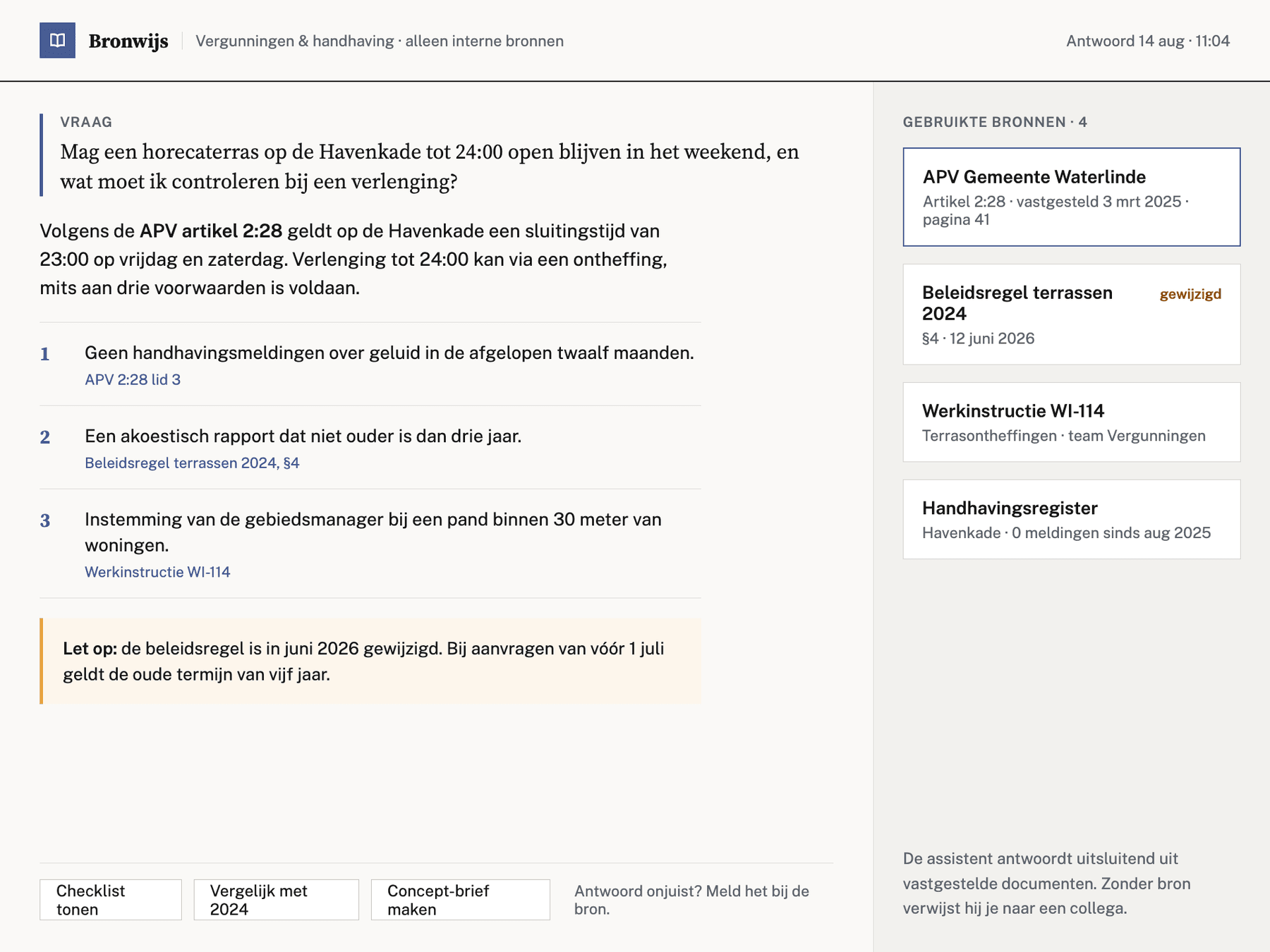
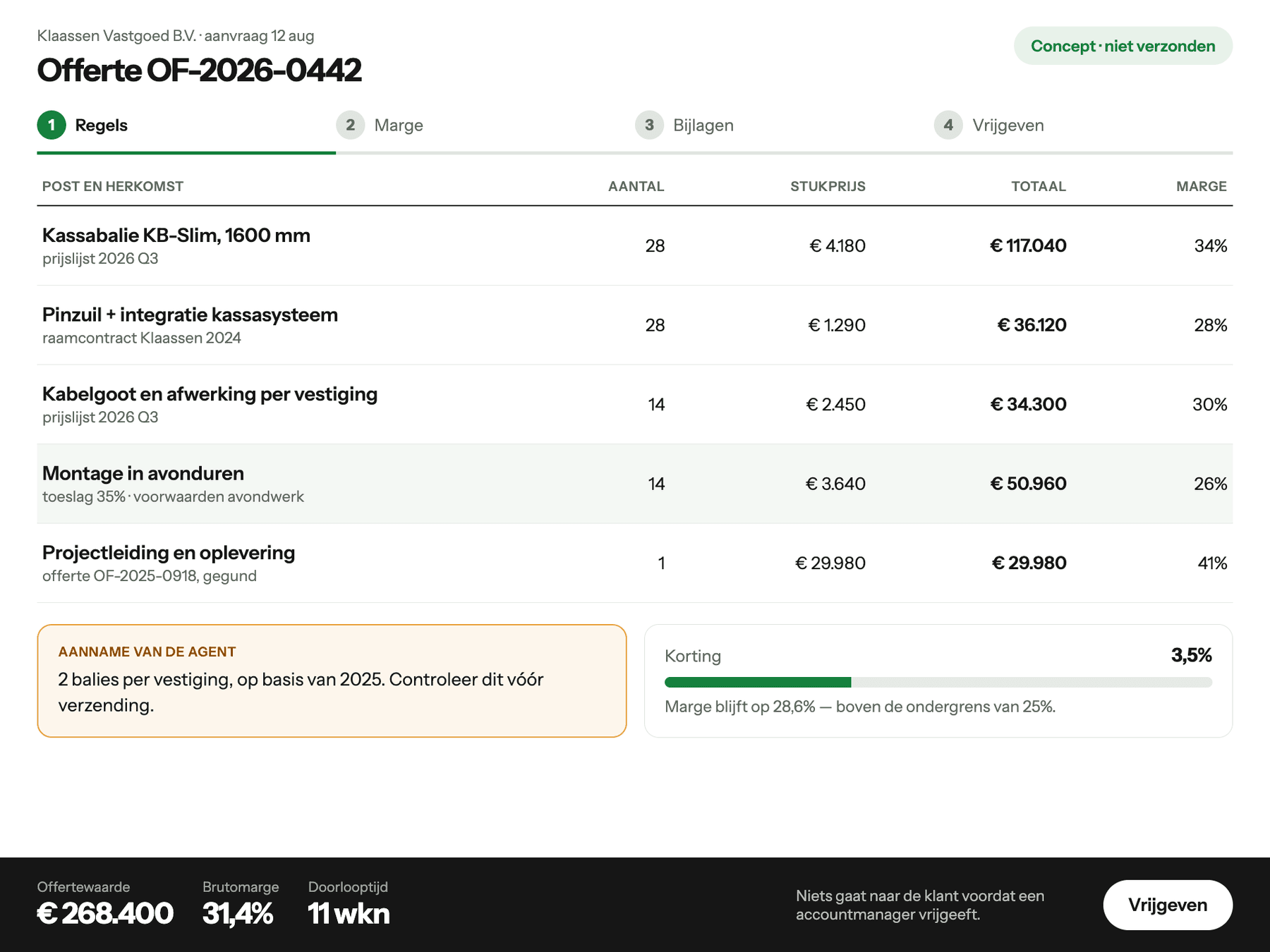
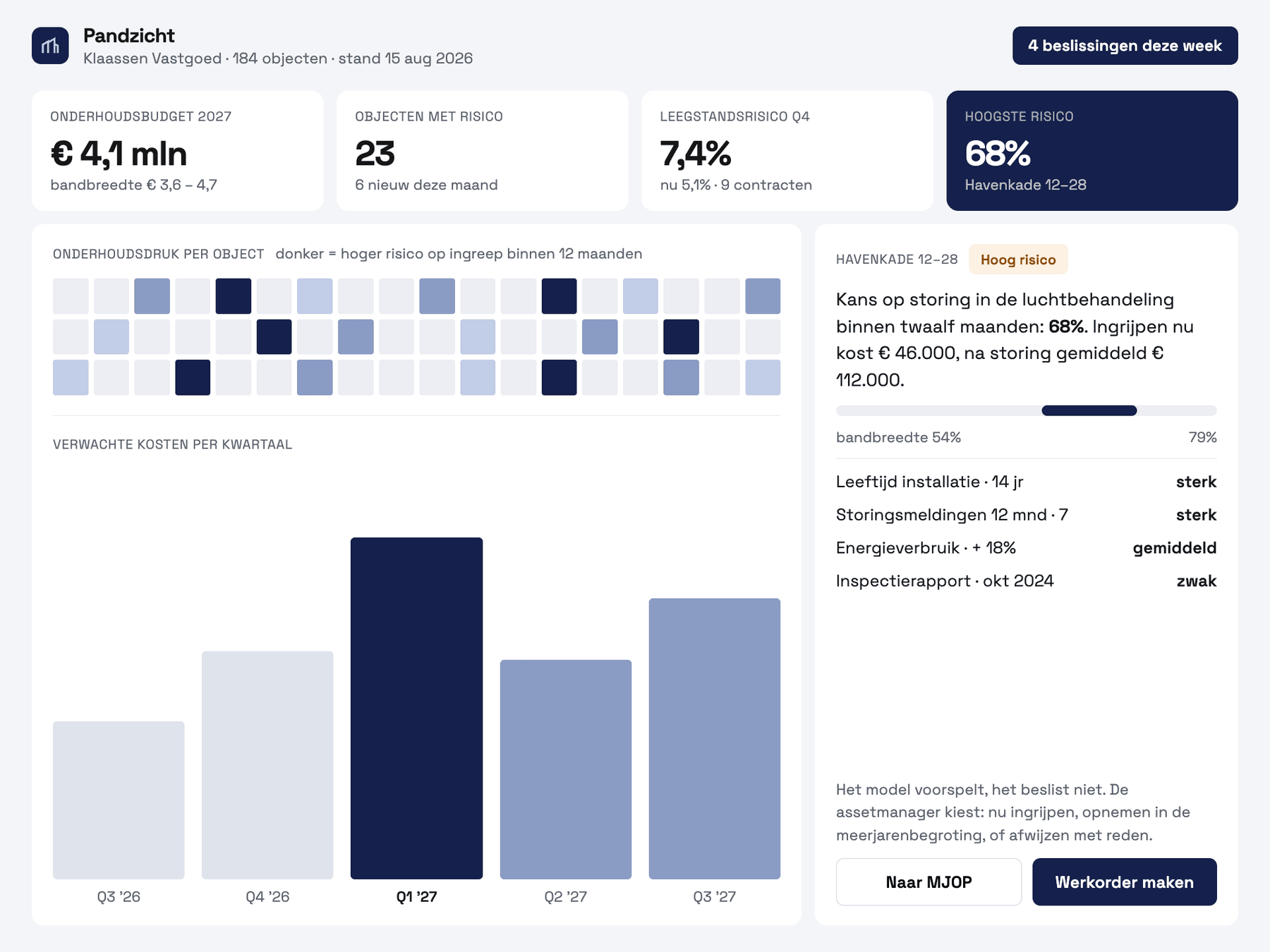
Knowledge assistant on approved policy
What is Custom Software?
Custom software is an application built specifically around one organisation's internal process, rather than an off-the-shelf SaaS product that works the same way for thousands of companies. Think internal tools, portals and workflow automation that fit existing systems and ways of working, instead of the other way round. After delivery the code belongs to the client, with no subscription model or vendor lock-in.
Built for clients including Tata Steel, M&G Investments, Digistore24, Toppers in Concert, Bar-le-Duc and Loogman


Three situations we come across again and again. Each one is explained below.

Your process is forced into a shape that doesn't fit
There's no field for your approval step, so the team works around it: a spreadsheet on the side and fields meant for something else.

Data is still retyped by hand between systems
CRM, scheduling and invoicing don't talk to each other. Someone exports a spreadsheet from one system and retypes it into the next.

A critical process still runs on one employee's desktop
The core is a spreadsheet full of macros that one person built years ago. Nobody else understands it, and when they're off sick the process stops.
Recognise any of these?
When custom software actually makes sense
The honest order is: buy what you can buy. If your administration, scheduling or invoicing runs fine in an existing package, custom software there is a waste of money. We say so even when it means there's less for us to build.
Custom software pays for itself in two places. The first is the process that sets you apart from your competitors: the way you quote, plan, inspect or deliver. Today that usually lives in people's heads and spreadsheets, which is exactly why it's fragile and impossible to scale.
- If your process fits a package, that's our advice
- Build where your process sets you apart
- Integrating is often cheaper than replacing

Understand the process first, then design a solution
The most expensive mistake in custom software is automating a process nobody can explain any more. You end up rebuilding the existing workaround in code, including the steps added years ago to fix a problem that disappeared long since.
That's why we start with the people who do the work. What really happens, in what order, where do people wait, and what are the exceptions? Almost always part of the process turns out to be unnecessary, and dropping it is cheaper than building it.
- We talk to the people who do the work
- We don't rebuild steps that can be dropped
- The outcome may be that you don't need to build anything

Built to hand over, even to another supplier
Custom software has a bad reputation for one reason: too many companies are stuck with software nobody else dares to touch. That isn't a property of custom software. It's a consequence of how it was delivered.
Alongside working software, we deliver the documentation, the operating instructions and the reasoning behind the choices we made along the way. That isn't an appendix for show. It's what lets you bring maintenance in-house, or carry on with another supplier three years from now.
- Documentation and operating instructions on delivery
- Transferable to your own team or another supplier
- Further development based on usage, not a bundle of hours

No template, but a team that gets to grips with your internal process first and only then starts building.
We start with the process, not the technology
First we map who does what and where it gets stuck. That discovery shapes the architecture, not the other way round.
The code and documentation are, and stay, yours
The source code lives in your repository, with documentation. Another team can always take over maintenance.
Built around your existing systems, not next to them
Your CRM, ERP or legacy system stays in place. We build the integrations around it, under ISO 27001 and ISO 9001.
A system, not a prototype
At go-live you have a tested, secure application that takes over the process straight away.
Quality by a fixed procedure
Code review, tests and security checks on every project, set down in our ISO quality management system.
Audit trail from the first version
Who changed or approved what is recorded in the system itself, not in a separate log on the side.
- projects delivered
- returning clients
- from 127 reviews
- ISO27001 and 9001 certified
Three ways to get software, side by side.
- Fits the way you work, not the other way roundOff-the-shelf package: no · Freelancer or small agency: yes
- You own the source code and the dataOff-the-shelf package: no · Freelancer or small agency: varies
- ISO 9001 and ISO 27001 certifiedOff-the-shelf package: varies · Freelancer or small agency: rarely
- Integrations with what's already runningOff-the-shelf package: partly · Freelancer or small agency: yes
- Tells you when a package is the better fitOff-the-shelf package: no · Freelancer or small agency: varies
- Design, software, data and AI in one teamOff-the-shelf package: no · Freelancer or small agency: no
- Management and further development after go-liveOff-the-shelf package: via the vendor · Freelancer or small agency: varies
- Dedicated contacts, office in AmsterdamOff-the-shelf package: no · Freelancer or small agency: varies
Discovery, architecture, build and handover. You own the code from the first commit.

Curious what this would look like for you?
- 01
Discovery and process analysis (1 to 3 weeks)
We map the existing process: which steps are now done by hand or in spreadsheets, which systems need to be connected and where the bottleneck is. We talk to the people who work with it every day, not just IT or management.
- 02
Architecture and data model (2 to 4 weeks)
We define the data model, the API contracts between systems and the permission structure: who can see or change what. UX sketches in Figma, matched to how users already work so adoption isn't a hurdle.

- 03
Building in sprints (8 to 32 weeks, depending on scope)
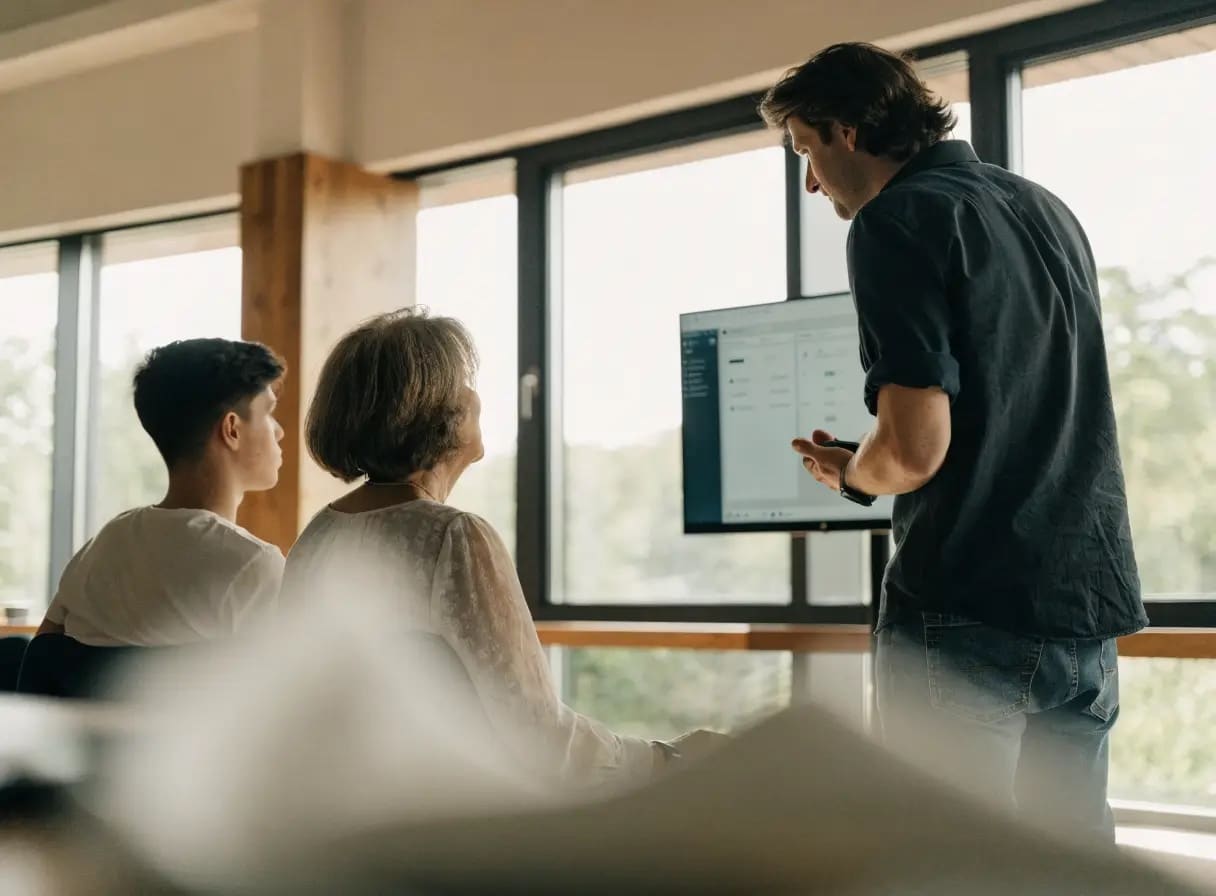
Two-week sprints with a working demo at the end of each one. You see progress, can adjust priorities and change scope without the whole project grinding to a halt.
- 04
Integrating with existing systems
Most internal tools don't stand alone: integrating with the CRM, ERP, accounting software or a legacy database is often the riskiest part. We build and test these integrations early in the project, not at the very end.

- 05
Testing with the people who will use it
Alongside a penetration test and code review, the tool is tested by the colleagues who will work in it every day. With internal software, adoption is the biggest risk, so we act on real-world feedback before go-live, not after.

- 06
Go-live and hypercare
Training for the team, handover of documentation and code, and a hypercare period right after go-live in which we quickly adjust whatever works differently in practice than planned. After that, an optional SLA for further development.

Curious what this would look like for you?
Custom software is never finished at go-live
- MonitoringWe monitor errors, queues and failing integrations between the systems the platform talks to.
- Permissions and accessWe keep roles and permissions up to date as employees join, move and leave.
- Maintaining integrationsWe update integrations as soon as a connected system changes its API or data format.
- Training and handoverWe train new colleagues and departments, so usage doesn't depend on whoever originally asked for the process.
- Further developmentWhen a process changes, we build the change into the platform, instead of users falling back on a spreadsheet workaround.

No account manager. Your first conversation is with someone who does the work, often with one of the founders. After that you build with a dedicated team from our office in Amsterdam.
- Office on the Duivendrechtsekade in Amsterdam
- ISO 9001 and ISO 27001, certified by Kiwa
- 500 projects delivered
- 4.8 from 127 reviews
Custom software never stands alone: it talks to your CRM, ERP, accounting software and identity provider. The process decides which technology and integrations we use, not the other way round.
 Laravel
 .NET
.NET React
React Next.js
 PostgreSQL
 Microsoft Azure
- Python
 OpenAI
 Anthropic
- CRM
- ERP
- Accounting software
- Identity provider and SSO
- Legacy databases
- Field service apps

Custom software that brings separate systems together, rather than adding another one.
Fragmented systems brought together
For a leading financial market leader, we brought separate tools together into one data platform with a consistent design system, built in React on Azure.
From reporting to decision-making
Fund managers get role-based access to dashboards, so the data the analysis team produces actually gets used in decisions.
How do I know whether I need custom software rather than an existing tool?
Custom software is the right answer once you notice you're reshaping an existing tool into something it isn't: spreadsheets side by side, integrations that don't exist, or a process you're forced to adapt to the software rather than the other way round. When the process itself is what sets your organisation apart, or three or more systems have to be aligned by hand every day, custom software is often cheaper than a pile of workarounds.
What's the difference between custom software and building a SaaS platform?
Custom software is built for one organisation, around one internal process. SaaS development delivers a product you sell to multiple customers, with accounts, subscriptions and a multi-tenant architecture. If you're looking for a product to sell, take a look at our SaaS development service; if it's an internal portal, dashboard or workflow tool for your own organisation, custom software is the right approach.
Who owns the source code after delivery?
You do, by default and without discussion. After go-live, Your Tech Club transfers the full code, documentation and access to your own repository, so you're never tied to one supplier for maintenance or further development.
What happens to our software if Your Tech Club stops trading or is acquired?
Nothing changes about who owns it: the code is already in your own repository and the documentation was handed over on delivery, so another agency can take over maintenance straight away.
How long does custom software development take?
A first working version is usually ready within six to sixteen weeks, depending on how many systems are involved and how complex the process you want to automate is. A full platform with multiple modules and integrations more often takes four to nine months, built in two-week sprints so you can adjust along the way.
Can the software be integrated with our existing systems, such as our CRM, ERP or accounting software?
Yes, integrating with existing systems is usually the whole point: custom software is rarely built as a replacement, but as the layer between your current systems that keeps data in sync. We build integrations via APIs, webhooks or event-driven connections, and use workflow automation for rules that are too specific for a standard integration.
Is custom software also suitable for the public sector or regulated industries?
Yes. Partly thanks to our ISO 27001 and ISO 9001 certification and hosting within the EU, custom software from Your Tech Club suits organisations with strict data security requirements, such as public institutions, healthcare and financial services. Tender requirements around data residency and information security are therefore often covered as standard.
Related services

Get in touch with us directly. We'll get back to you as soon as we can

 Your message goes straight to our team in Amsterdam.