
 SERVICESMOBILE DEVELOPMENT
A mobile app people keep opening
Fast, scalable and maintainable apps built with React Native, Flutter or native iOS and Android.

 ISO 9001 & 27001
An app that works where your team works, even where there's no signal. See our approach →
What is mobile development?
Mobile development is building software specifically for smartphones and tablets: native for iOS (Swift) and Android (Kotlin), or cross-platform with React Native from a shared codebase. The app usually connects to an existing back end or API for data, authentication and payments. Publishing goes through App Store Connect and Google Play Console, including Apple's and Google's review process. Your Tech Club delivers this from Amsterdam, from first prototype to maintenance after go-live.
Built for clients including Tata Steel, M&G Investments, Digistore24, Toppers in Concert, Bar-le-Duc and Loogman


Before organisations come to us, they've usually run into one of these three problems.

The app doesn't feel native
The current app was built as a webview wrapper or with a low-code platform. Navigation stutters, animations aren't smooth and within a few taps users notice it isn't a proper iOS or Android app.

iOS and Android are drifting apart
A new feature lands on one platform first and the other only follows weeks later, or not at all. Two separate native codebases, or a cross-platform layer that wasn't set up properly, turn every release into a race between them.

The app is disconnected from your other systems
Stock, customer details or statuses in the app don't match what's in the CRM, ERP or existing back end. Every integration has become a one-off, and nobody dares touch the sync any more.
Native, cross-platform or actually a web app?
Before the question of native or cross-platform comes up, there's a cheaper question: do you need an app at all? If your users mainly look up information or fill in a form, a good mobile website does the same job without anyone having to install anything. An app nobody opens is the most expensive form of nothing.
An app pays for itself as soon as you need something the browser doesn't offer: working without a connection, push notifications that actually arrive, heavy use of the camera or scanner, or a spot on the home screen of people who use you every day.
- No app if a mobile website does the same job
- Cross-platform by default, native where it has to be
- Offline working and push notifications as real reasons

Building the app is half the job, keeping it in the store is the other
An app isn't finished at delivery. Apple and Google release new versions every year, and an app that doesn't keep up first becomes unreliable and is then removed from the store. That's no disaster, but it is an obligation you need to plan for up front rather than be caught out by.
The same goes for the review procedure. The first submission takes longer than people think, and rejections are more often about privacy wording, account deletion and payment rules than about the code. We handle the submission and make sure the requirements are already in the design.
- Annual OS updates planned in advance
- Submission to Apple and Google including privacy requirements
- Older app versions keep working after an update

What happens when the connection drops
Most apps used in the field fail at the same point: in a basement, a warehouse or a rural area the connection drops and the form someone has just filled in is gone. That's the moment an engineer goes back to paper, and doesn't come back.
Working offline is therefore not an extra feature but a design choice. Data is stored locally, the app carries on as if nothing has happened, and as soon as there's a connection again everything syncs. The question to answer up front is what happens when two people have changed the same record.
- Local storage, syncing as soon as there's a connection
- Agreed up front what happens in a conflict
- Tested in the conditions where the app is used

We don't build in one stack by default. For each app, and sometimes each feature, we make the choice that best fits what the app needs to do and the systems already in place.
Native where it must be, React Native where it can be
For apps with heavy camera, sensor or Bluetooth functionality we build natively with Swift and Kotlin, for maximum speed and full access to the platform. If it's mainly screens, forms and workflows, we choose React Native: one shared codebase for iOS and Android, quicker to build and easier to maintain. We make that call per project, not as a fixed starting point.
The app connects to what's already there
Most apps we build talk to an existing system: a CRM, ERP, payment provider or an API that's already running. Instead of building yet another island, we set up an API layer that drives the app and keeps it usable offline, so users aren't stuck as soon as the network drops.
Store publication isn't an afterthought
We handle App Store Connect and Google Play Console ourselves: certificates, provisioning profiles, TestFlight builds for beta testers and the App Store Optimization that decides whether users find the app. If Apple or Google rejects a build, we sort it out; it's not something you have to chase yourself.
Source code and documentation are yours
You get full access to the repository and technical documentation, so you're not tied to one supplier for what comes next.
Quality that doesn't depend on one developer
Code review and automated tests come with every change, set down in our ISO 9001 certified quality process.
Security as a fixed part
Access to code, customer data and store accounts follows fixed procedures within our ISO 27001 certification.
- projects delivered
- returning clients
- from 127 reviews
- ISO27001 and 9001 certified
Three ways to get software, side by side.
- Fits the way you work, not the other way roundOff-the-shelf package: no · Freelancer or small agency: yes
- You own the source code and the dataOff-the-shelf package: no · Freelancer or small agency: varies
- ISO 9001 and ISO 27001 certifiedOff-the-shelf package: varies · Freelancer or small agency: rarely
- Integrations with what's already runningOff-the-shelf package: partly · Freelancer or small agency: yes
- Tells you when a package is the better fitOff-the-shelf package: no · Freelancer or small agency: varies
- Design, software, data and AI in one teamOff-the-shelf package: no · Freelancer or small agency: no
- Management and further development after go-liveOff-the-shelf package: via the vendor · Freelancer or small agency: varies
- Dedicated contacts, office in AmsterdamOff-the-shelf package: no · Freelancer or small agency: varies
From prototype to live in the stores. We work iteratively and validate early with real users.
- 01
Scoping & platform choice
We start with an intake to pin down the goal, audience and core functionality. That's also where we choose the platform: native with Swift and Kotlin for maximum performance and access to device features, or React Native for a codebase shared between iOS and Android. We also map which existing back end, CRM or API the app needs to talk to.
- 02
UX/UI design
We design wireframes and a clickable prototype following Apple's Human Interface Guidelines and Material Design, so the app feels familiar on its platform from the very first version. Users test this prototype before a single line of code is written.
- 03
Architecture & integrations
We lay the technical foundations: authentication, offline behaviour, data synchronisation and push notifications. We connect to existing back ends or APIs, or build a new back end if there isn't one yet. This phase also sets the sprint plan for the rest of the project.
- 04
Building in sprints
We develop in two-week sprints. After every sprint there's a working build you install on your own device via TestFlight or the Play Console, so you see the app grow rather than only at delivery.
- 05
Testing on real devices
We test on a range of physical iOS and Android devices, screen sizes and OS versions. Alongside functional tests we look at performance, battery use and crash-free behaviour, complemented by a closed beta with real users via TestFlight and Play Console's internal test track.
- 06
Store launch & hypercare
We submit the app to App Store Connect and Google Play Console, including metadata, screenshots and App Store Optimization. After go-live we follow crash reports and user feedback closely and fix whatever is needed straight away in the first weeks, before moving on to regular further development.
A mobile app is never finished at its store release
- Crash monitoring & bug fixingWe follow crash reports and app vitals per device and OS version, trace the cause and ship fixes through a fixed release cycle rather than an emergency patch after the fact.
- OS compatibilityEvery annual iOS and Android release brings new APIs, permission models and mandatory SDK versions. We test and update the app so it keeps working on the latest OS.
- Store releasesWe handle ongoing releases via App Store Connect and Google Play Console, including phased rollouts, changelogs and keeping to Apple's and Google's review guidelines.
- Performance & batteryWe measure start-up time, memory use and battery consumption and adjust app size and background activity, so the app stays light as features are added.
- Further development based on usage dataIn-app analytics show where users drop off or get stuck in a flow. Those insights decide which screens and features are tackled in the next sprint.

No account manager. Your first conversation is with someone who does the work, often with one of the founders. After that you build with a dedicated team from our office in Amsterdam.
- Office on the Duivendrechtsekade in Amsterdam
- ISO 9001 and ISO 27001, certified by Kiwa
- 500 projects delivered
- 4.8 from 127 reviews
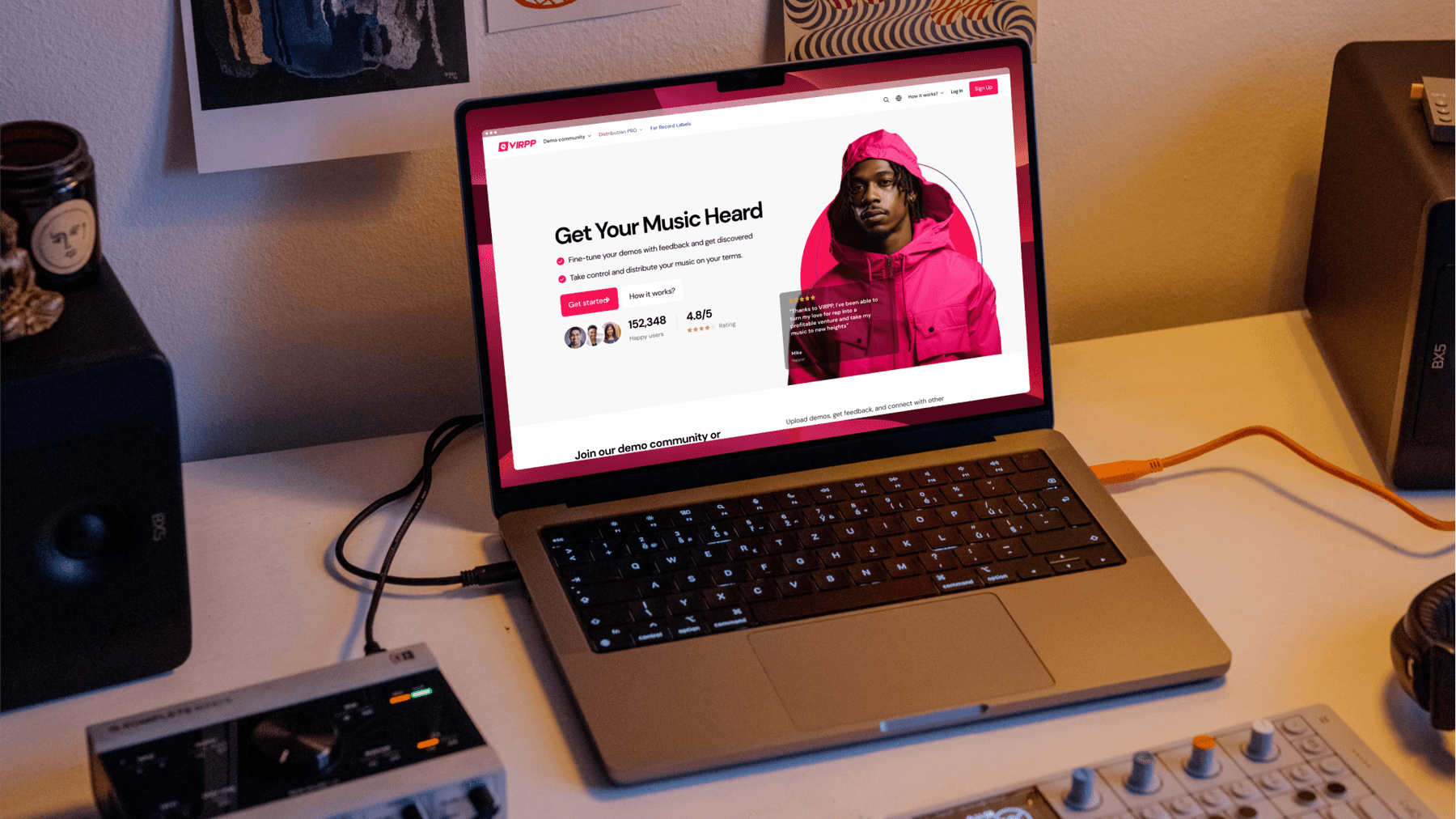
A React Native app that grows with the same backend as the platform.
One codebase, two platforms
For VIRPP we built the mobile app in React Native, so iOS and Android run on a single codebase and new features don't have to be built twice.
Connected to the whole platform
The app talks to the same Laravel backend as the music platform itself, so artists, labels and listeners see the same data in real time.
How much does mobile app development cost?
That depends heavily on the scope: a focused first version (MVP) is a different project from a full app with its own back end, push notifications, in-app purchases and multiple platforms. In a no-obligation conversation we define the scope and quote.
Native app or React Native: which is the smarter choice for my app?
That depends on what the app needs to do. Native (Swift for iOS, Kotlin for Android) is the best choice for heavy sensor, camera or Bluetooth functionality and for apps that need maximum speed. React Native is often smarter if the app mainly consists of screens, forms and workflows: you then share a large part of the code between iOS and Android and can roll out updates faster. We decide this per project, not as a fixed starting point.
How long does it take to build an app?
A focused first version (MVP) usually takes 10 to 16 weeks, including design, development and the first App Store review. A full product with multiple releases and more extensive functionality is more likely to take 4 to 9 months.
Do you also handle publication in the App Store and Google Play?
Yes, we take care of the whole publication: setting up App Store Connect and Google Play Console, certificates and provisioning profiles, TestFlight builds for beta testers, and the App Store Optimization (screenshots, description, keywords) that decides whether users find the app. If Apple or Google rejects a build, we sort it out.
Can the app connect to our existing back end or systems?
Yes, most apps we build connect to what's already there: an existing CRM, ERP, payment provider or an API that's already running. For that we build a separate API layer that drives the app and keeps it usable offline, so users aren't stuck as soon as the network drops.
Do you also provide maintenance and updates after launch?
Yes, the vast majority of our clients choose ongoing maintenance after launch. That means absorbing OS updates (new iOS and Android versions regularly break functionality), security patches, monitoring for crashes and performance, and new features in two-week sprints.
Related services

Get in touch with us directly. We'll get back to you as soon as we can

 Your message goes straight to our team in Amsterdam.