Not sure yet? Then the conversation starts with your process, not the technology.
Why Your Tech Club
Buy, have it built, or build it with us
Three ways to get software, side by side.
Fits the way you work, not the other way roundOff-the-shelf package: no · Freelancer or small agency: yes
You own the source code and the dataOff-the-shelf package: no · Freelancer or small agency: varies
ISO 9001 and ISO 27001 certifiedOff-the-shelf package: varies · Freelancer or small agency: rarely
Integrations with what's already runningOff-the-shelf package: partly · Freelancer or small agency: yes
Tells you when a package is the better fitOff-the-shelf package: no · Freelancer or small agency: varies
Design, software, data and AI in one teamOff-the-shelf package: no · Freelancer or small agency: no
Management and further development after go-liveOff-the-shelf package: via the vendor · Freelancer or small agency: varies
Dedicated contacts, office in AmsterdamOff-the-shelf package: no · Freelancer or small agency: varies
What to look for
Off-the-shelf package
Freelancer or small agency
Your Tech Club
Fits the way you work, not the other way round
You own the source code and the data
Varies
ISO 9001 and ISO 27001 certified
Varies
Rarely
Integrations with what's already running
Partly
Tells you when a package is the better fit
Varies
Design, software, data and AI in one team
Management and further development after go-live
Via the vendor
Varies
Dedicated contacts, office in Amsterdam
Varies
Something working, fast
A first working version in weeks
No waiting six months for one big delivery. We build in two-week cycles, and you're already working with a first version while the rest is still being built.
Source code, environments and documentation are in your name. If you ever want to continue with your own team or another party, you can do so without starting over.
Who uses it, which process sits behind it and which systems it has to talk to. That gives us the scope, with a price.
02
Design
Screens in Figma, tested with the people who'll be working with them every day.
03
Build and test
Two-week sprints with a demo. Every delivery goes through code review and tests.
04
Go-live and handover
Go-live, measurement and a handover with documentation. Source code and environments are in your name.
It doesn't stop at go-live
Further developmentNew features at a steady pace, without needing a new project for it.
Management and monitoringWe keep an eye on errors, speed and integrations, and step in before users notice.
Security and updatesPermissions, dependencies and updates kept up to date in line with ISO 27001.
Amsterdam
Who you'll talk to
You talk to the founders
No account manager. Your first conversation is with someone who does the work, often with one of the founders. After that you build with a dedicated team from our office in Amsterdam.
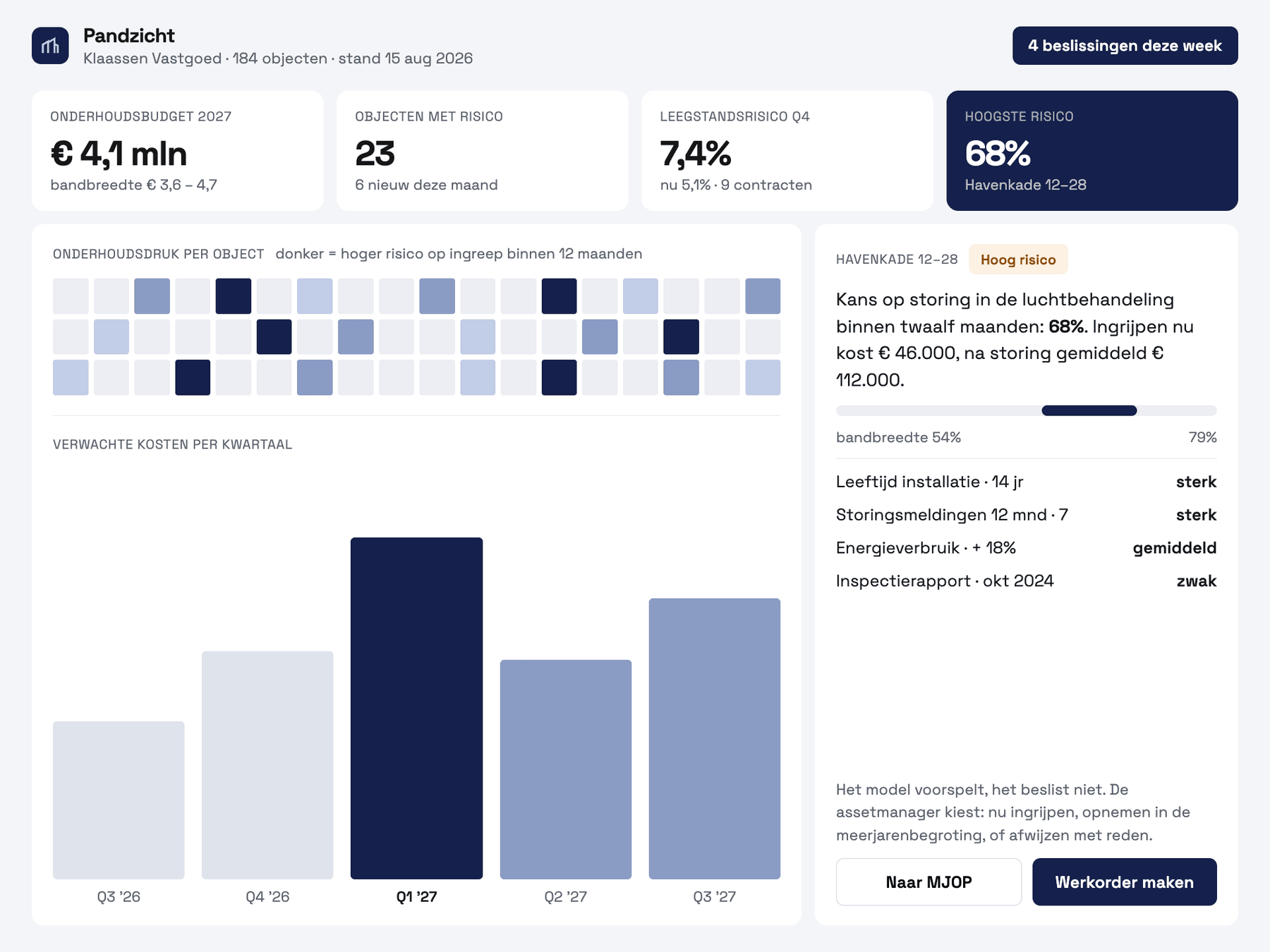
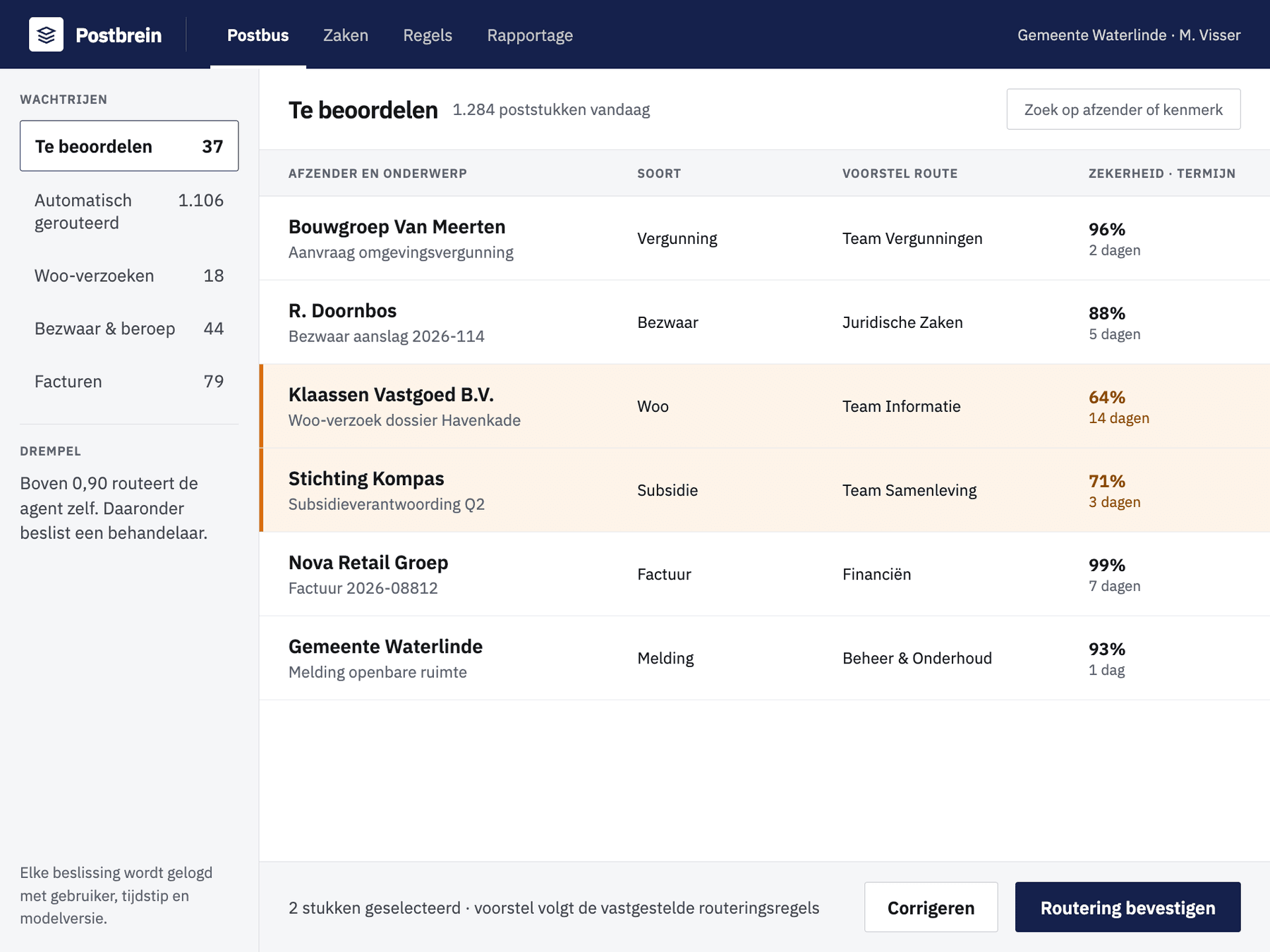
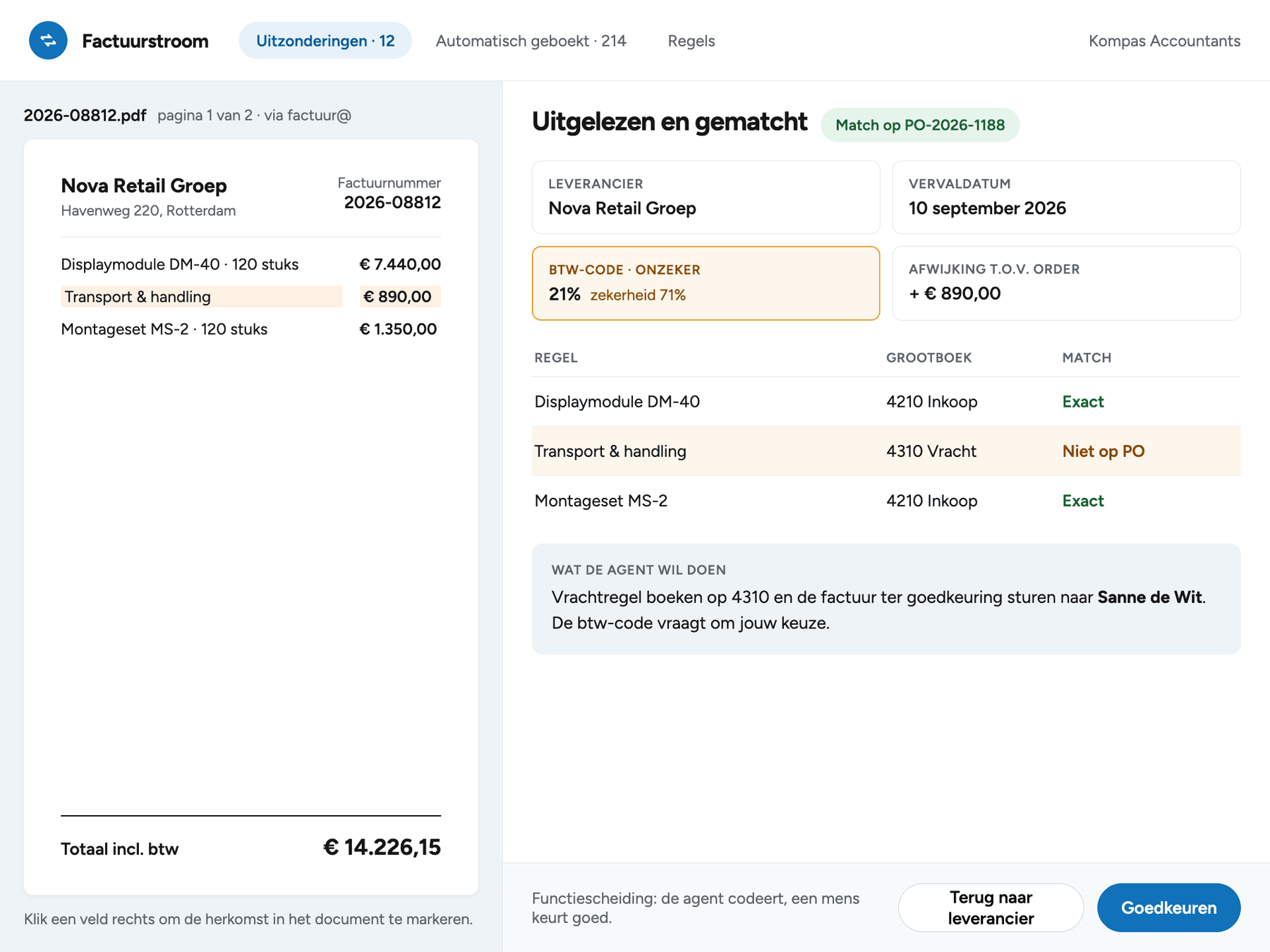
A data platform corporates can find their own way around.
From loose files to one environment
Data that used to be exchanged by email and shared drives now sits in one environment, with roles and permissions per organisation.
Built to be handed over
Documentation, maintenance instructions and the reasoning behind decisions are part of the handover, so the platform isn't tied to us.
Explained
Commissioning software: what to look for
Four questions to answer before you choose a partner.
1
Custom or off-the-shelf software?
Buy what you can buy. If your accounting, scheduling or invoicing runs well in an existing package, custom software there is a waste of money.
Custom software pays off in two places: the process that sets you apart from competitors, and the links between systems you currently stitch together by hand.
2
Web application, customer portal or SaaS: what's the difference?
A web application is a working environment for your own people. A customer portal is where customers or partners log in to sort things out themselves. SaaS is a product you sell to multiple customers, with its own accounts, subscriptions and a foundation that has to be able to grow.
The technology is similar; the choices aren't: who uses it, how often, and who pays for it.
3
How do you stop software from grinding to a halt after a few years?
By building from day one as if someone else will have to take it over.
Source code and environments in your name
Mainstream technology such as Laravel, .NET, React and Next.js
Documentation and tests with every delivery
Management and further development agreed up front
4
What drives the price and the timeline?
Mainly the number of user roles, the integrations with existing systems and the data that needs to be migrated. How good it looks matters less than you might think.
A first working version is usually ready within weeks. After that we keep building in short cycles, with a fixed price per phase.
Frequently asked questions
Questions about digital products and platforms
What counts as digital products and platforms?
Anything people use every day to get their work done: web applications, portals, dashboards, SaaS products, custom software and mobile apps. The difference from a website is the user. A website informs a visitor; a platform supports someone who completes a task in it.
When do you choose custom software, and when existing software?
If your process fits an off-the-shelf package, you buy that package. We'll tell you when that's the case. Custom software is worth it when the process sets you apart from your competitors, or when you're currently stitching three systems together by hand. We work that out in the first phase, before anything gets built.
How long before something works?
A first working version of a portal or dashboard is usually ready in eight to fourteen weeks. We split the work into short cycles with interim deliveries, so you can adjust course along the way instead of only seeing the result at the end.
What does a digital platform cost?
That depends on the scope, which we define in the first phase. A first working version of a portal or dashboard usually starts from €20,000. What we agree up front is what goes into that first version, so the price is tied to a clearly defined result rather than an open-ended assignment.
Can you take over an existing platform?
Yes, that's a large part of our work. We start by understanding what's there and what's getting in the way, before we replace anything. Documentation and maintenance instructions are part of the handover, so another party can take it over again later.
Who owns the source code?
You do. The code, the environments and the accounts are in your name. If you ever want to continue with another party, you can do so without starting over.
What about security?
Your Tech Club is ISO 27001 certified for information security and ISO 9001 certified for quality. We build in roles, permissions, logging and EU hosting from the design stage, not as a layer added afterwards.
Which technologies do you use?
Whatever suits your situation and your team, with a preference for mainstream technology that another party can maintain too: including Laravel, .NET, React, Next.js and PostgreSQL, hosted in the EU, for example on Microsoft Azure.
Get in touch with us directly. We'll get back to you as soon as we can
Your message goes straight to our team in Amsterdam.
Cookies & privacy. We use functional cookies (always) and analytics and marketing cookies (only with your consent) to improve the site. Read our privacy policy.