


Qualogy: a fresh corporate identity for clients and talent
How do you hold on to one corporate identity across two sites? For Qualogy, we connected WordPress and GetNoticed with a single design system.
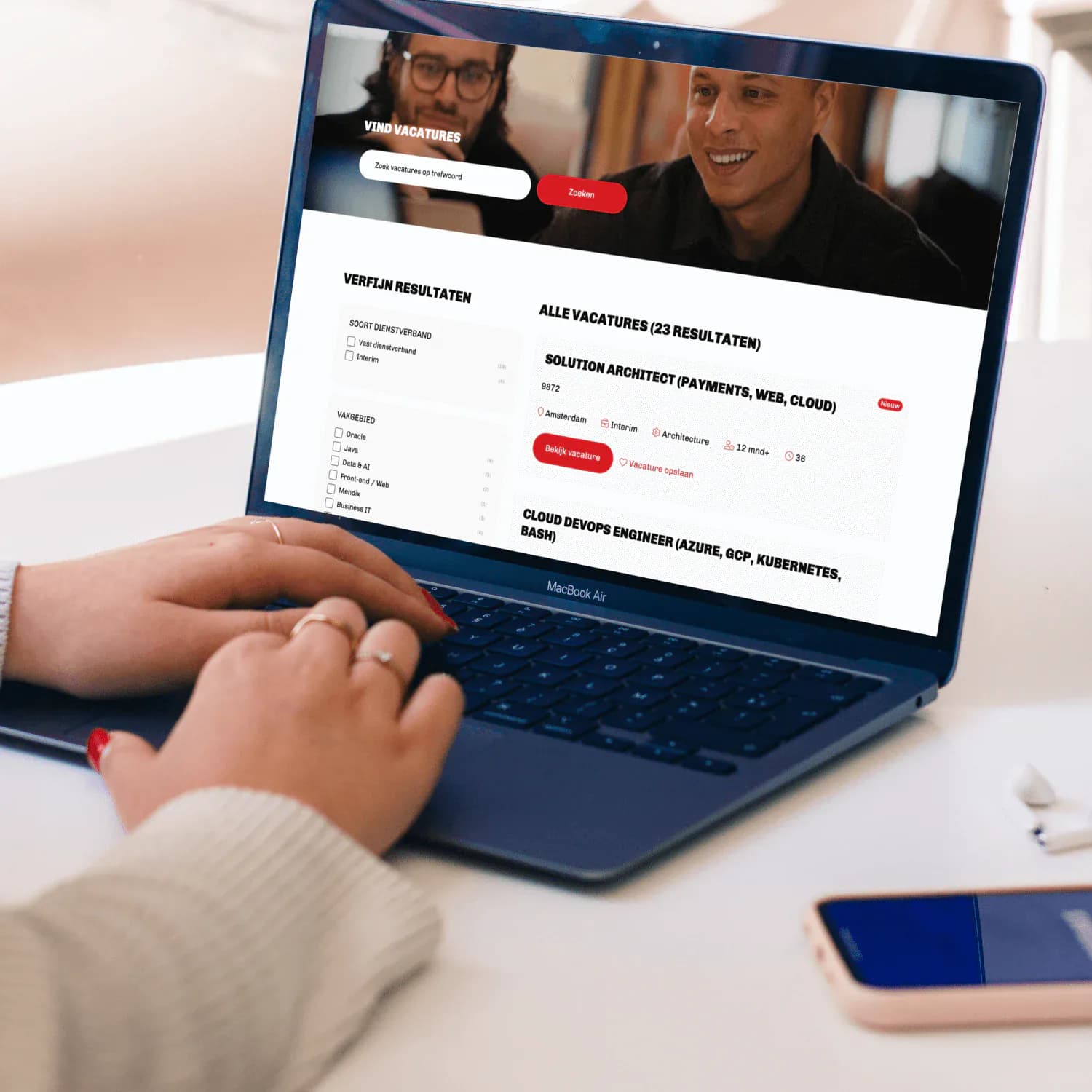
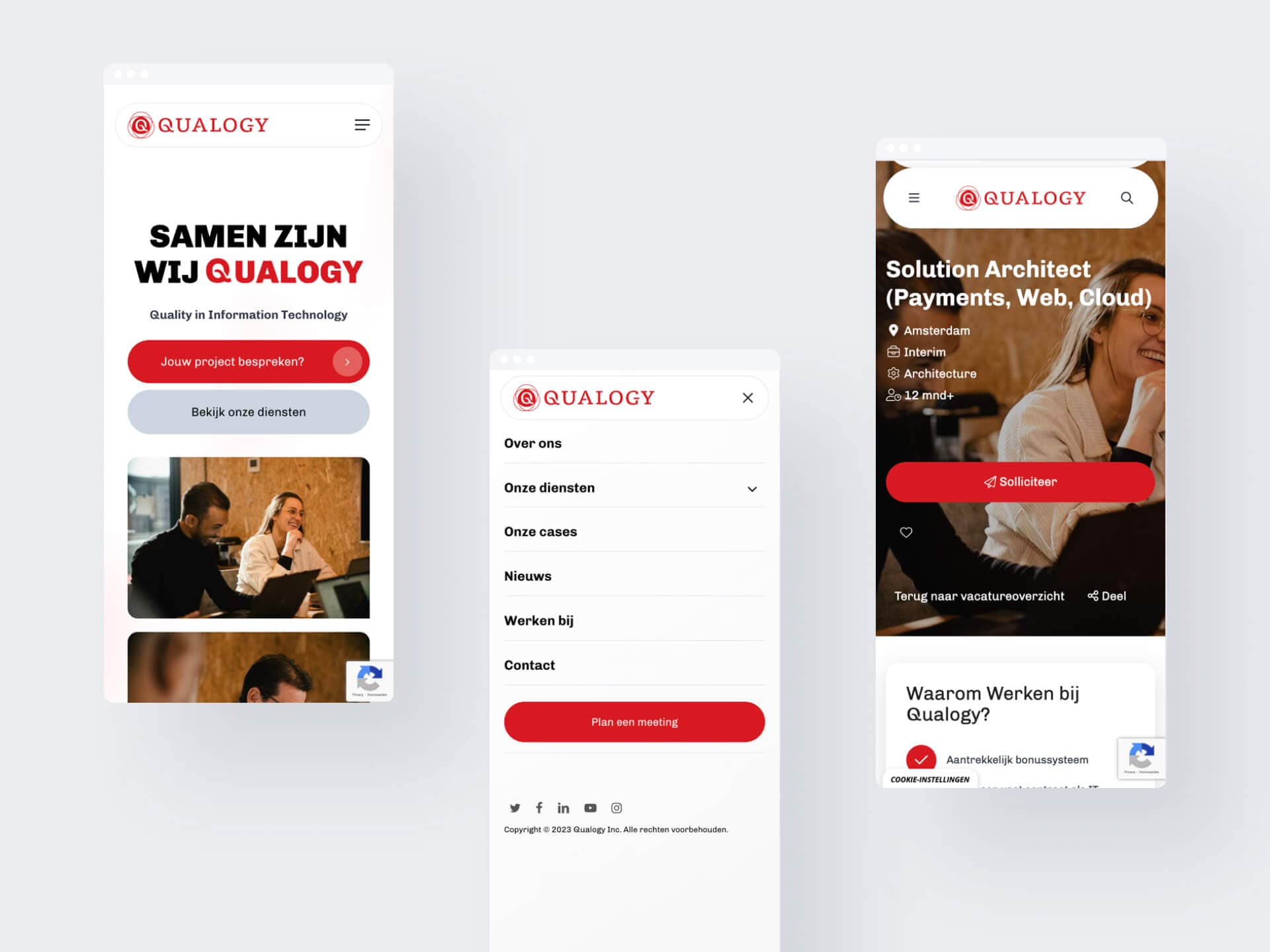
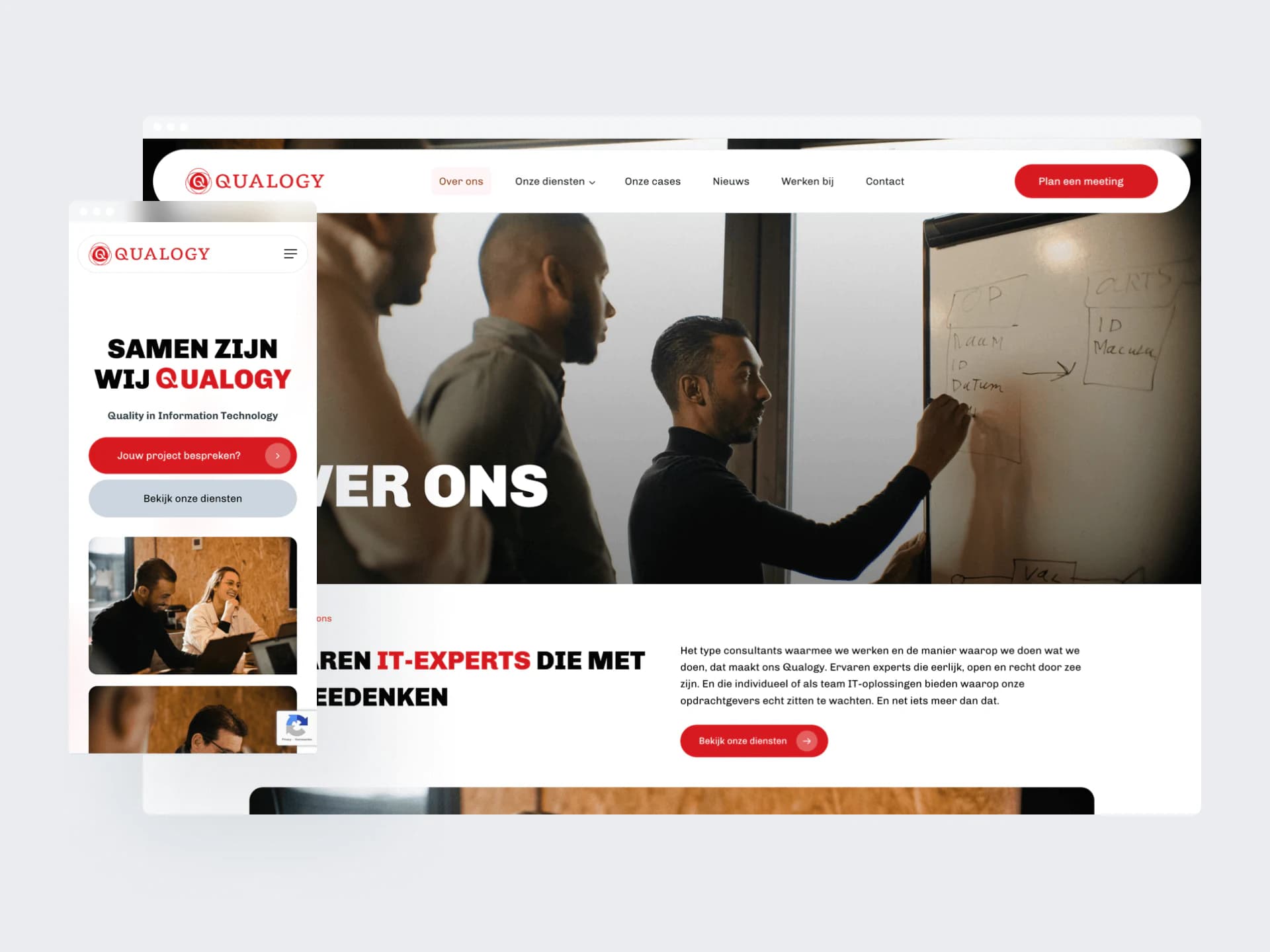
Qualogy wanted to modernise without losing the brand identity it had built up. At the same time, the brand had to appeal to clients and new talent alike. We translated that corporate identity into two sites: a corporate website in WordPress and a careers platform in GetNoticed, connected by one design system.
On this page, you can read why we deliberately chose two platforms, and how you still stay one brand. Because building two sites isn't hard. Building two sites that feel like one company, that is the work.
The project in brief
- Client
- Qualogy
- Sector
- IT services
- What we did
- UI/UX design, design system, corporate website development, careers platform
- Technology
- Figma, WordPress, GetNoticed, HTML and CSS, PHP, Google Tag Manager
What was the challenge for the corporate identity?
Qualogy had to serve two audiences with different expectations from one brand. A potential client looks for proof of professionalism and experience. An applicant looks for atmosphere and prospects. Too corporate puts talent off, too young undermines credibility with buyers. The new style had to land exactly in between.
I know this tension from my own company. A client wants to know whether you can handle a big project. A developer who wants to work for you wants to know whether the office is a good place to be. Those are two different conversations. Yet both have to ring true to who you are.
Qualogy had also already built a brand. You don't just throw that away. So modernising here didn't mean starting over, but choosing what had to stay and what could change.
Why did we choose two platforms instead of one?
Because the two sites need to do different things. The corporate site runs on WordPress, where marketing manages the content themselves. The careers platform runs on GetNoticed, which is built for recruitment. Applicants follow a fixed process there, and HR manages candidates in the same system they come in through.
You can also build a careers section in WordPress, with a few plugins. I see that a lot. But recruitment calls for vacancy management, an application flow and candidate follow-up. A system made for that does it better than a corporate CMS with bolt-on extensions. I would rather pick the right tool for each task than one tool for everything.
Two platforms do come at a price. You maintain two systems, with two logins and two rounds of updates. You have to be honest about that. For Qualogy, it didn't outweigh the gain, because marketing and HR now each work in a system that suits their job. And the design system holds the two together, so to a visitor they don't feel like two companies.
That trade-off between an off-the-shelf package and building your own comes up in almost every project. We wrote a blog about it: custom software or an off-the-shelf package.
How does the corporate identity stay one brand?
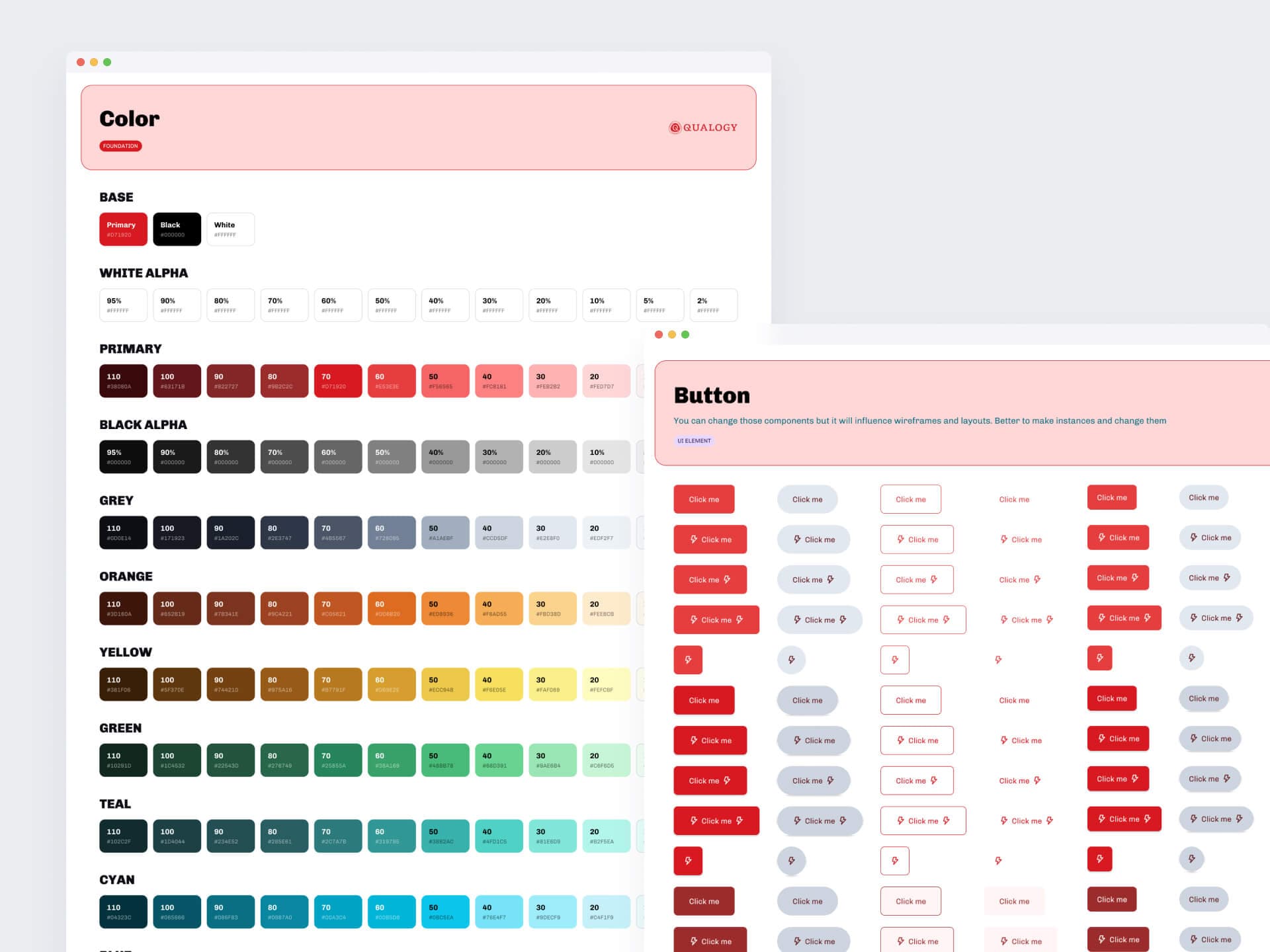
Through a design system. It fixes colours, typography and components, so both platforms recognisably project the same brand. That means no page has to be designed from scratch. The core values and the professional look stayed leading, while visual design, interaction and tone of voice were refreshed.
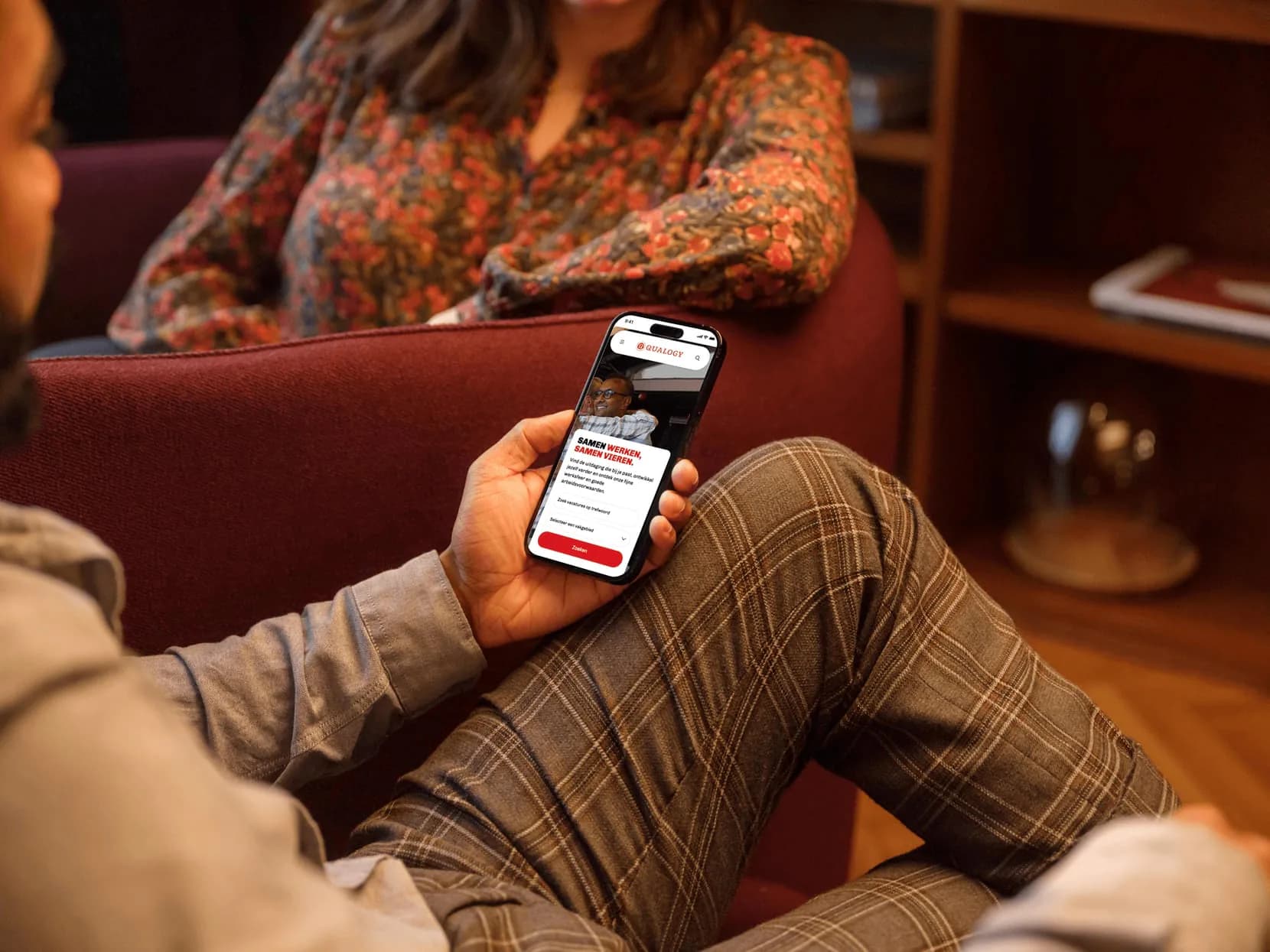
A design system sounds big, but the idea is simple. You agree once on what a button looks like, which colours you use and how a heading is built. After that, everyone uses the same parts, whether that is marketing in WordPress or HR in GetNoticed.
In my view, the biggest benefit isn't at launch, but in years two and three. Someone adds a page, and it simply fits. Without a design system, five shades of blue creep into your site within a year.
Do you want a website that holds on to your brand, even when your team manages it? We design and build custom websites with a design system underneath.
See custom website developmentWhat does the design look like?
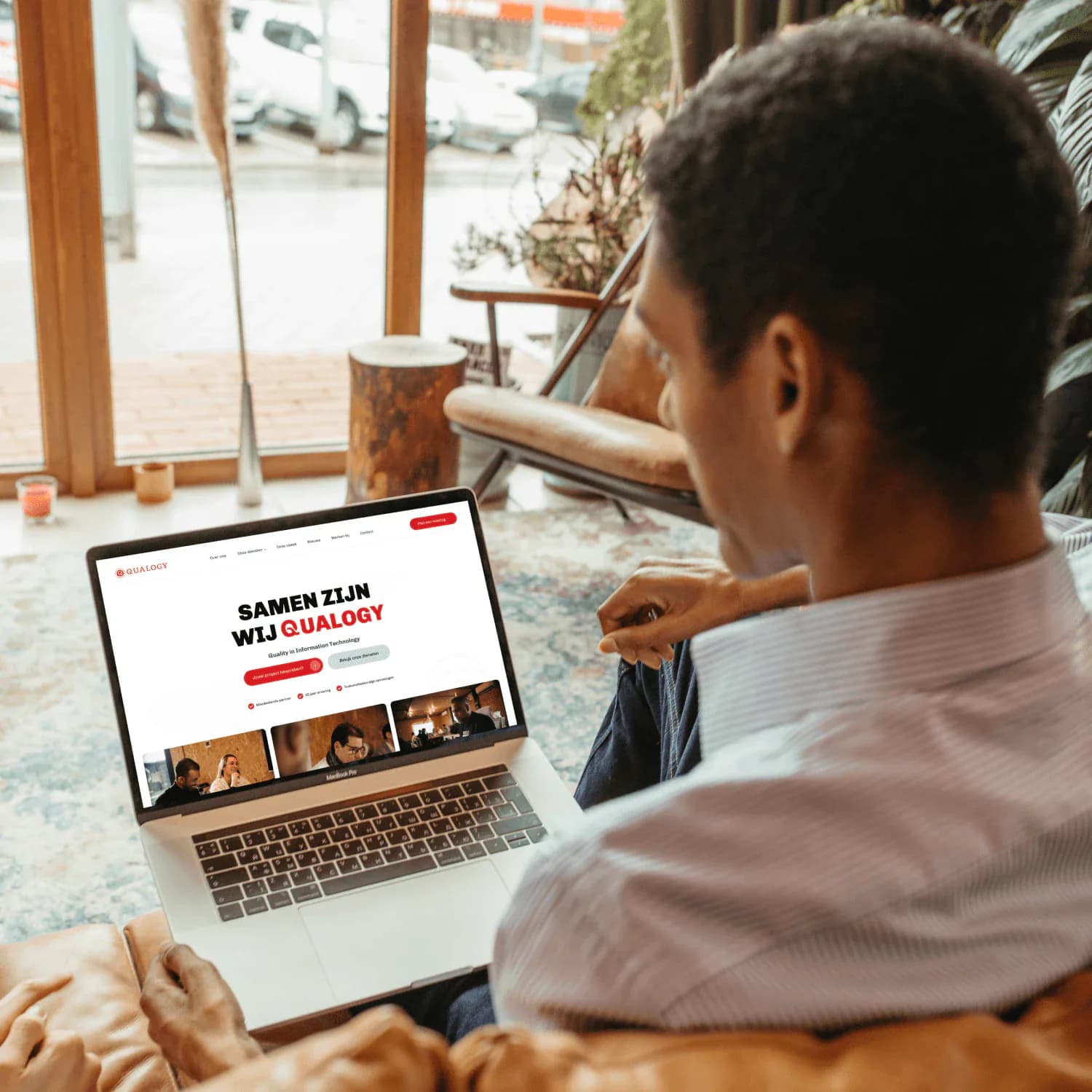
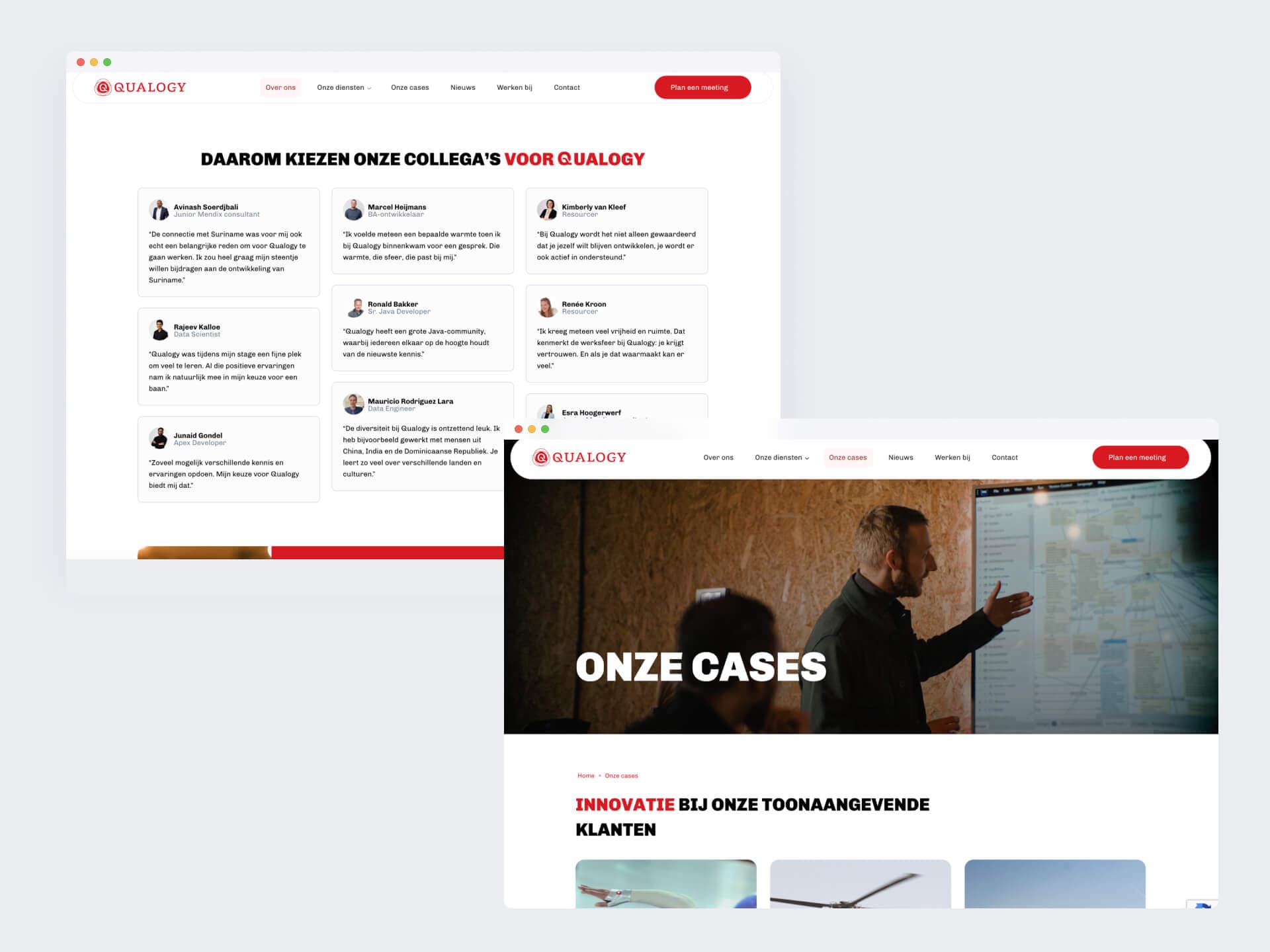
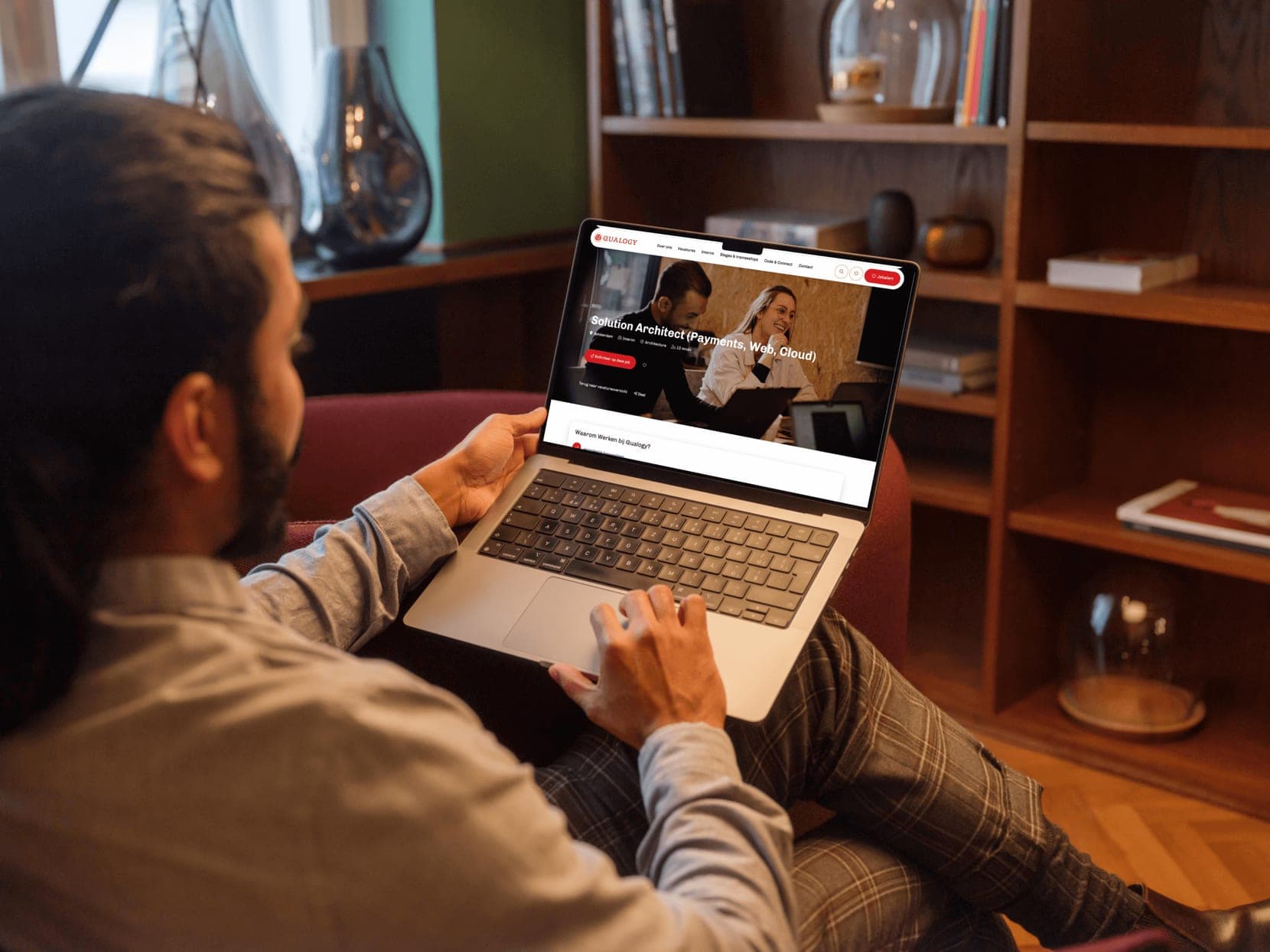
We worked out the design in Figma. The careers site features stories from employees about working at Qualogy. The corporate site has a case overview. Two different stories, but with the same colours, type and components. So on both sites you immediately recognise the same company.
The corporate site mainly shows experience, with cases and proof. The careers site shows the people. That distinction isn't in a different brand, but in what you put on the page. My rule of thumb: if a visitor clicks from one site to the other and barely notices, you've done it right.
Analytics on both sites also run through Google Tag Manager. As a result, Qualogy sees what visitors do in one consistent way, whether they are clients or candidates.
What did the new corporate identity deliver?
The application process has become shorter for candidates and recruiters. Applicants follow one fixed route, and HR manages candidates in the same system they come in through. Marketing manages the corporate site themselves and stays within the agreed style. Both platforms recognisably show the same brand.
What I learned from this myself: one brand doesn't mean one system. It means one set of agreements. For another example of a brand we have supported online for years, read the case on Toppers in Concert. Want to know first what a new site costs? See the cost of a website.
Do you address clients and talent with the same site, and does it chafe? Show me where it rubs, and we'll look at the set-up together.
Book an intro callUpdated
Get in touch with us directly. We'll get back to you as soon as we can


 Your message goes straight to our team in Amsterdam.
Who built the Qualogy website?
Your Tech Club. We did the UI/UX design, built the design system, developed the corporate website in WordPress and set up the careers platform in GetNoticed.
What technology does the Qualogy website run on?
The corporate site runs on WordPress with PHP, HTML and CSS. The careers platform runs on GetNoticed. The design was worked out in Figma and analytics run through Google Tag Manager.
Why a separate platform for careers?
Recruitment needs different functions from a corporate site: vacancy management, an application flow and candidate follow-up. A system built for that does it better than a corporate CMS with plugins.
Can you modernise without losing your brand identity?
Yes, if you distinguish what has to stay from what can change. At Qualogy, the core values and the professional look stayed leading. Visual design, interaction and tone of voice were refreshed.
What did Your Tech Club build for Qualogy?
Two platforms with one design language: a corporate website for clients and a careers platform for applicants, connected by a shared design system.