


RUMAG e-commerce: an online store that can handle Black Friday
RUMAG has more than a million followers on Instagram. This is how we moved RUMAG e-commerce to Shopify, ready for the Black Friday rush.
RUMAG has more than a million followers on Instagram. That is great for reach, but tricky for an online store. During a campaign like Black Friday, that audience arrives all at once. The old WooCommerce environment couldn't cope, so we moved RUMAG e-commerce to Shopify.
We were one of RUMAG's first technical partners when it moved into online sales. That makes this a personal project for me. Below you can read what had to change, why we chose Shopify and what it delivered.
The project in brief
- Client
- RUMAG.
- Sector
- media and merchandise, e-commerce.
- What we did
- UI/UX design, e-commerce development, hosting optimisation, the migration from WooCommerce to Shopify and the blog environment.
- Technology
- design in Figma, Shopify, integrations with Facebook and Instagram, measurement via Google Tag Manager.
What was the challenge for RUMAG e-commerce?
Handling traffic that arrives in brief bursts. A community of more than a million followers doesn't buy evenly spread across the week. When a campaign runs, everyone comes at once. Black Friday is the clearest example. On top of that, management had to become simpler for the RUMAG team itself.
Most online stores have a busy month. RUMAG has busy minutes. A post goes live, and a few minutes later a large part of that audience is in the store. That calls for something different from a store that grows steadily.
On the old environment, that meant the same ritual every time. Scale up the servers beforehand, hope it was enough, then scale back down. That costs money and nerves, and it goes wrong on exactly the day you can't afford it.
Why did we choose Shopify and not WooCommerce?
Because the bottleneck was infrastructure, not functionality. Shopify scales the hosting with the peaks. A self-hosted WooCommerce environment has to be set up and paid for in advance for the busiest day of the year. For a brand with peaks like these, that is expensive dead weight on every other day.
I'm not saying WooCommerce is bad. For many stores it works fine. But when your audience arrives in waves, you don't want to be dealing with servers. You want the platform to handle that for you, so you can focus on the campaign.
That said, Shopify isn't always the final destination either. Sometimes a headless set-up fits better, for example when you really want to run content and store separately. I wrote about that earlier in when a headless online store makes sense. For RUMAG, that wasn't needed at the time.
Do you also have a large audience that wants to buy all at once? We build Shopify stores that scale with your busiest moment.
See our Shopify store developmentHow did we build the new online store?

On Shopify, with a custom design from Figma. We migrated the store while keeping the products, customer data and URL structure. We also connected the store to Facebook and Instagram, and set up measurement through Google Tag Manager. We reviewed the hosting as well. We also built the blog environment.
A migration without gaps
Keeping the URL structure sounds technical, but it is simply sensible. It preserves the search visibility RUMAG had built up. A customer with an old link still lands on the right page.
Integrations with Facebook and Instagram
For a brand that is big on social media, those integrations are not an extra. That is exactly where most buyers' journey begins. With Google Tag Manager, you can also measure what each campaign delivers.
What does the design look like?
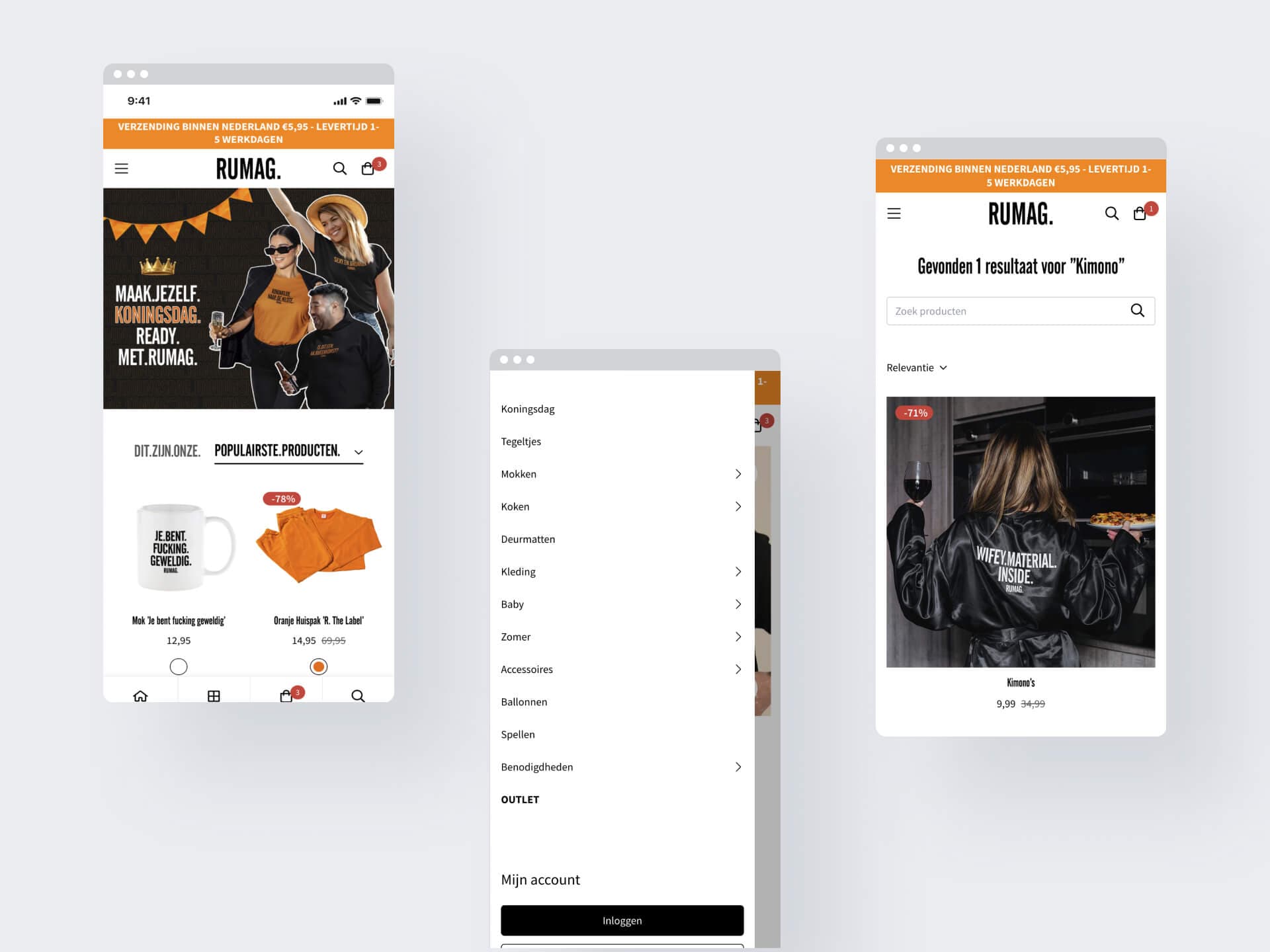
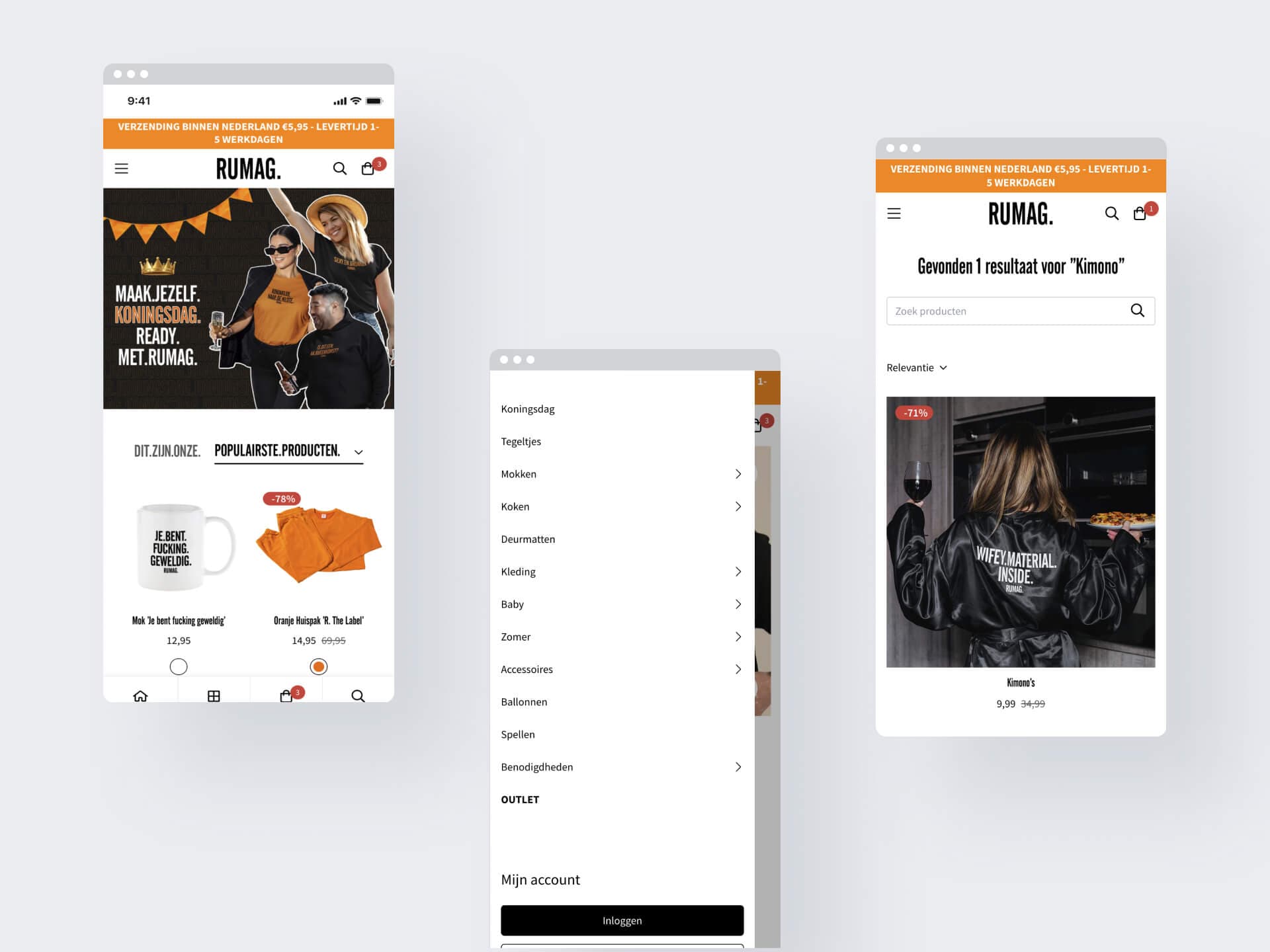
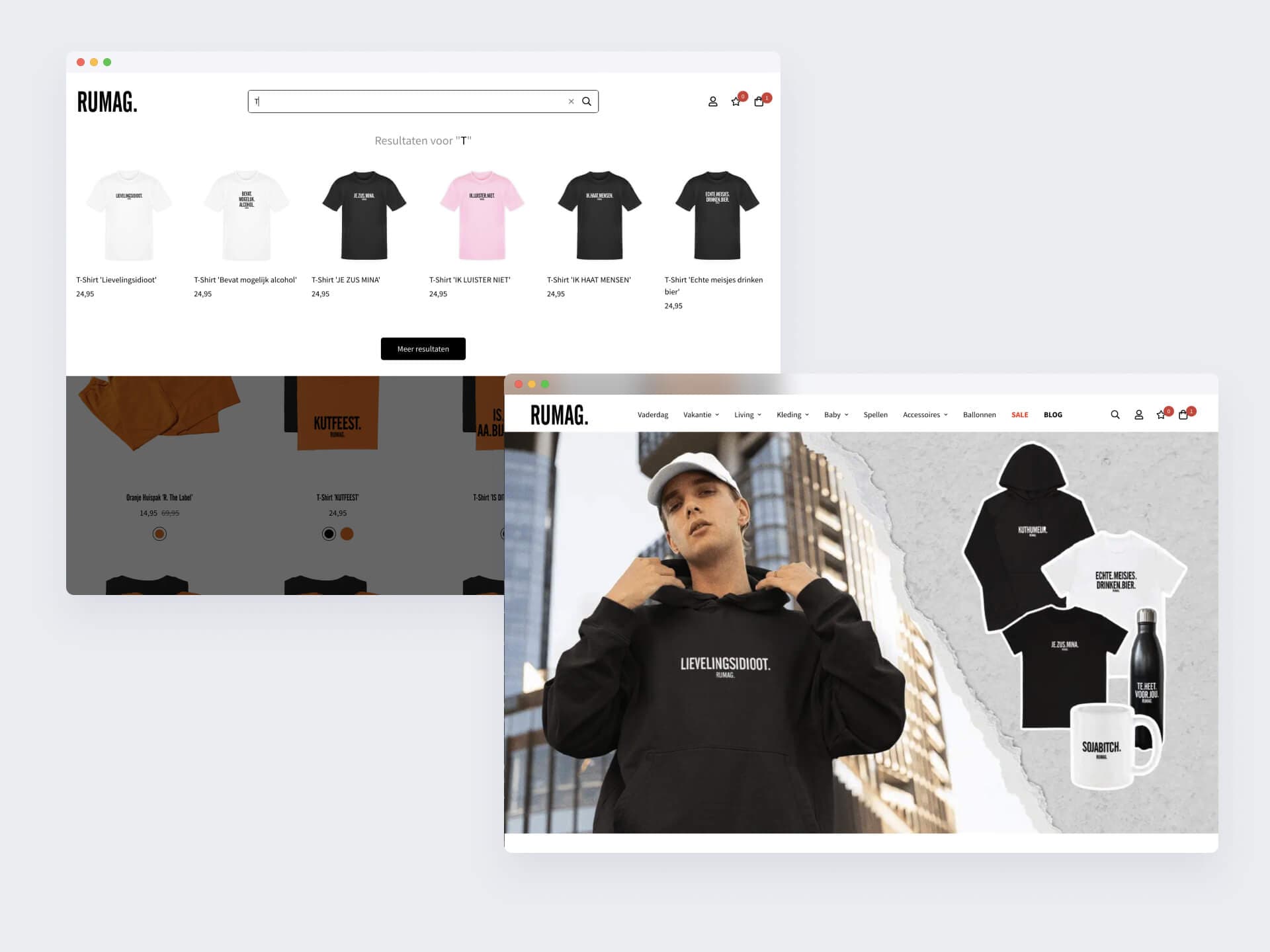
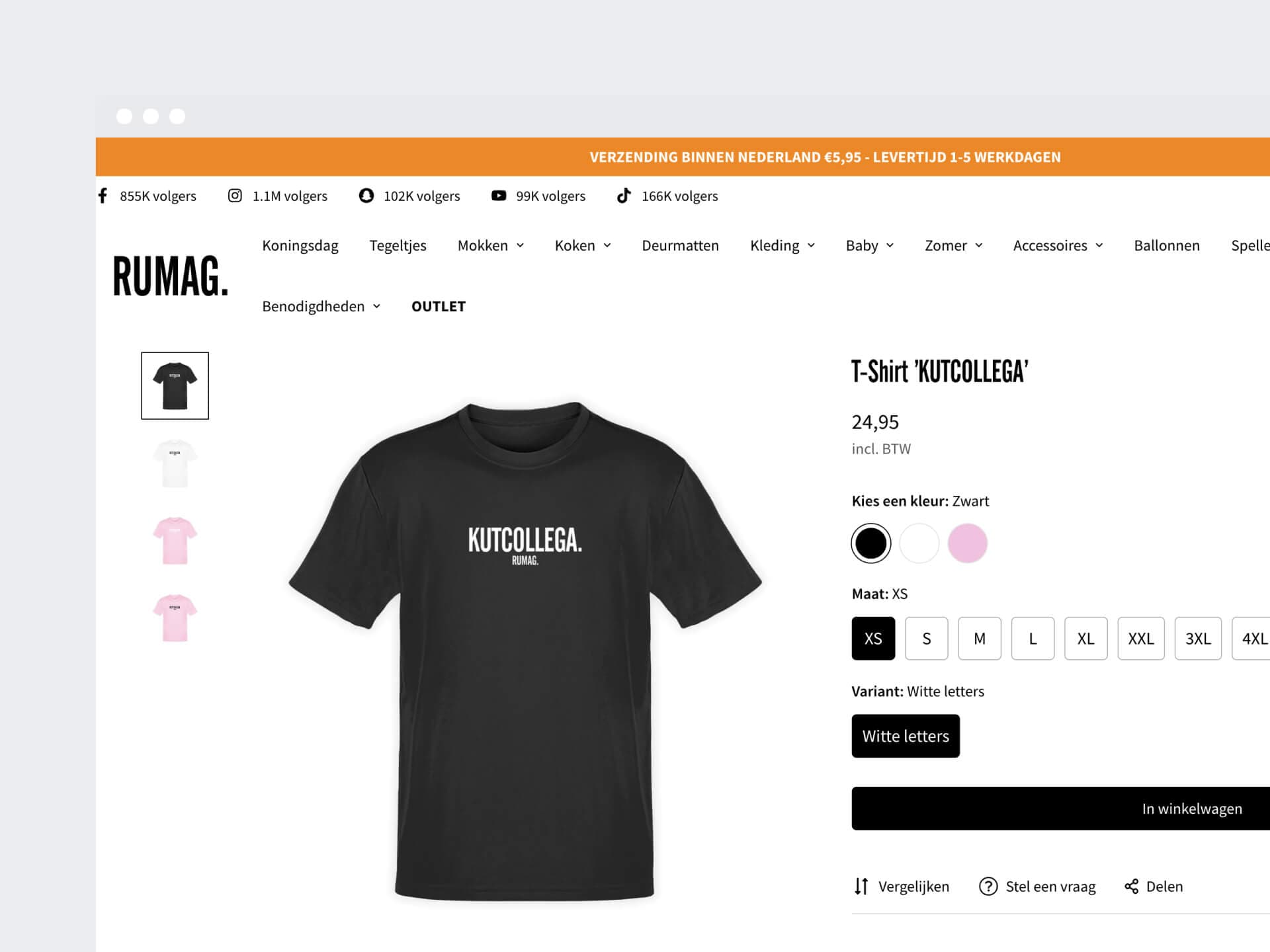
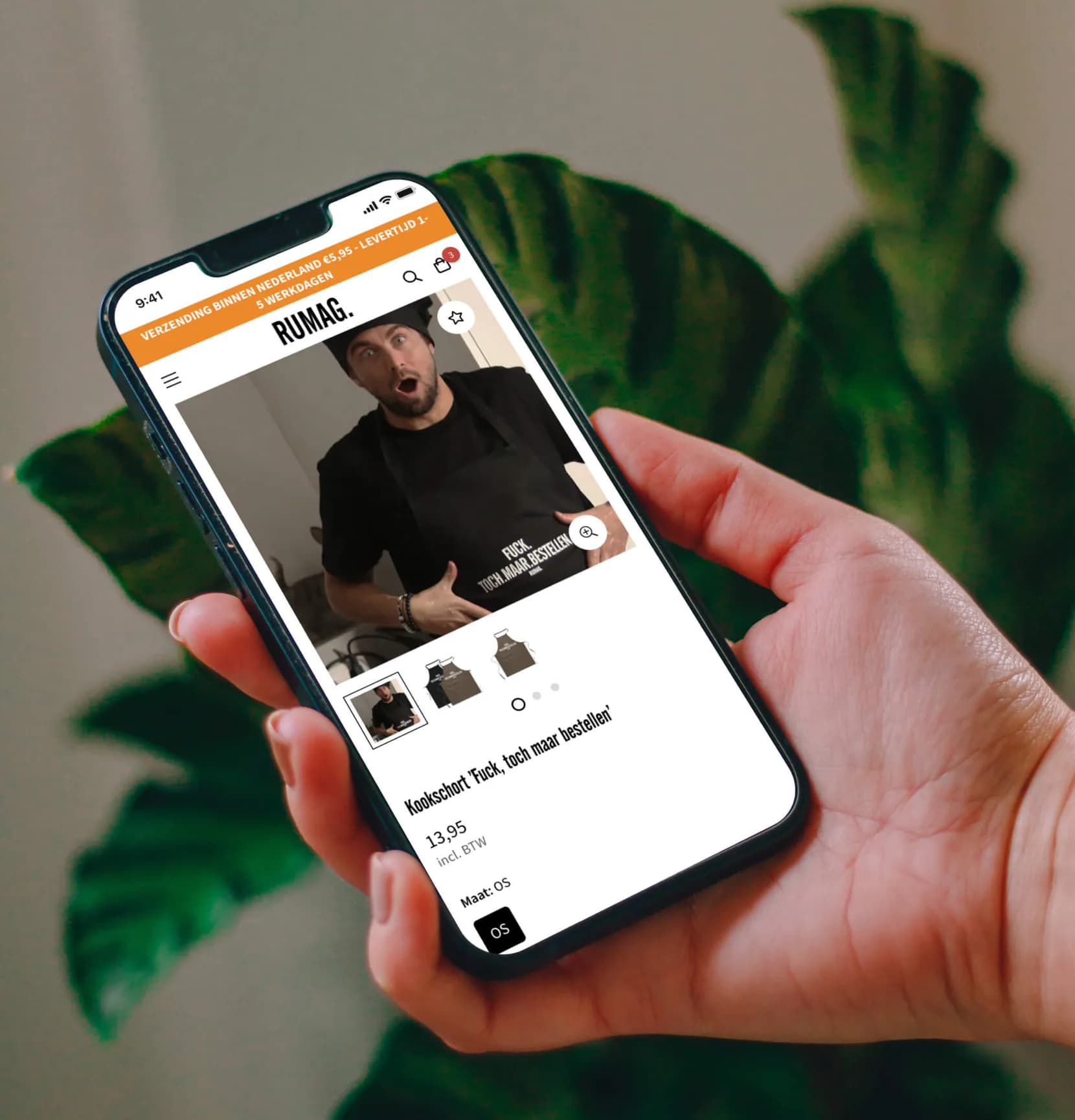
The design is custom-made around RUMAG's direct style, in the brand colours black and white. The interface is deliberately kept simple: a recognisable brand, a short path to the product. On a product page you choose colour and size, see the price and click Add to cart. Nothing more is needed.
I think that is a good choice for a brand like RUMAG. The audience arrives via a post and wants to get to that one shirt quickly. On Black Friday, every extra click is a customer who drops off. On a phone, too, the category menu is short and clear.
What did the move deliver for RUMAG e-commerce?
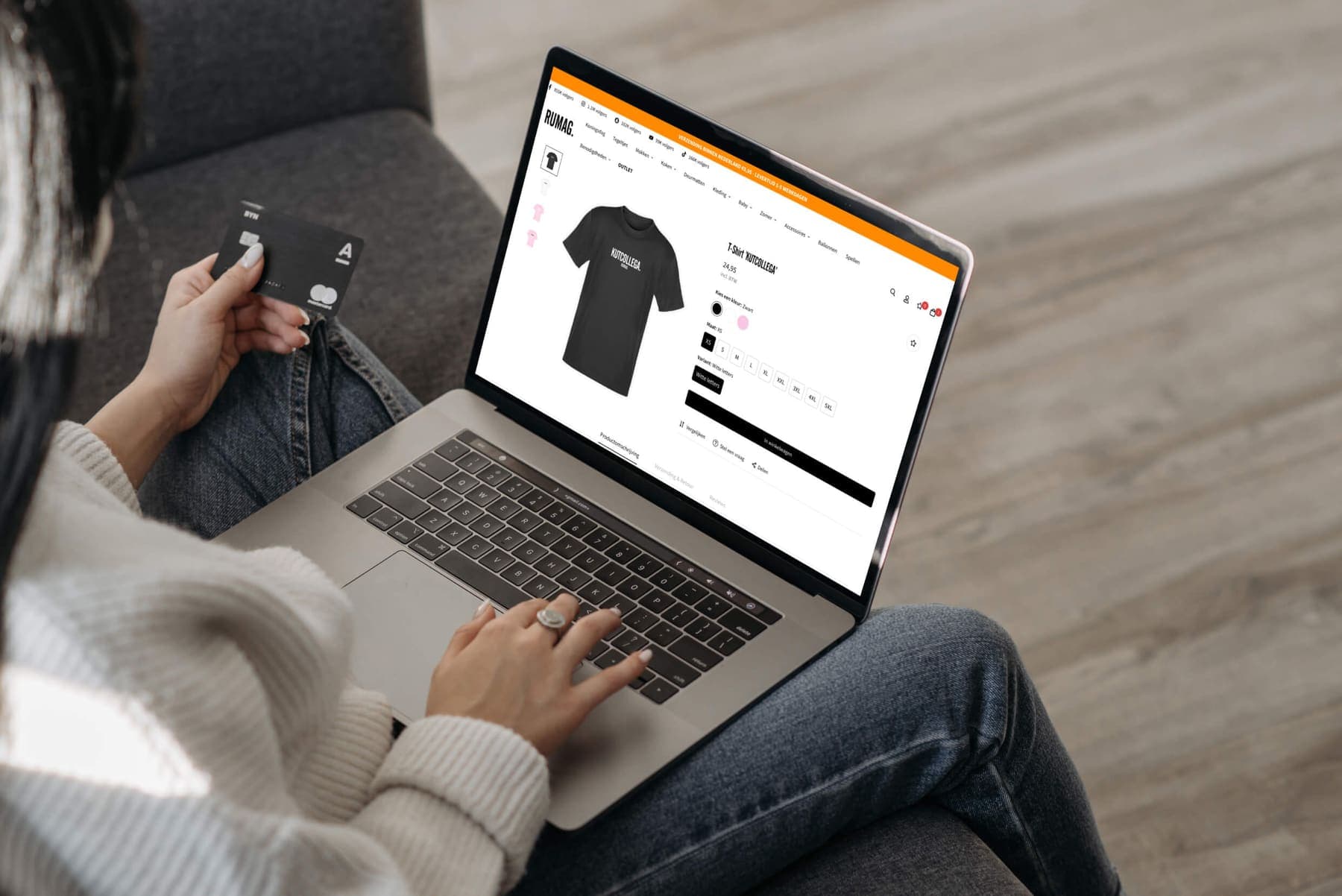
The team manages the online store without a developer. A campaign day like Black Friday no longer needs extra server set-up in advance. The store scales with demand, while RUMAG focuses on the campaign itself. The blog environment we built is also running, and the integrations with Facebook and Instagram are live.
What I took from it
What I learned from it myself: for a brand with an audience like this, your online store is an extension of your socials. So treat it that way. You can read a similar story in the case about the Shopify Plus online store for Kosso Nutrition. And if you want to know what a switch like this costs, take a look at the cost of having an online store built.
Want to know whether your online store can handle the next peak? I'm happy to look at your platform and your busiest moment with you.
Book an intro callUpdated

Get in touch with us directly. We'll get back to you as soon as we can


 Your message goes straight to our team in Amsterdam.
Who built the RUMAG online store?
Your Tech Club. We did the UI/UX design, carried out the migration from WooCommerce to Shopify and took care of the hosting optimisation and the integrations with Facebook and Instagram.
What technology does the RUMAG online store run on?
Shopify, with the design worked out in Figma. Shopify takes care of the infrastructure, so campaign peaks don't need their own server set-up. Measurement runs through Google Tag Manager.
Why migrate from WooCommerce to Shopify?
If peak load is the problem, Shopify moves the infrastructure to the platform. You no longer have to scale servers in advance for your busiest day, and management becomes simpler for a team without a developer.
Is data lost when migrating to Shopify?
No, provided the migration is set up for it. At RUMAG, products, customer data and the URL structure all moved across, so the search visibility that had been built up is not lost.