

Spectre: an AI platform for reality TV
Together with Signal.Stream we built Spectre: an AI platform that finds the moments that make the story in the footage of a reality production.
Deliverables
- AI engineering
- Platform design and architecture
- Video and audio processing at scale
- UX/UI design
- Website design and development
Tech stack
- Proprietary model (SPECTRE LLM)
- Next.js (website)
A reality production generates thousands of hours of video and audio. Somewhere in there are the moments that make a season: a confession, a break-up, one conversation that changes everything. They happen once, and someone has to find them again. Spectre helps with that. Your Tech Club built the platform together with Signal.Stream, which makes content for television and streaming.
What needed to get better?
Searching takes days. Story teams watch hours of dailies to find the scenes editors build around. General-purpose AI models barely help. They are trained on books, code and the internet, not on television, and they return words rather than a moment. They don't know what a confessional sounds like, they lose the thread when six people talk over each other, and they don't know the rules of a format.
On top of that, unreleased footage is sensitive. You don't put footage from a season that has yet to air into a public AI tool.
Two sides that needed each other
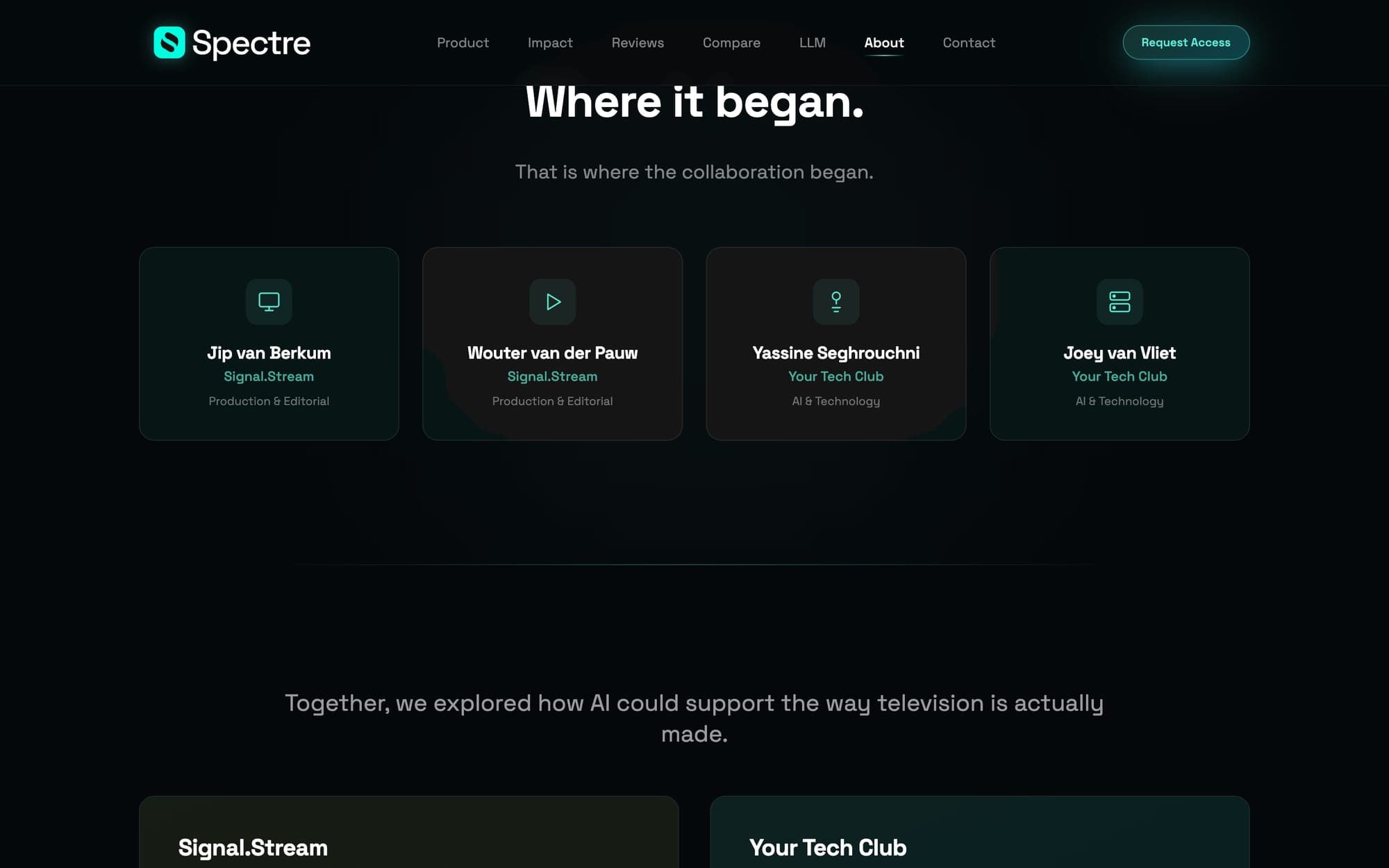
Production know-how without technology would have stayed an idea. Technology without production context would have solved the wrong problem. Signal.Stream brought years of experience in television production, knowledge of editorial workflows and access to real productions. Your Tech Club brought the AI engineering, the design and architecture of the platform, and the engineering to process large volumes of material.
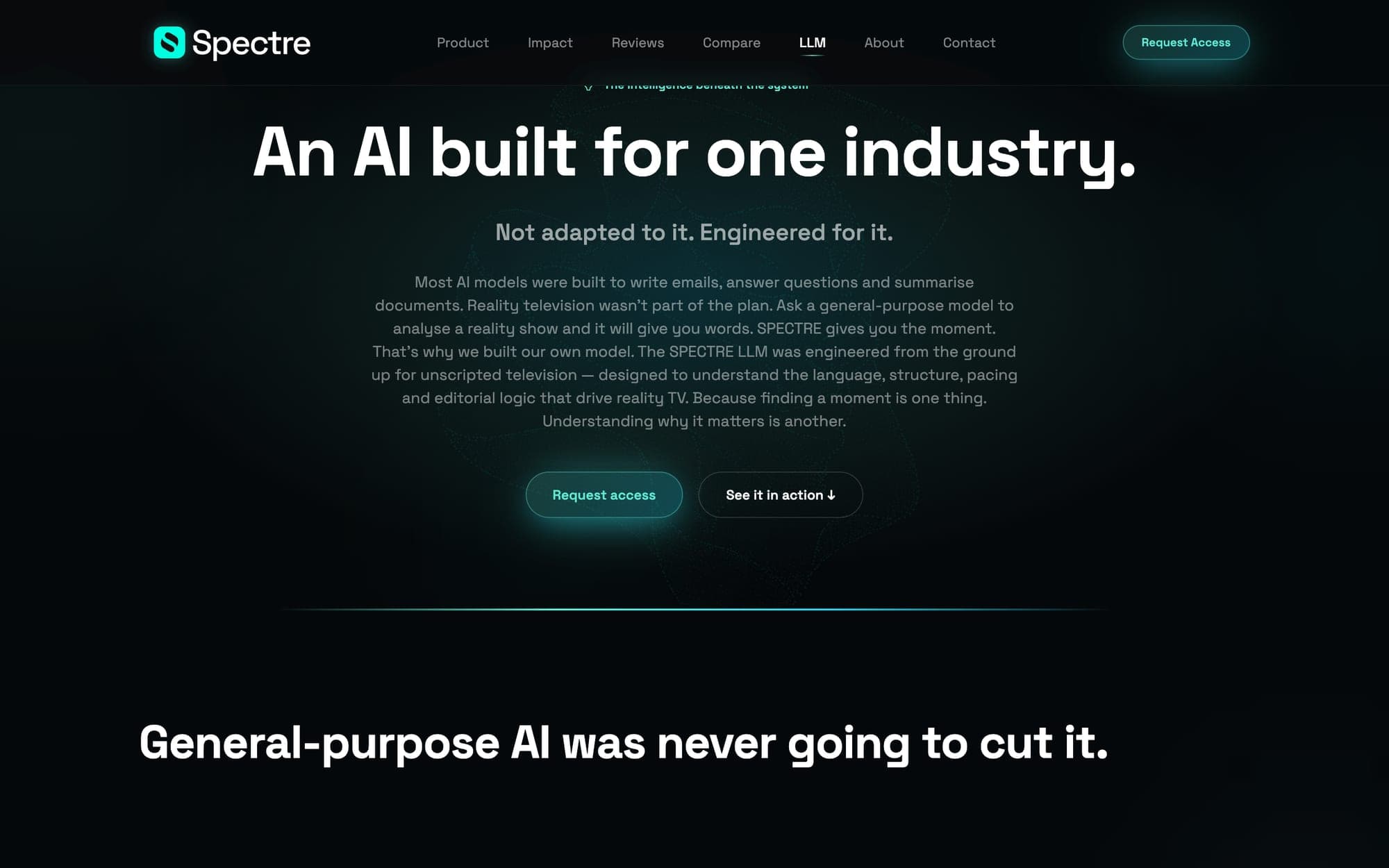
That led to the most important decision: not to adapt a general-purpose model, but to build a system for one industry. Spectre learns the cast, the format and the show bible of a production, and looks for what matters to that particular story.
How we approached it
Spectre was shaped from the start together with editors, story producers, showrunners and production teams. Their feedback decided not only what the technology could do, but also what it had to do. Every feature is designed around a problem they run into every day, with real productions as the test.
What did we build?
A platform that turns raw video and audio into a story a team can work with. It runs on a proprietary model built for unscripted television.
Scenes, emotions and conversations
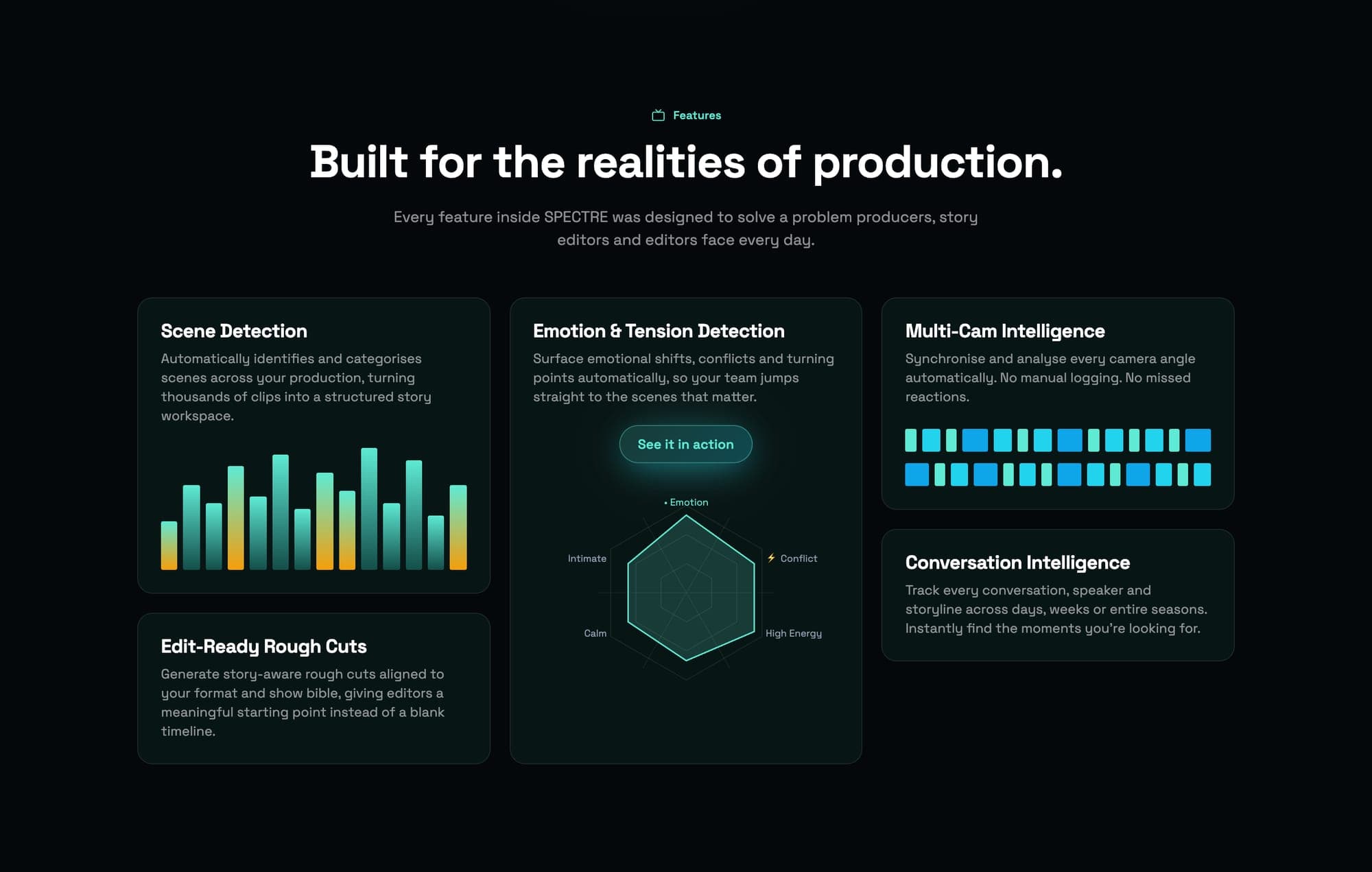
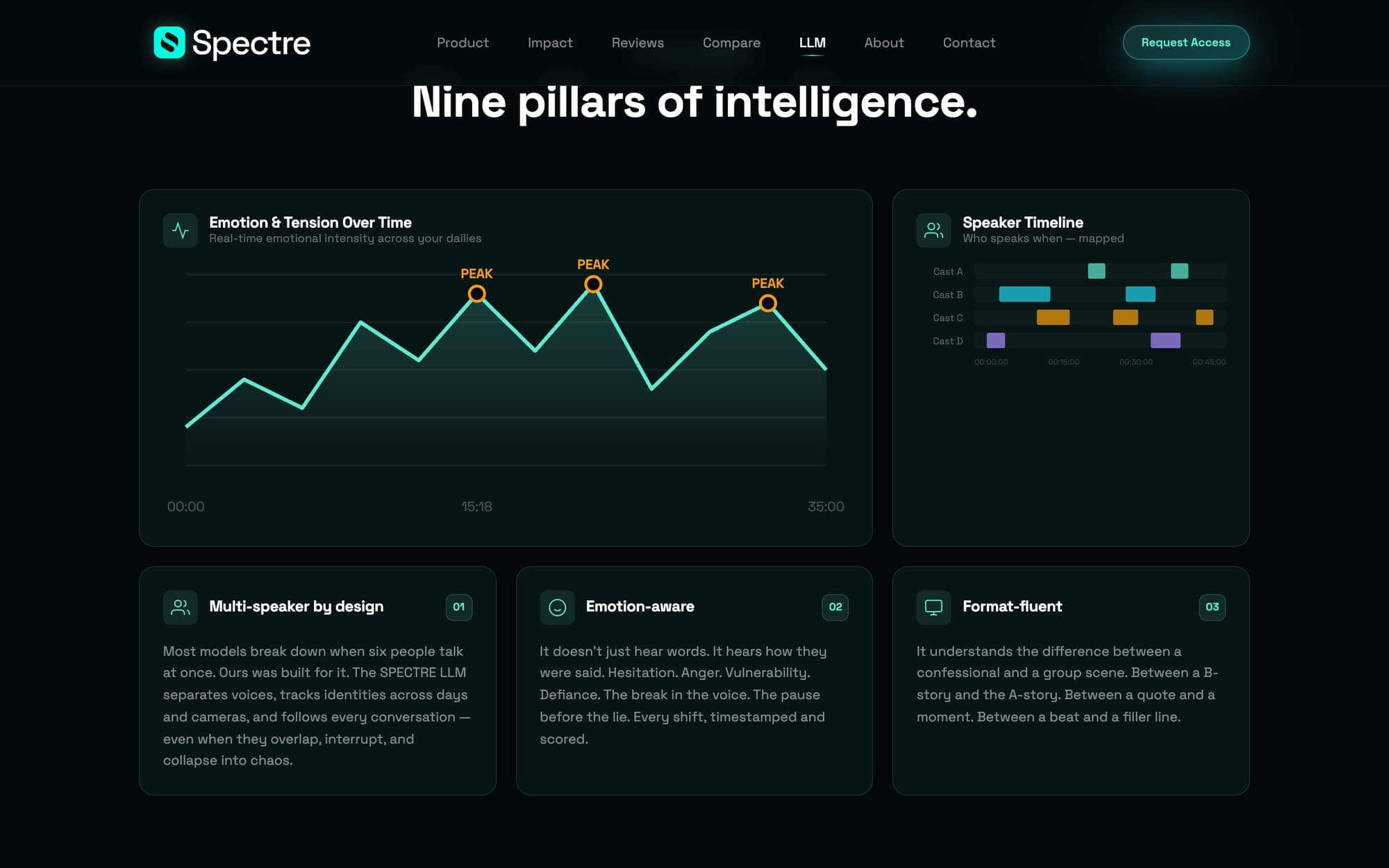
Spectre detects and organises scenes across every camera angle and shooting day, flags emotional turning points, conflict and tension, and maps who said what to whom. Alliances and conflicts become visible, without spreadsheets or relying on memory.
Built for multiple speakers
Where a general-purpose model gives up when six people talk at once, Spectre separates the voices and follows speakers across days and cameras. Every moment comes with the exact second it happened, so an editor lands on the right spot in the timeline straight away.
An assistant for the story team
Daily summaries of what happened and what matters, and an AI Spotter trained on the production's show bible and format. Spectre understands Dutch and the main European languages, for productions that aren't made in English only.
Footage stays with the production
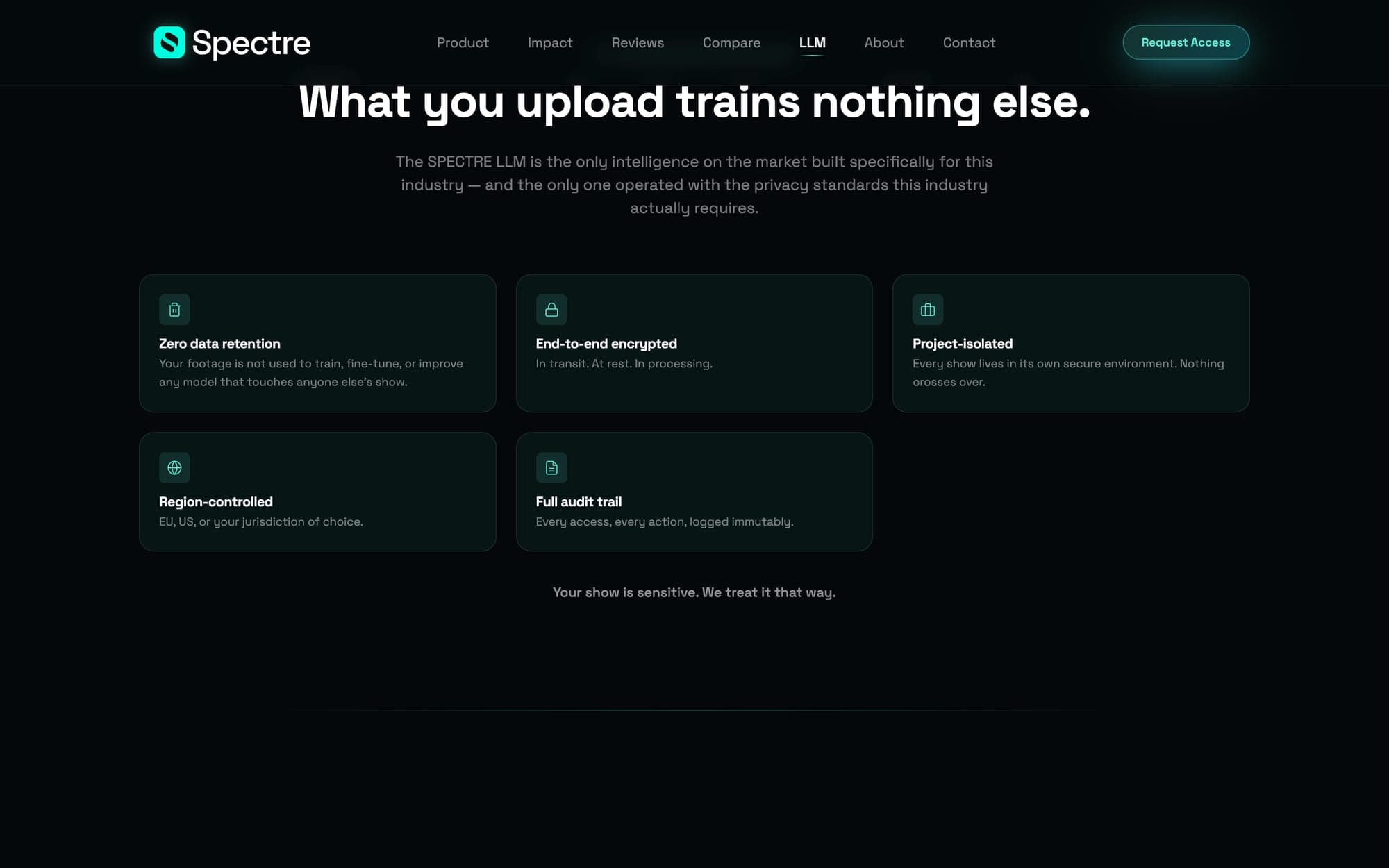
Every production runs in its own isolated environment. Material is not used to train models for other productions, it is encrypted in transit, at rest and during processing, and every access and action is logged. A production company chooses the region where its data is stored, and Spectre can run in a private cloud, on-premise or on infrastructure the production manages itself.
The website
Spectre's website was also designed and built by Your Tech Club, in Next.js. Production teams request access there under NDA; new places open in rounds.
Where does it stand now?
Scene detection, conversation intelligence, emotion and tension detection, daily reports and the AI Spotter are live. The next step is on the roadmap: rough cuts ready for the edit, direct export to Premiere Pro and DaVinci Resolve, and timelines organised by storyline.
Spectre doesn't replace an editor's instinct. It takes the searching away, so a team can spend its time on the story.

Get in touch with us directly. We'll get back to you as soon as we can


 Your message goes straight to our team in Amsterdam.
Who built Spectre?
Spectre is a collaboration between Signal.Stream and Your Tech Club. Signal.Stream brought the knowledge of television production and editorial work. Your Tech Club did the AI engineering, the design and architecture of the platform, the processing of large volumes of video and audio, and the design and build of the website.
What does Spectre do?
Spectre searches the video and audio of a reality production for the moments that matter: emotional turning points, conflicts, conversations and the relationships between contestants, each with the exact second it happened. Scene detection, conversation intelligence, emotion and tension detection, daily reports and the AI Spotter are live.
Why a proprietary model and not a general-purpose AI model?
General-purpose models are trained on books, code and the internet. They return words, but they don't recognise a confessional, they lose track when several people talk over each other and they don't know the rules of a format. Spectre is built for unscripted television and learns the cast, the format and the show bible of a production.
What happens to a production's footage?
Every production runs in its own isolated environment. The material is not used to train models for other productions, it is encrypted in transit, at rest and during processing, and every access is logged. The production chooses the region where the data is stored, and Spectre can also run in a private cloud or on-premise.
Which languages does Spectre work in?
Dutch and the main European languages. Spectre is built for productions that aren't made in English only.
Does Spectre work with Premiere Pro or DaVinci Resolve?
Direct export to Premiere Pro and DaVinci Resolve timelines is on the roadmap for the next version, together with rough cuts ready for the edit.