

Data marketplace for corporate organisations
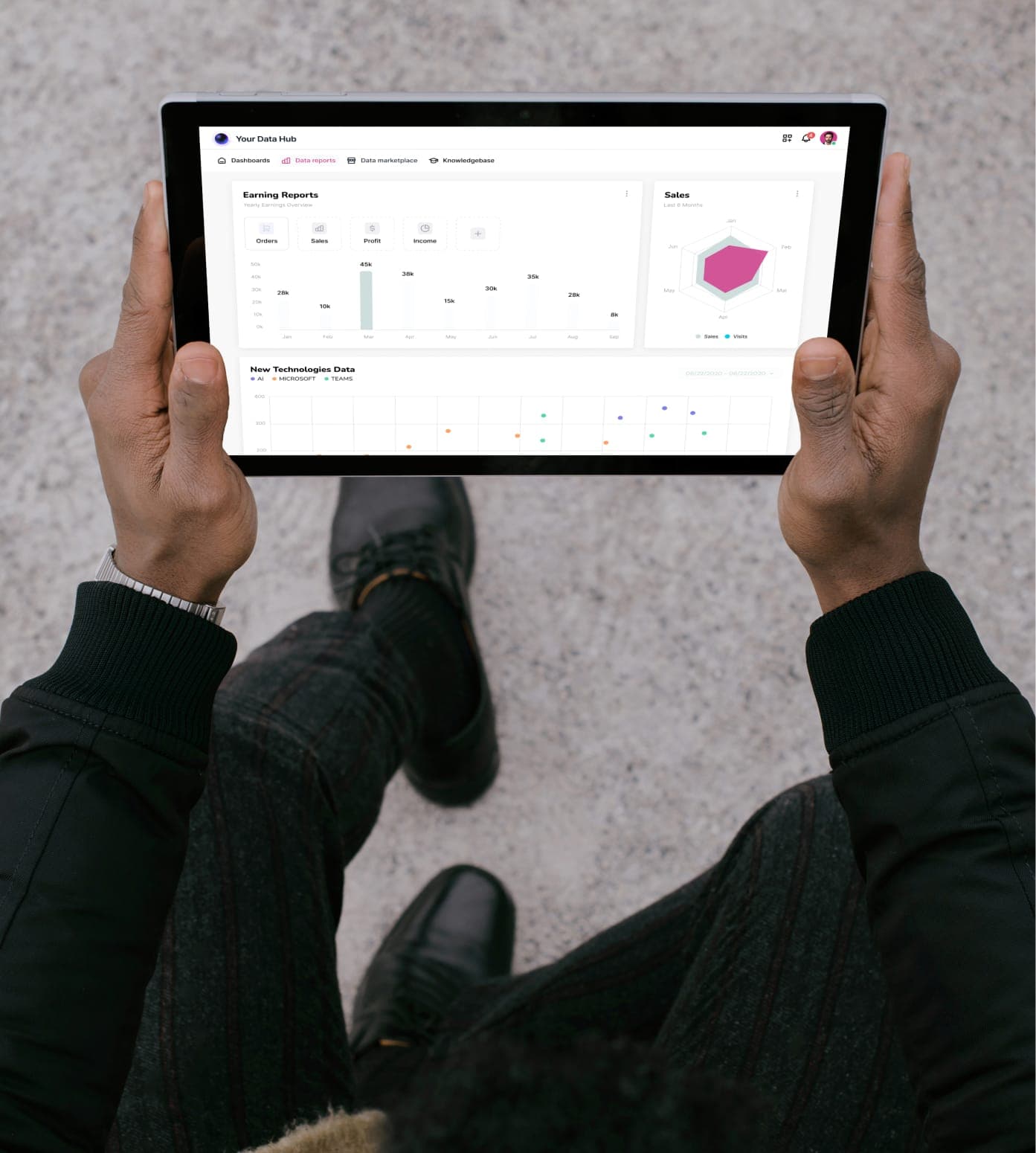
For corporate organisations, we built a white-label data marketplace: datasets findable in one place, with access through a fixed request route.
Deliverables
- Branding
- UX/UI design
- Web application development
- Website development
Tech stack
- Figma
- React
- .NET
Large organisations rarely have too little data. What's missing is a place where you can see what exists and who's allowed to use it. For that, Your Tech Club designed and built a white-label data marketplace: one entry point where datasets can be found and access can be requested.
What needed to improve?
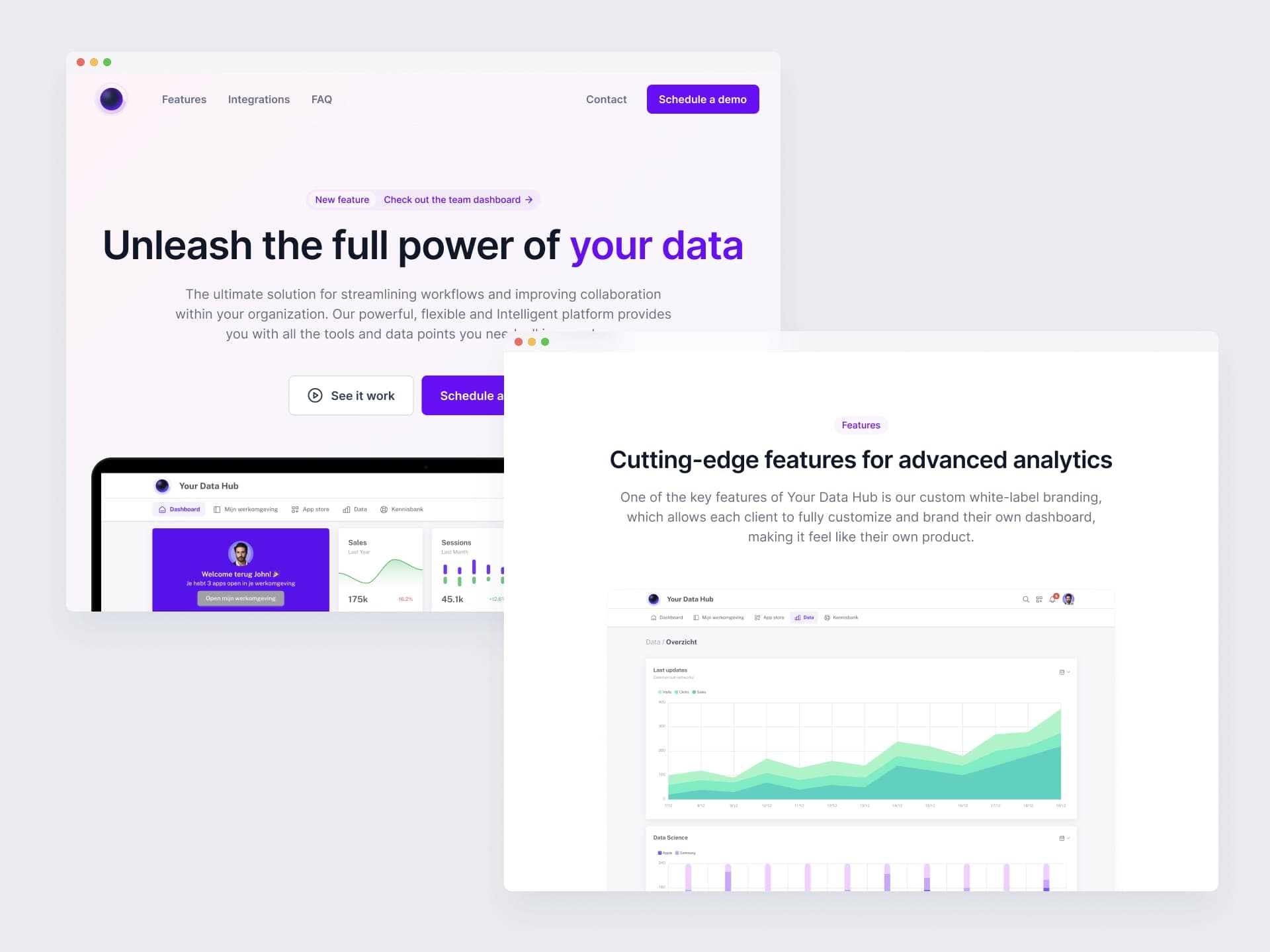
Information was spread across platforms and storage locations, with no shared index. Staff didn't know what existed, hunted for who had what, and redid work that had already been done elsewhere. Access ran through separate permissions per system, so no one had a central view of who could access what.
One entry point, not another system

The answer wasn't another place to store data, but one entry point above it all: an overview of what exists, with a fixed route to get access. Because the platform is white label, it runs under the name and brand identity of the organisation using it.
What did we build?
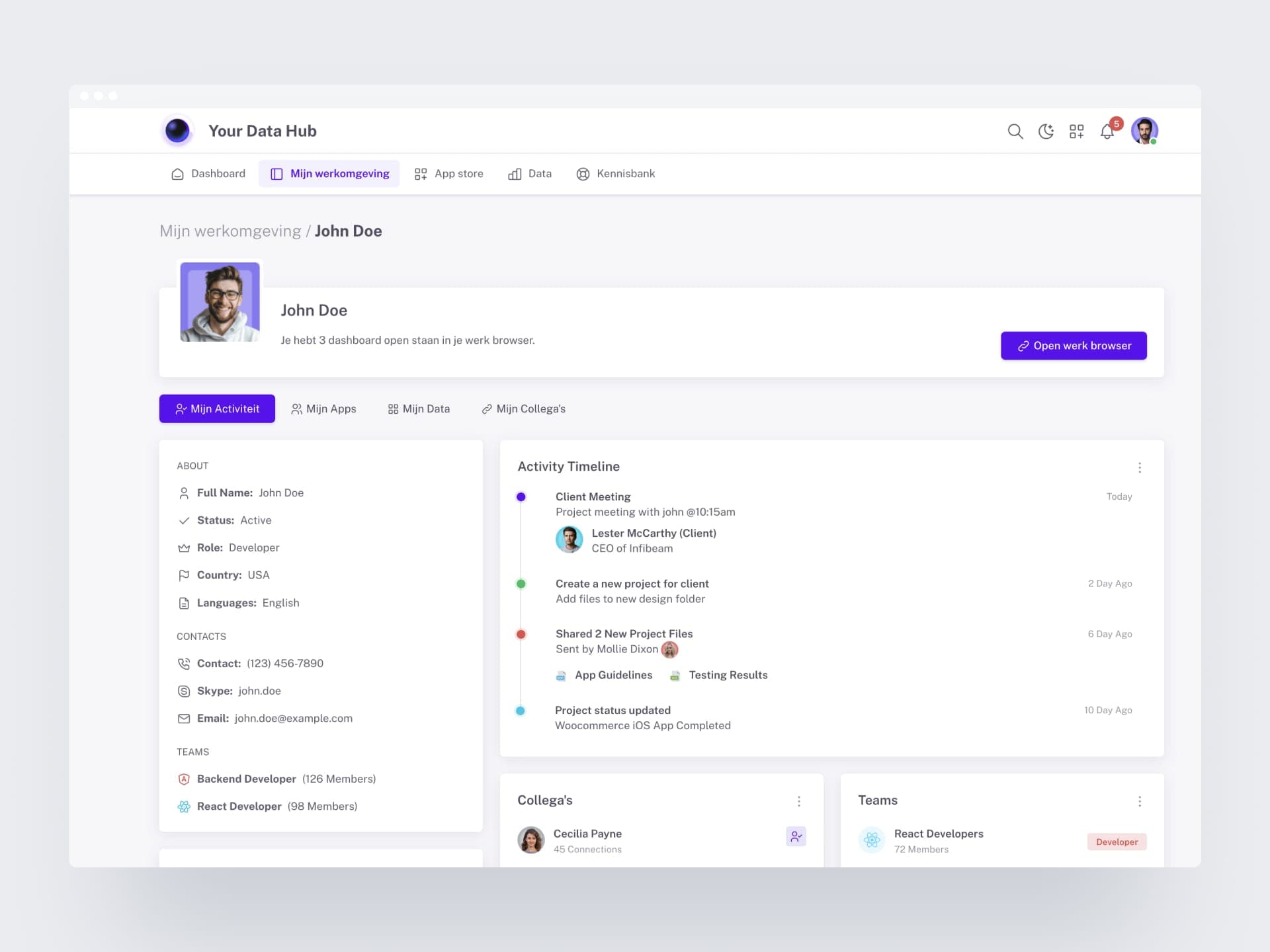
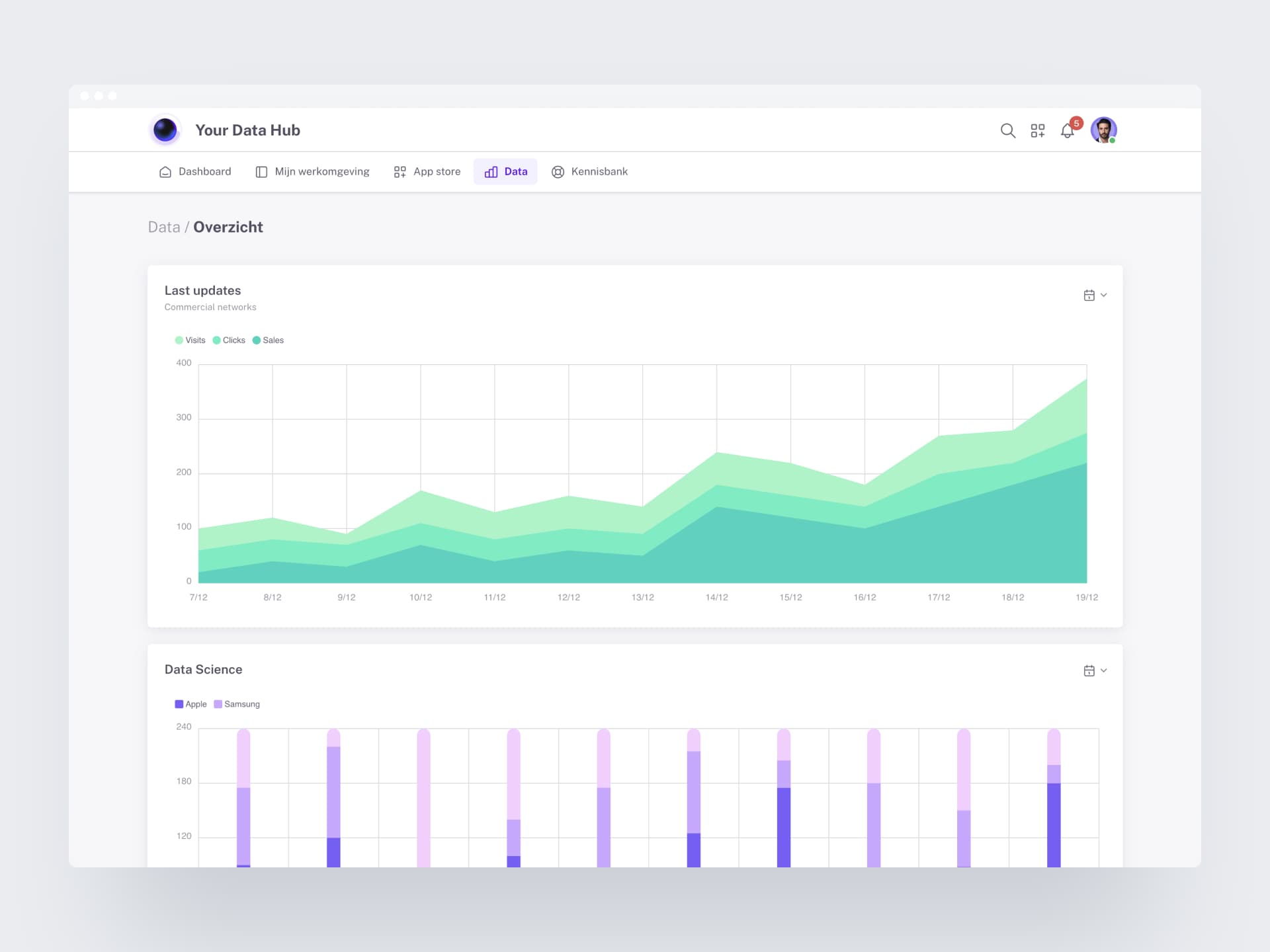
A secure environment where users see which datasets exist, request access and view data without leaving the environment. Each request goes through an approval step, so there's a record of who got access and why.
Designed on research
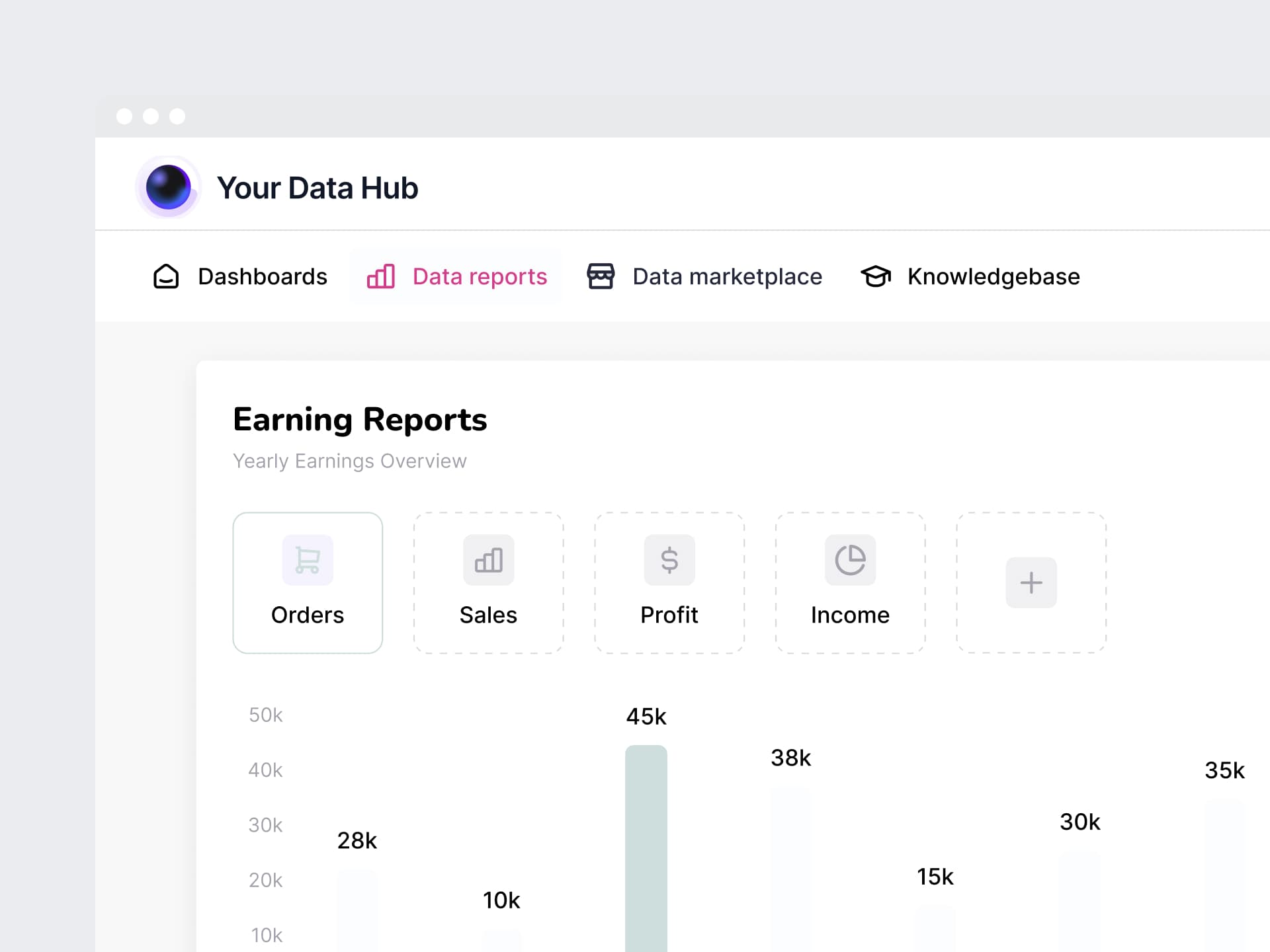
The request process is based on UX research and interviews with corporates, not on assumptions. That research decided which steps are really needed and which could go.
Built by twelve specialists
A React front end on a .NET back end, built by a team of twelve specialists. The focus was on security, scalability and connecting a wide range of data sources.

What has it achieved?
One place for indexing, access management and data visualisation. Who can access what is visible centrally instead of scattered across systems. That way, data that already existed becomes genuinely usable.

Get in touch with us directly. We'll get back to you as soon as we can


 Your message goes straight to our team in Amsterdam.
Who built this data marketplace?
Your Tech Club, with a team of twelve specialists. We did the branding, the UX/UI design and the development of both the web application and the accompanying website.
What did Your Tech Club build here?
A white-label SaaS platform where an organisation's datasets can be found, staff request access through a defined process, and data is viewed within the same environment.
What technology does the platform run on?
A React front end with a .NET back end, designed in Figma. The setup focuses on security, scalability and connecting a wide range of data sources.
What is a data marketplace?
An internal marketplace where an organisation's datasets can be found and staff request access to exactly what they need. Instead of hunting for who has something, you see what exists and request it through a defined process.
What does white label mean here?
The platform runs under the brand name and identity of the organisation using it. Users see their own environment, not a supplier's.
How is security handled?
Access runs through a request and approval process instead of separate permissions per system. That gives a central view of who can access what, and why.