

Headless CMS on Strapi and Next.js for ADC
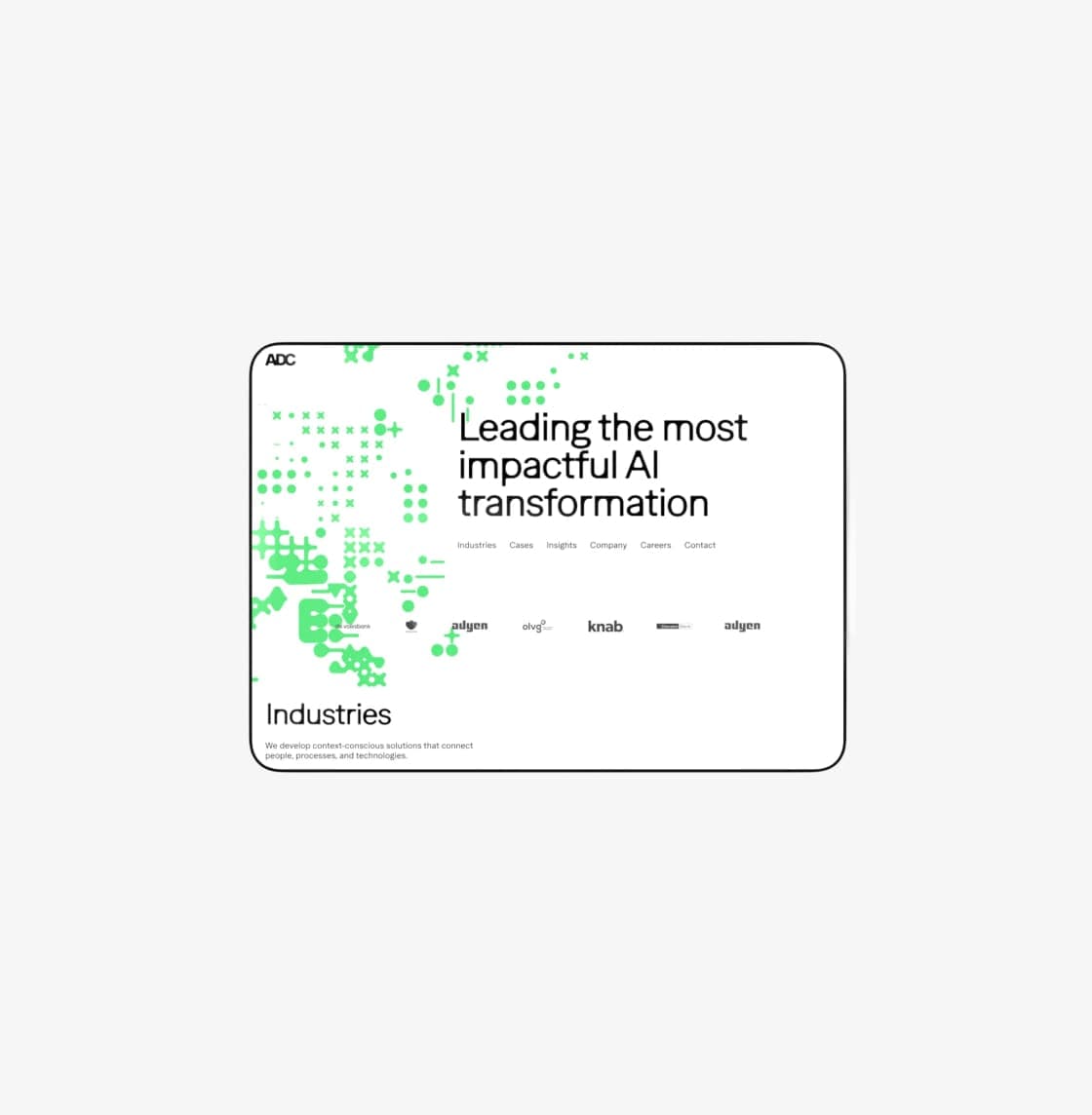
For data and AI consultancy ADC we built a headless platform: Strapi as the CMS, a Next.js front end and a content model for cases and insights.

Deliverables
- UI/UX design (in part)
- Custom web development
- Content modelling and migration
Tech stack
- Next.js, React, GSAP
- Strapi (open-source headless CMS)
- MySQL
- HubSpot, GA4
ADC is a European data and AI consultancy. Its credibility rests on proof, and that proof lives in content: cases, insights and sector knowledge. Your Tech Club designed and built the platform that content is published on.
What needed to get better?
The brief started as a redesign. The technical discovery showed that the bottleneck wasn't the design: the existing CMS setup was hitting its limits. The content structure didn't scale, performance was disappointing and maintenance got heavier every quarter.
Why a redesign became a new platform
A new design on the same foundation wouldn't have fixed those issues. And for a consultancy that grows on authority, that's no detail: every week that publishing a new insight is a struggle is a week in which the proof doesn't grow. So rather than building further on the old foundation, we put a headless setup in place: Strapi manages the content, a Next.js front end displays it.
Why Strapi
Strapi is open source. That means ADC keeps the content structure in its own hands, can host and extend the platform itself, and isn't tied to a single vendor.
What did we build?
A content model instead of separate pages
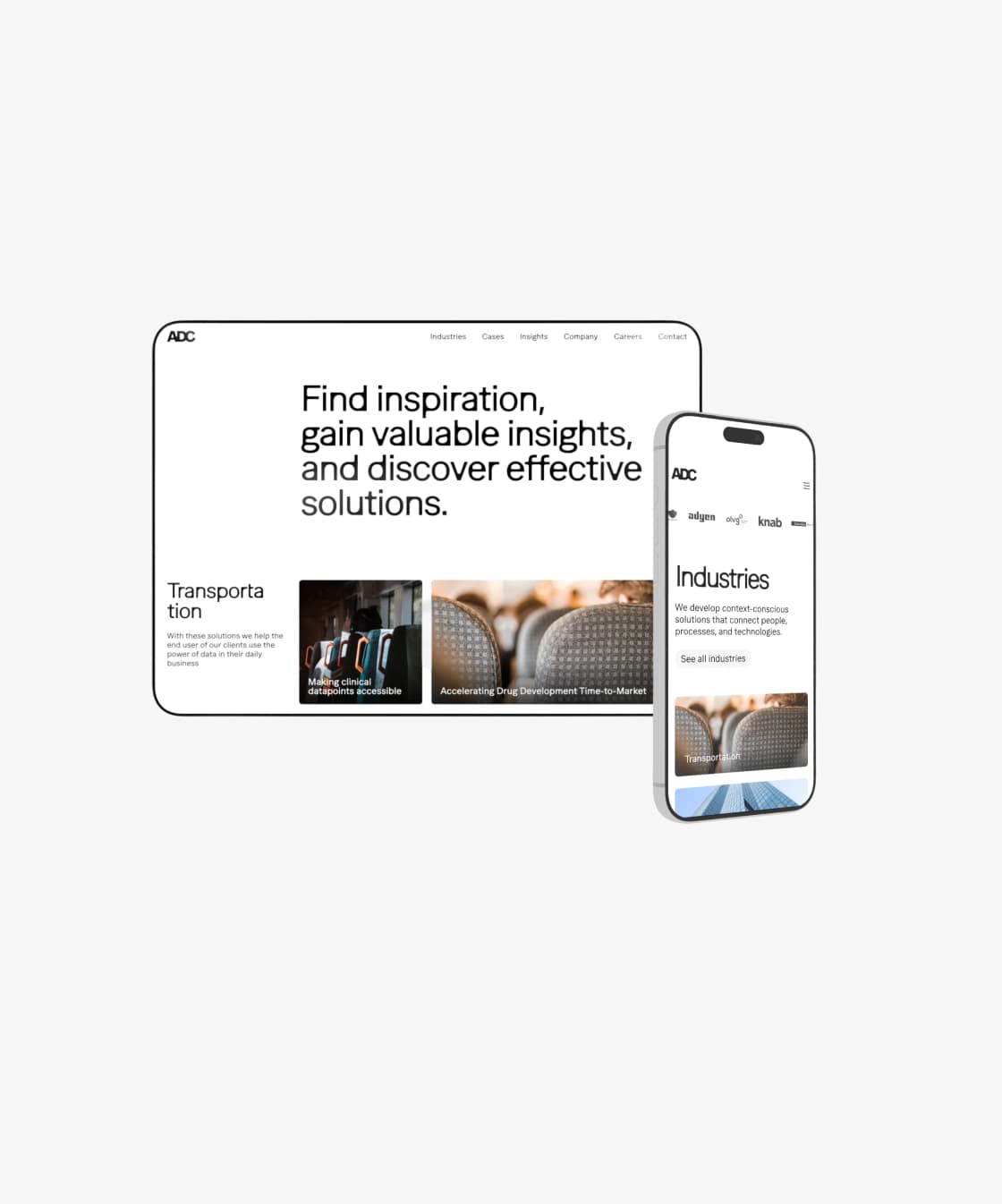
We designed relational content types: cases, insights, sector pages, news, events and campaigns with gated assets. Entries are linked to each other, so internal links and topic clusters follow from the structure instead of being manual work.
A rendering strategy per page
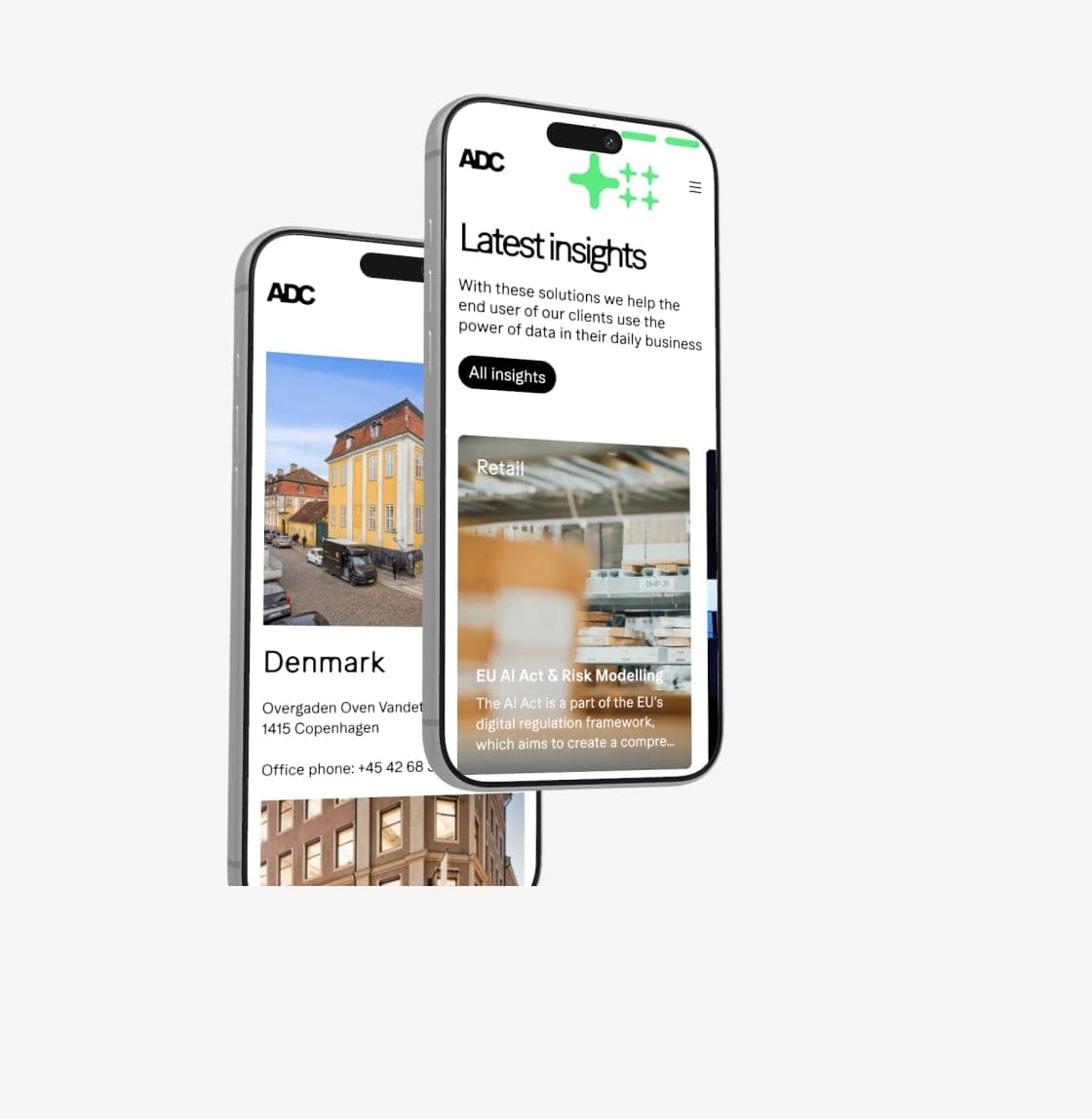
Static pages are pre-generated, dynamic pages are rendered server-side, with caching and optimised image delivery. Metadata fields, canonical control, a clean URL structure and a sitemap that updates itself are set up in Strapi.
Marketing keeps working
HubSpot was carried over into the new front end with forms, UTM tracking and lead routing, so existing workflows stayed intact. GA4 records clicks on calls to action, form submissions and navigation behaviour.
What can ADC do with it now?
Publishing a new case or insight means filling it in in Strapi rather than raising a development task. New content types and pages can be added without rebuilding the existing content.

Get in touch with us directly. We'll get back to you as soon as we can


 Your message goes straight to our team in Amsterdam.
Who made ADC's website?
Your Tech Club. We did part of the UI/UX design, modelled and migrated the content, and built the platform: Strapi as a headless CMS with a Next.js front end.
What did Your Tech Club build for ADC?
A headless content platform. The content lives in Strapi as relational content types, and visitors see a Next.js front end. HubSpot and GA4 were carried over, so the existing marketing workflows kept working.
What technology does ADC's website run on?
Next.js and React on the front end, with GSAP for animation, and Strapi with MySQL on the back end. HubSpot handles forms and lead routing, GA4 the analytics.
What exactly is a headless CMS?
A CMS that only manages content and makes it available through an API, without rendering the website itself. The front end is a separate system. That means you can use the same content across several channels and replace the front end without touching the content.
When is headless the right choice?
When you publish a lot of content, serve several channels or set high standards for performance and structure. For a ten-page site that rarely changes, a traditional CMS is cheaper and faster.
Why Strapi and not a commercial headless platform?
Strapi is open source, so there are no licence costs per user or per API call and no vendor lock-in. You can host it yourself, model the content types yourself and set up role-based access rights.