

Custom brand website for Lavish: cocktails online without an online store
Lavish doesn't sell to consumers, but still wants to stand out online. How we built a custom brand website with Byte24 stock data and a stockist finder.
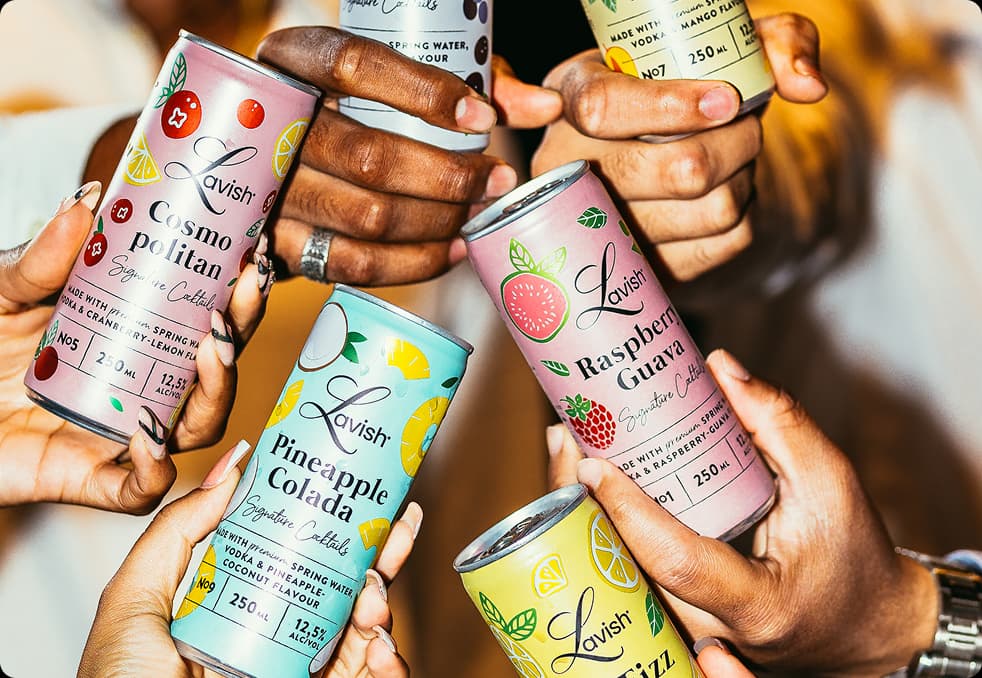
Lavish makes canned cocktails and doesn't sell directly to consumers. Even so, the brand needs to be as strong online as it is at a festival or behind the bar. So we built a custom brand website in three languages, with an ERP integration for stock per product and a separate route for business enquiries.
A brand site without a shopping cart is an interesting puzzle. You can't steer towards orders, so you have to work out what a visitor should do instead. Below you can read which choices we made and why.
The project in brief
- Client
- Lavish.
- Sector
- drinks, canned cocktails.
- What we did
- UX/UI design, custom web development, ERP integration and a multilingual site in Dutch, French and German.
- Technology
- custom website with an integration with Byte24, the ERP system.
What was the challenge for this custom brand website?
Building a brand experience without an online store. There was no up-to-date brand presence online, and business customers had no view of stock. There was also no structure for capturing enquiries. The old homepage mainly showed six cans among ice cubes and splashing water, under the headline 'The taste of magic'.
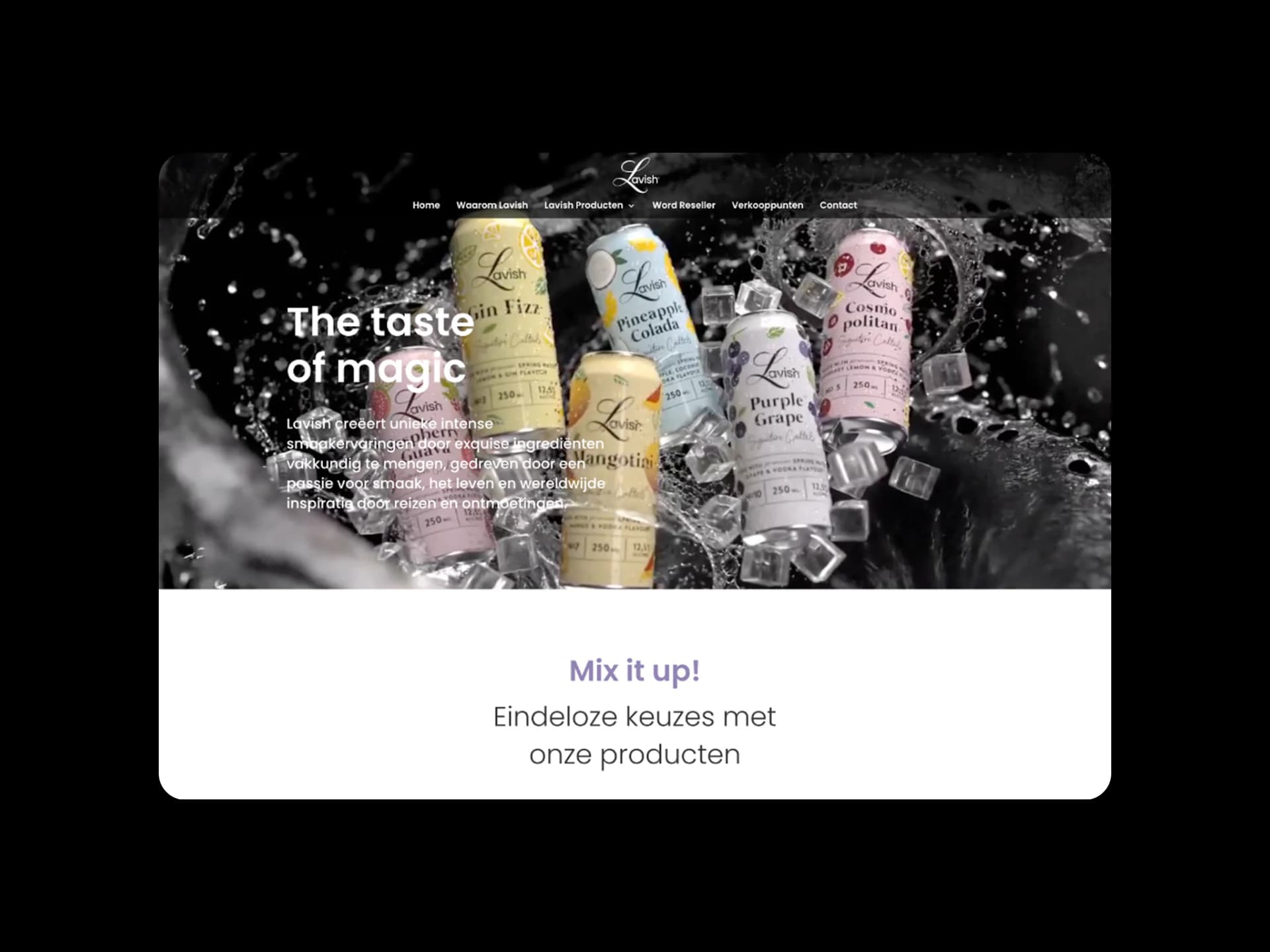
That image wasn't bad. But it said little about what Lavish is, where you can drink it or how a bar or restaurant starts working with the brand. A beautiful photo without a next step is a postcard. Nice to receive, but you don't do much with it.
The tricky thing about a brand that doesn't sell directly is that several audiences visit at once. Consumers want to experience the brand and know where to get it. Distributors, event organisers and hospitality businesses want product information and an easy way to get in touch.
How do we bring the brand online?
With imagery instead of product lists. Large images, videos of festivals and cocktail moments, micro-animations and subtle movement bring the world of Lavish to the screen. Every cocktail got its own page with its own visuals and a short story about taste and experience. That way, the site feels like the brand itself.
Take the Absinthe Strawberry Vanilla page. The can stands on a black background, with the flavour name as a large, repeated word graphic. There is no price and no order button. Just a clear flavour and a mood that suits a night out.
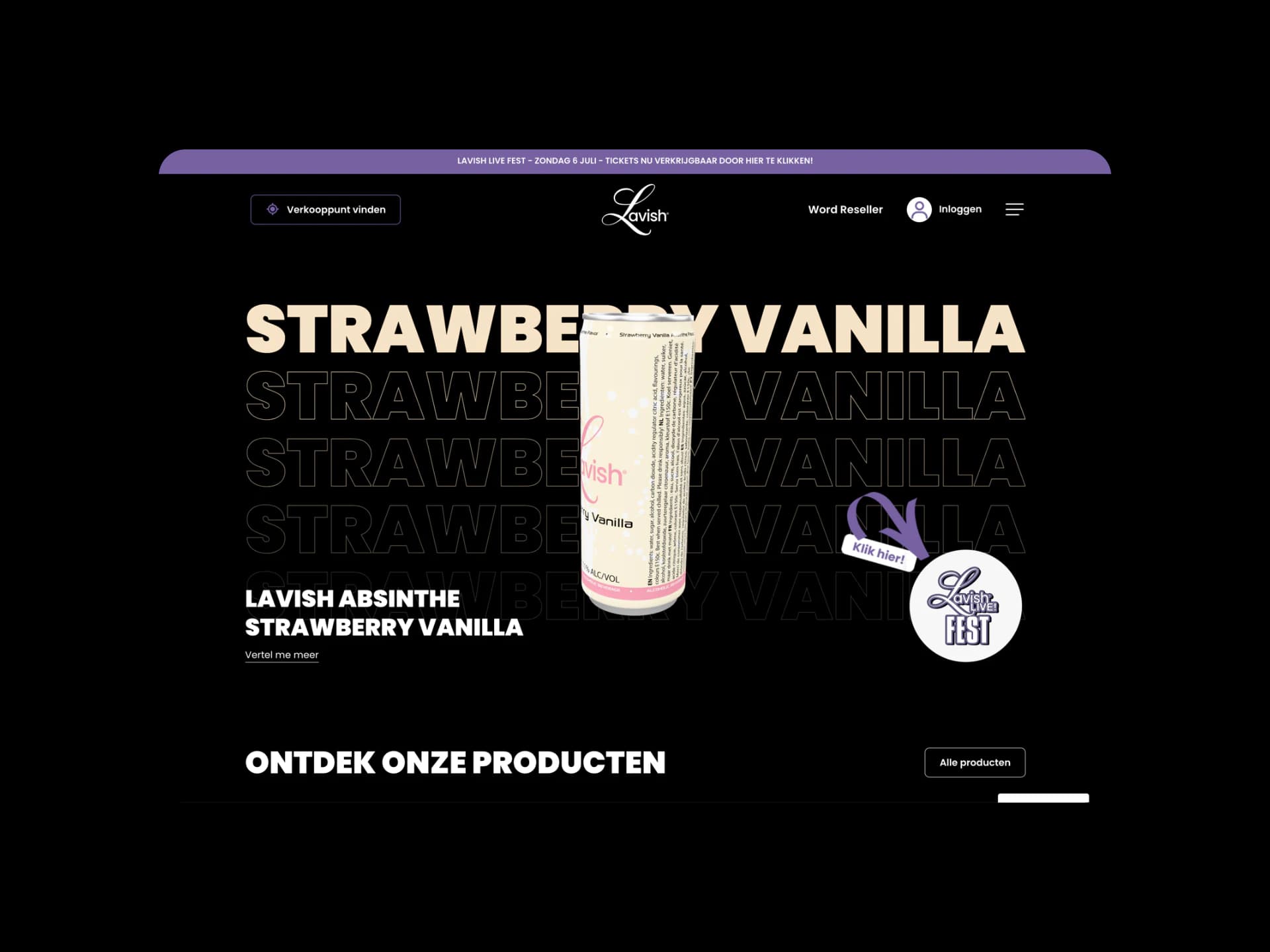
I think a brand site should be bold. A drinks brand that feels like a catalogue online sells itself short. That is why we chose movement and large images, even though that asks more of the design than a neat row of product photos.
Do you want a brand site that does more than look good? We build custom websites around what your visitor needs to do, even when that isn't placing an order.
See custom website developmentHow do business enquiries come in?
Through a separate landing page for distributors, event organisers and hospitality businesses. There, forms sit next to visual material and product information, so an enquiry is a logical next step. Resellers also have their own recruitment page. That way, a business visitor doesn't have to hunt for a contact button among consumer pages.
I think that separation matters. A festival organiser looking for a drinks partner wants different information from someone who has just tried a can. Mix the two up, and the business visitor is the first to drop off. And for a brand like Lavish, that is exactly the visitor who brings in the volume.
How did we build the ERP integration and the stockist finder?
The custom brand website is connected to Byte24, Lavish's ERP system. As a result, stock per product is visible, without anything being sold directly. We also built an interactive stockist finder. Visitors see on a map where Lavish is available, from festivals to bars, restaurants and shops.
Stock without manual work
The benefit of the integration is simple: nobody has to update stock by hand. What the site shows matches what is available. For a business customer considering an order, that saves a phone call. Want to know what an integration like this would take with your system? See the cost of having an integration built.
A stockist finder by postcode
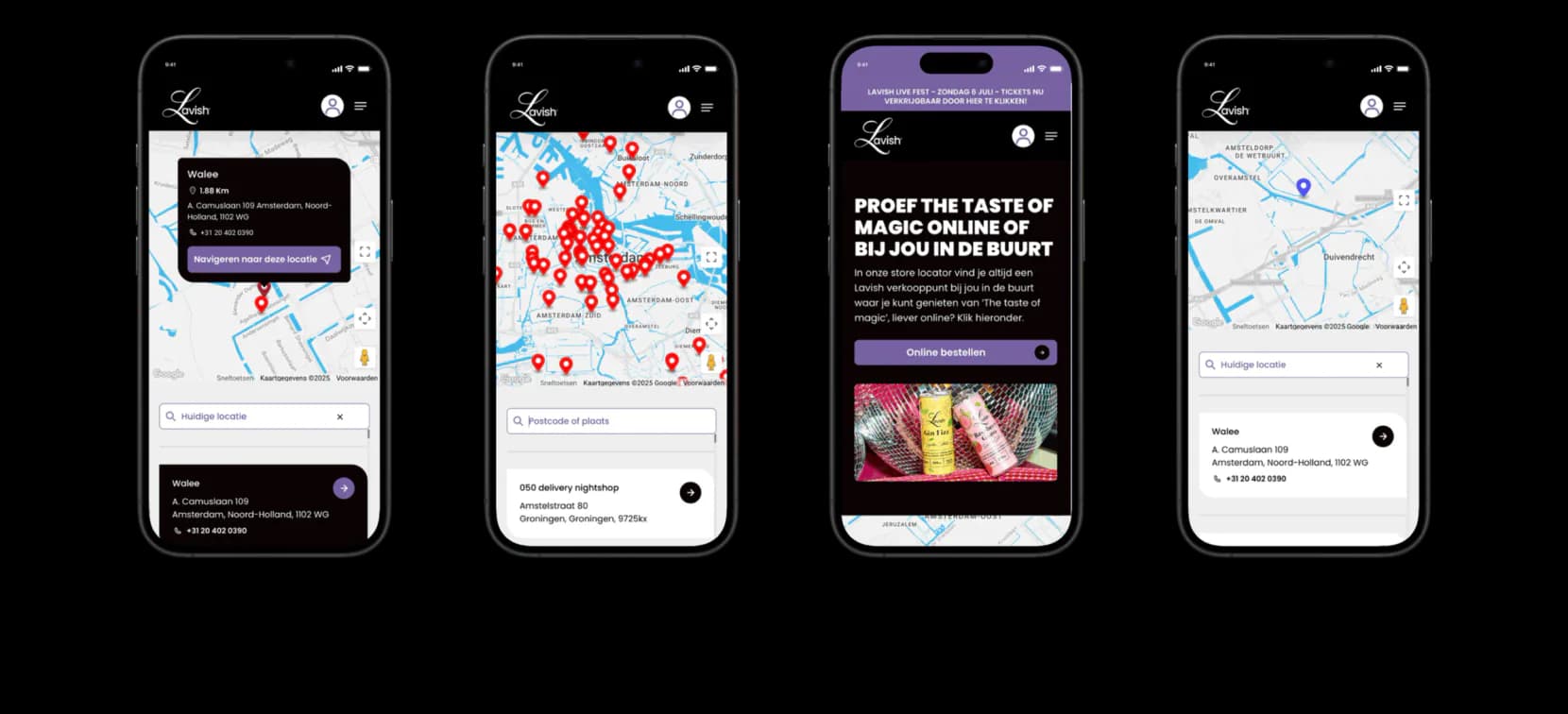
On mobile, you search by postcode and see the details of a shop that has been found. The map shows the locations in Amsterdam, for example. It sounds like a small feature. Yet for a consumer it is the most important question after 'what does it taste like': where can I get it?
Three languages, one structure
The site is available in Dutch, French and German. Content is managed per language, with the same structure and findability for each language version.
What did the custom brand website deliver?
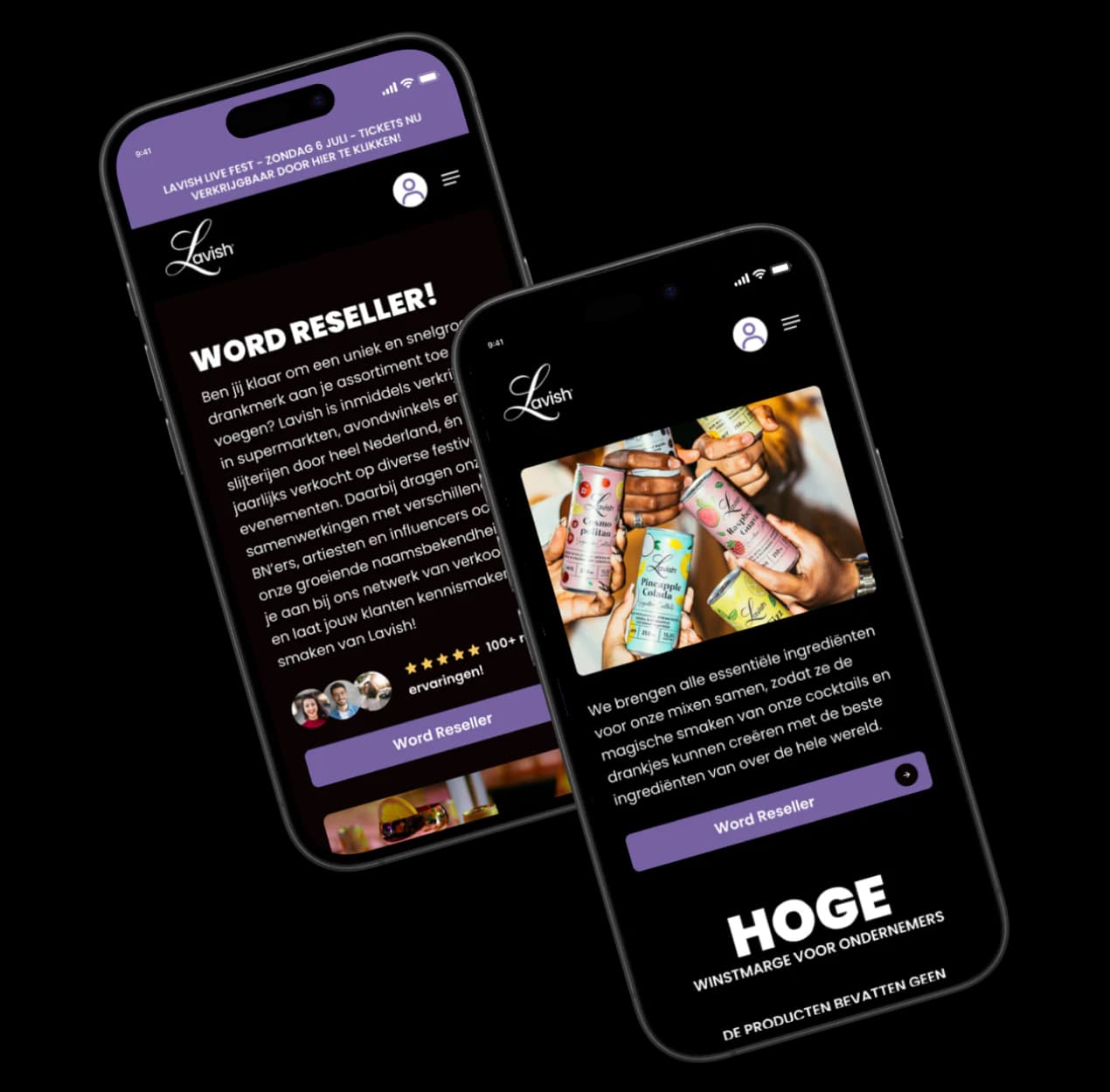
The brand comes across online as it does offline. Business contacts have their own route, and visitors can find the stockists. Stock per product comes straight from Byte24. The site works in Dutch, French and German, so Lavish can use the same site beyond the Netherlands too.
Whether it worked, I'm happy to leave to Lavish:
“The new website perfectly conveys who we are. Creative, strategic and high-end. Your Tech Club didn't just help us technically, but above all helped us position our brand more strongly.”
Curious what we built for another drinks brand? Read the case on Bar 4 Bar, the music platform for Bar le Duc. And for an idea of budget, see the cost of having a website built.
You don't sell online yourself, but want your brand to stand out? I'm happy to think through what your visitors should do.
Book an intro callUpdated
Get in touch with us directly. We'll get back to you as soon as we can


 Your message goes straight to our team in Amsterdam.
Who built the Lavish website?
Your Tech Club. We did the UX/UI design, built the multilingual brand website and handled the integration with Byte24, the ERP system, for stock information.
What did Your Tech Club build for Lavish?
A brand website without an online store, with a page for each cocktail, a landing page for business enquiries, a stockist finder and an ERP integration that shows stock per product.
Can you build a brand website without an online store?
Yes. If you don't sell directly to consumers, the goal shifts from ordering to brand experience, finding stockists and business enquiries. The structure of the site follows that goal.
What does an ERP integration add to a brand site?
Stock information per product without anyone updating it by hand. At Lavish, that runs through Byte24, so what the site shows matches what is available.
How does a multilingual site work in practice?
Content is managed per language, in this case Dutch, French and German, while keeping the same structure and findability for each language version.