

Accessible website for the Van der Lely Foundation
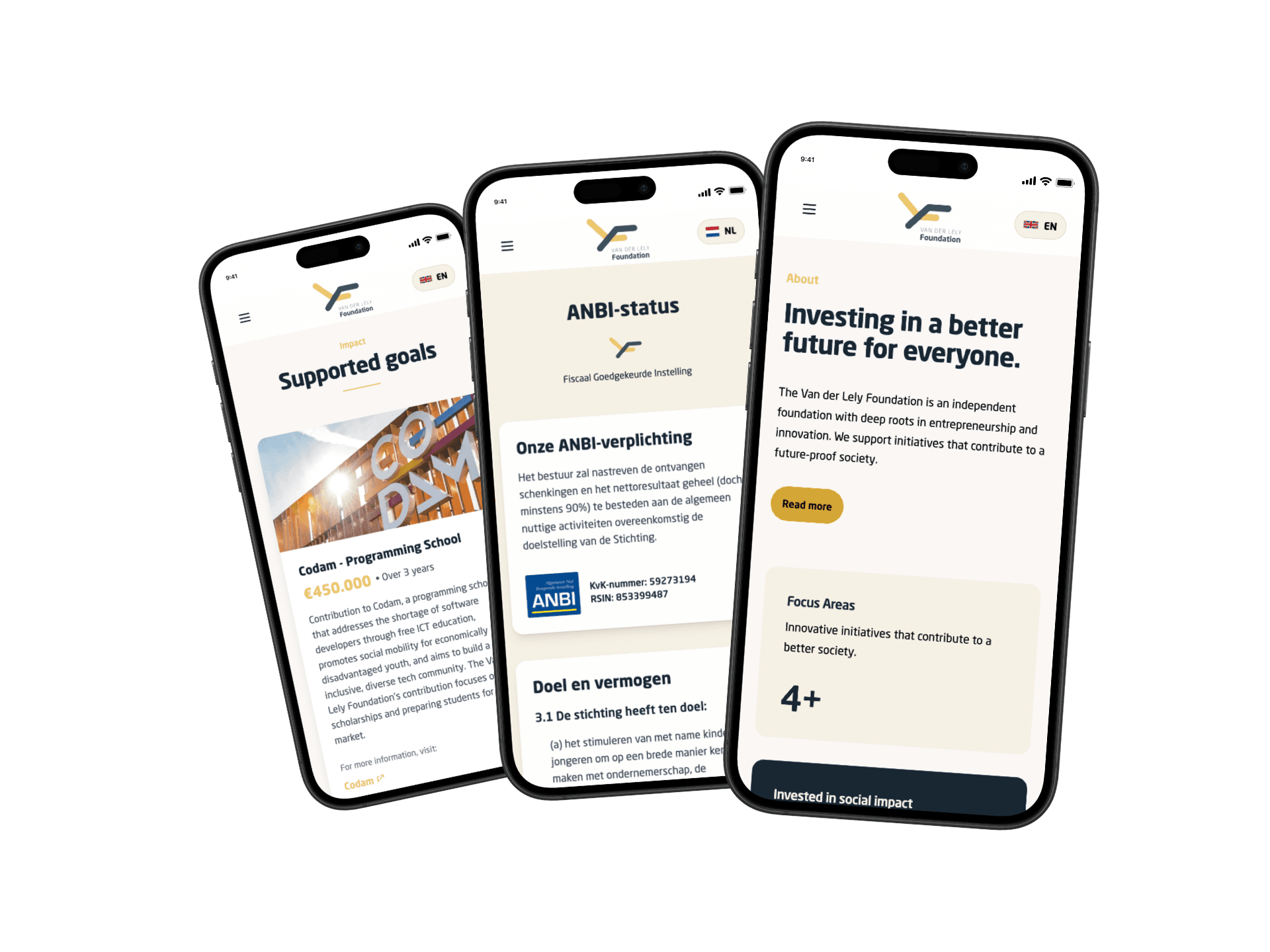
For the Van der Lely Foundation, we built a bilingual, WCAG-compliant website in React with a step-by-step application form and an ANBI section.

Deliverables
- Custom UX/UI design
- Custom web development
- Multilingual setup (NL and EN)
- Accessible to WCAG 2.1 AA
Tech stack
- React
- Micro-motion animations
The Van der Lely Foundation is an independent foundation that supports initiatives in education, health, and arts and culture. A foundation that assesses applications like these needs a website that brings order to the application process. Your Tech Club designed and built that platform.
What does a foundation website need that a company website doesn't?
Transparency that can be checked, and accessibility that isn't optional. A Dutch ANBI (a registered public benefit organisation) must make its policy plan, board composition and annual accounts public and easy to find. At the same time, applicants and partners come from all walks of life, so the site has to work for people with a visual or motor impairment.
There was also a practical problem: applications arrived unstructured, which made assessing them time-consuming.
What does the application form look like?
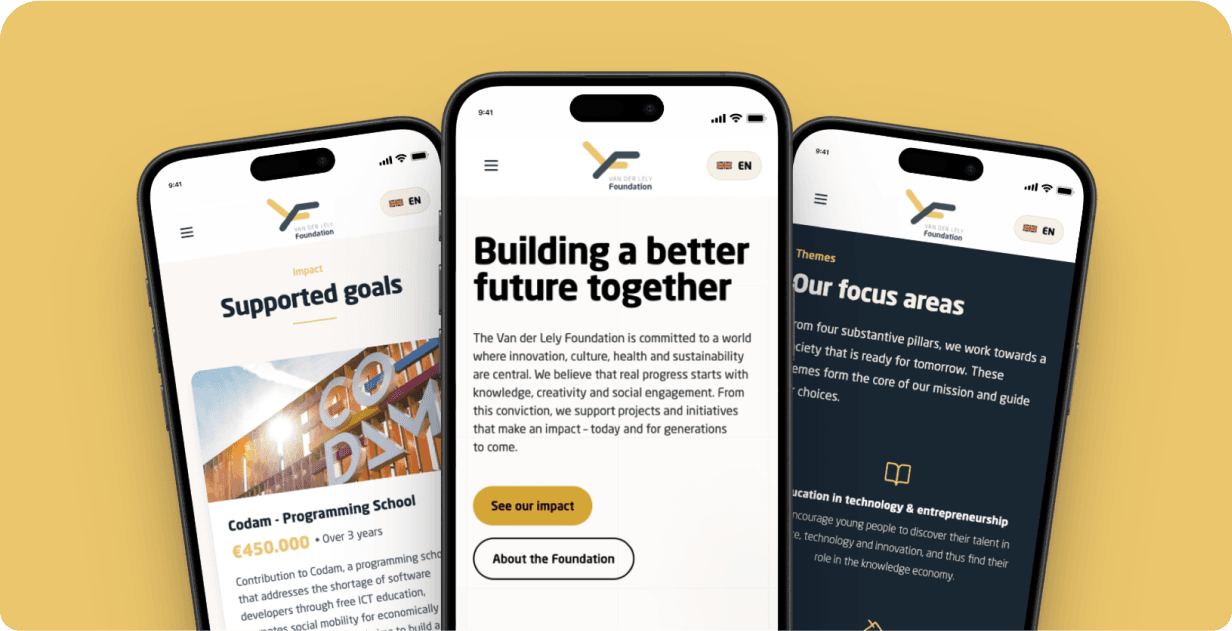
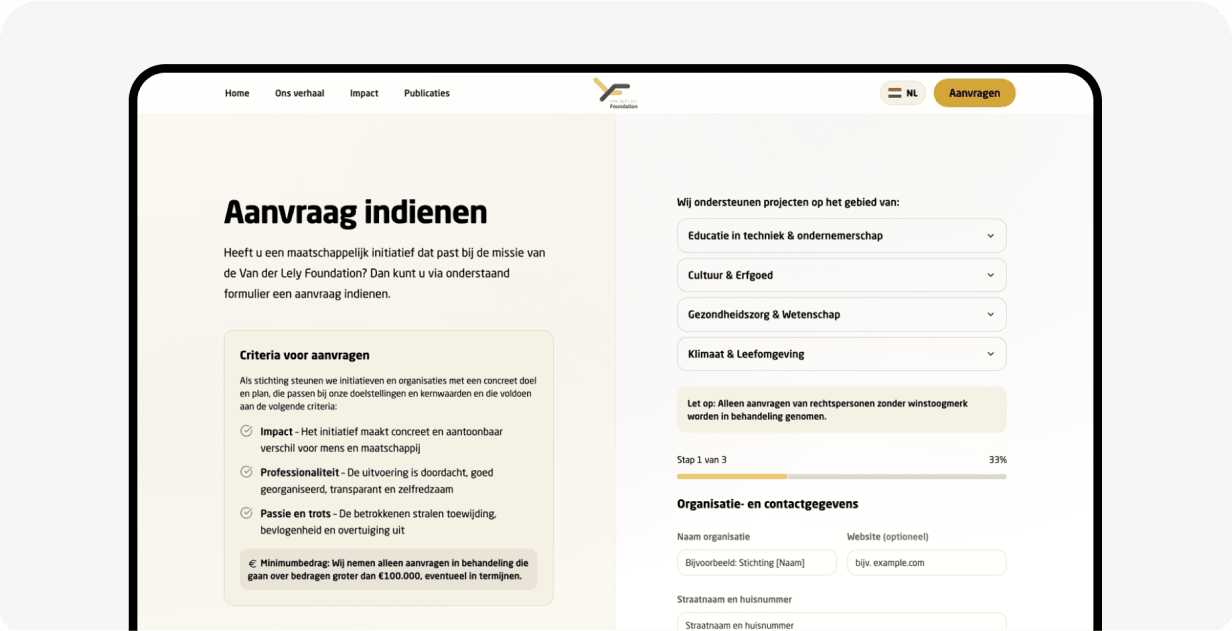
A step-by-step form that guides applicants through the process instead of confronting them with one long screen. Each step asks for one type of information, with validation as you go, so errors don't only show up at the end.
A completed application is processed automatically and delivered to the foundation's team as one bundled email. Every application arrives in the same format, which makes comparing them easier.
How was the site made accessible?
By treating WCAG 2.1 AA as a design principle rather than a check afterwards. That means sufficient contrast, a logical heading structure, full keyboard operability, visible focus indicators and text alternatives for images.
Design that suits the mission
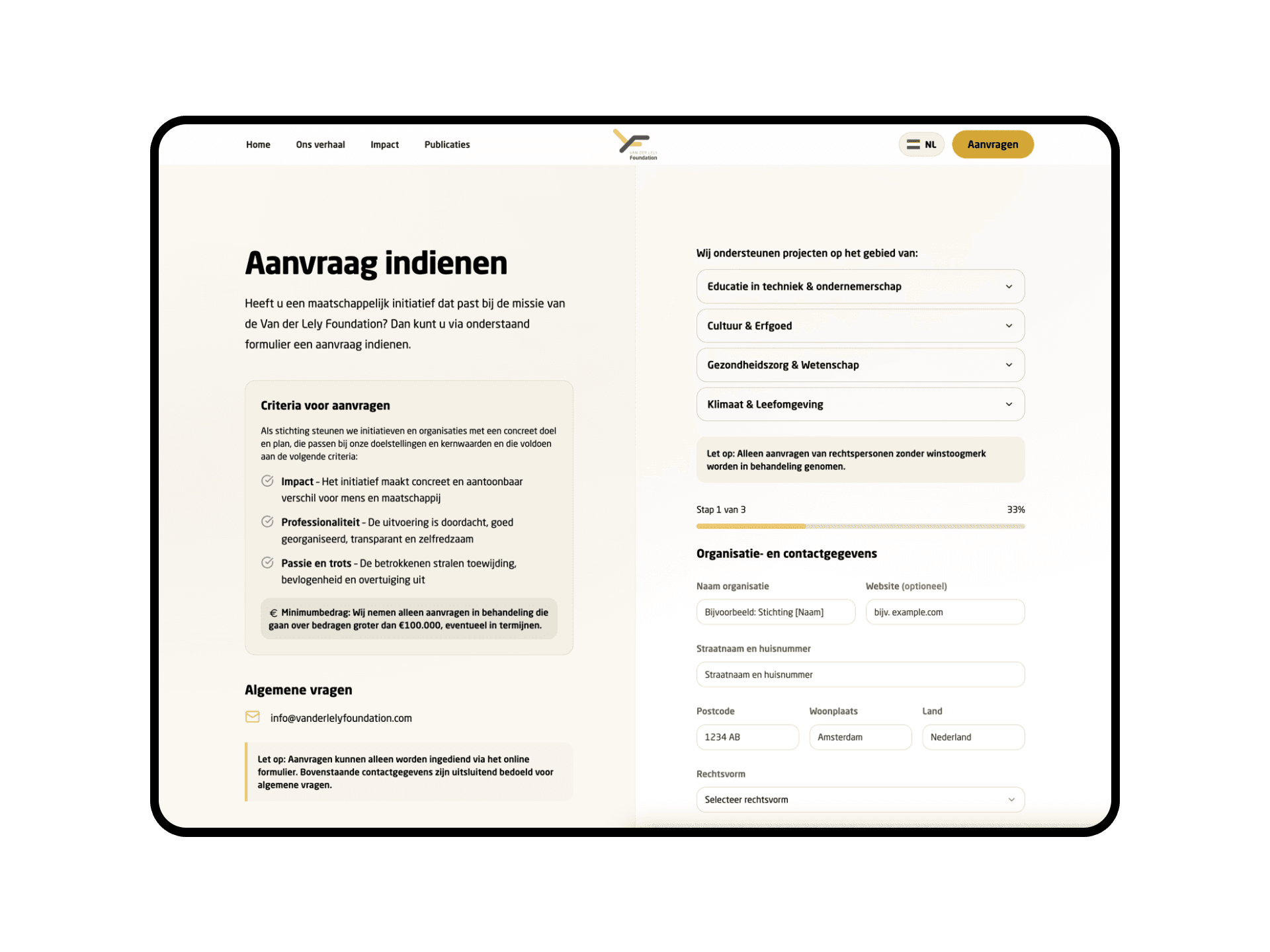
The design uses natural, earthy tones, calm typography and plenty of white space. Micro-animations bring content subtly to life and are set up so they don't get in the way of visitors who are sensitive to motion.
Bilingual by design
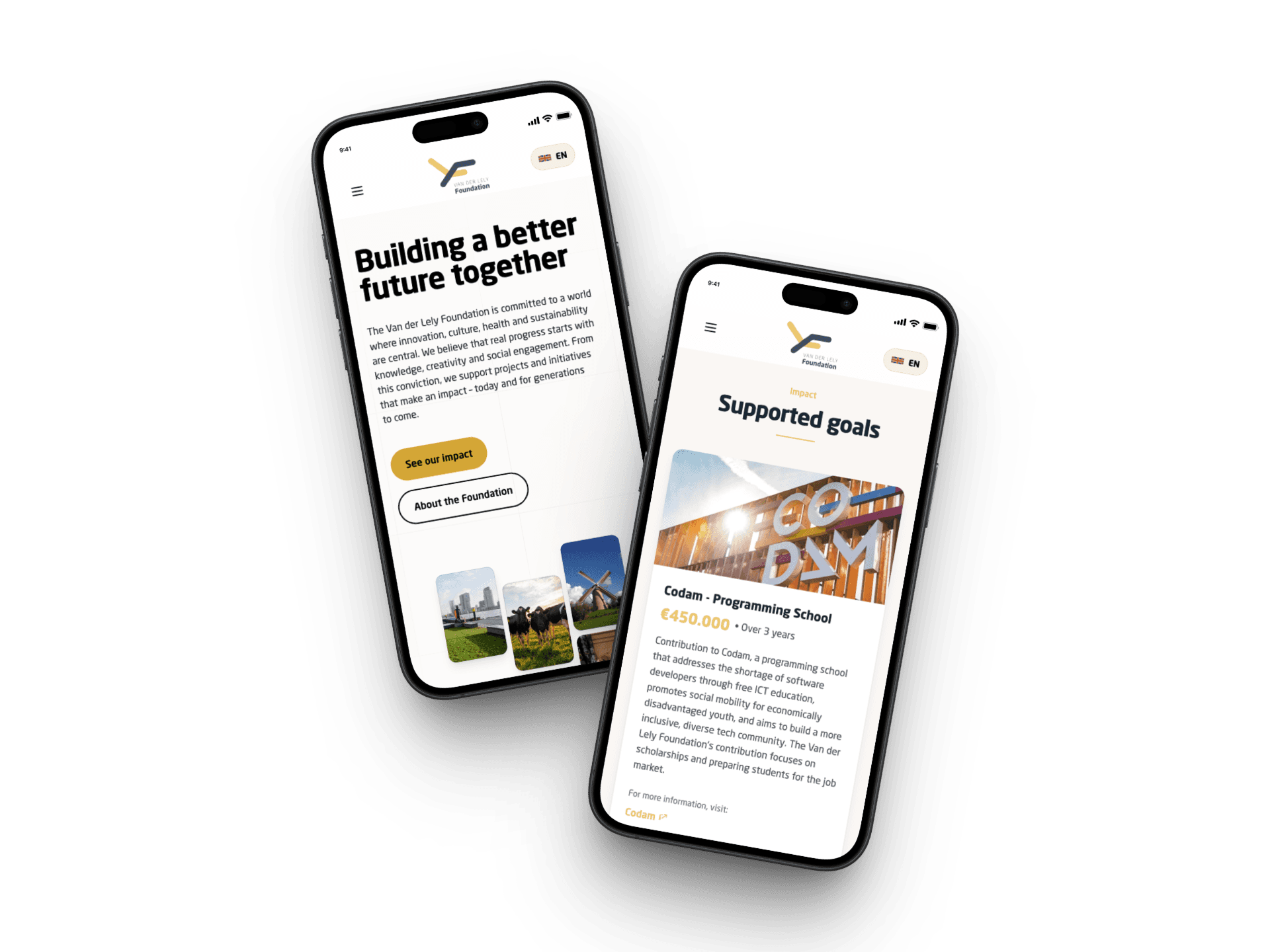
The site is available in Dutch and English and is built so that adding another language doesn't mean rebuilding. That makes the foundation accessible to international partners and institutions.
What can the foundation do now?
Applications that arrive comparable
The structured form delivers complete applications in a fixed format, which makes assessing them easier.
Transparency that holds up
The policy plan, ANBI information and supported projects are easy to find and read, without visitors having to search for them.
A site that grows with the foundation
The component-based setup makes adding projects, annual reports and languages a matter of filling them in.

Get in touch with us directly. We'll get back to you as soon as we can


 Your message goes straight to our team in Amsterdam.
Who made the Van der Lely Foundation website?
Your Tech Club. We did the custom UX/UI design and built the bilingual website in React, including the step-by-step application form and accessibility in line with WCAG.
What did Your Tech Club build for the Van der Lely Foundation?
An accessible, bilingual website with a step-by-step application form that delivers applications in a fixed format, and a dedicated section for the foundation's ANBI information.
What technology does the Van der Lely Foundation website run on?
React, with micro-motion animations for the interaction. React keeps the step-by-step application form smooth, while the rest of the site stays light.
What does WCAG-compliant mean for a website?
That the site meets the Web Content Accessibility Guidelines, the international standard for digital accessibility. In practice, that means sufficient colour contrast, a logical heading structure, full keyboard operation, visible focus and text alternatives for images and video.
Does an ANBI foundation have to publish certain information on its website?
Yes. An ANBI, a Dutch registered public benefit organisation, is required to make public its policy plan, board composition, remuneration policy and financial statements, among other things. On this site, that information has its own section.
Why a step-by-step application form?
Because one long form puts people off and leads to half-finished applications. Asking for one type of information per step and validating straight away means applications arrive more complete. For the foundation's team, that means less chasing.