

An electric future: an EV charger configurator for Laadpunt Nederland
An electric future starts with the right charger. For Laadpunt Nederland we built an EV charger configurator that puts every enquiry straight into TribeCRM.
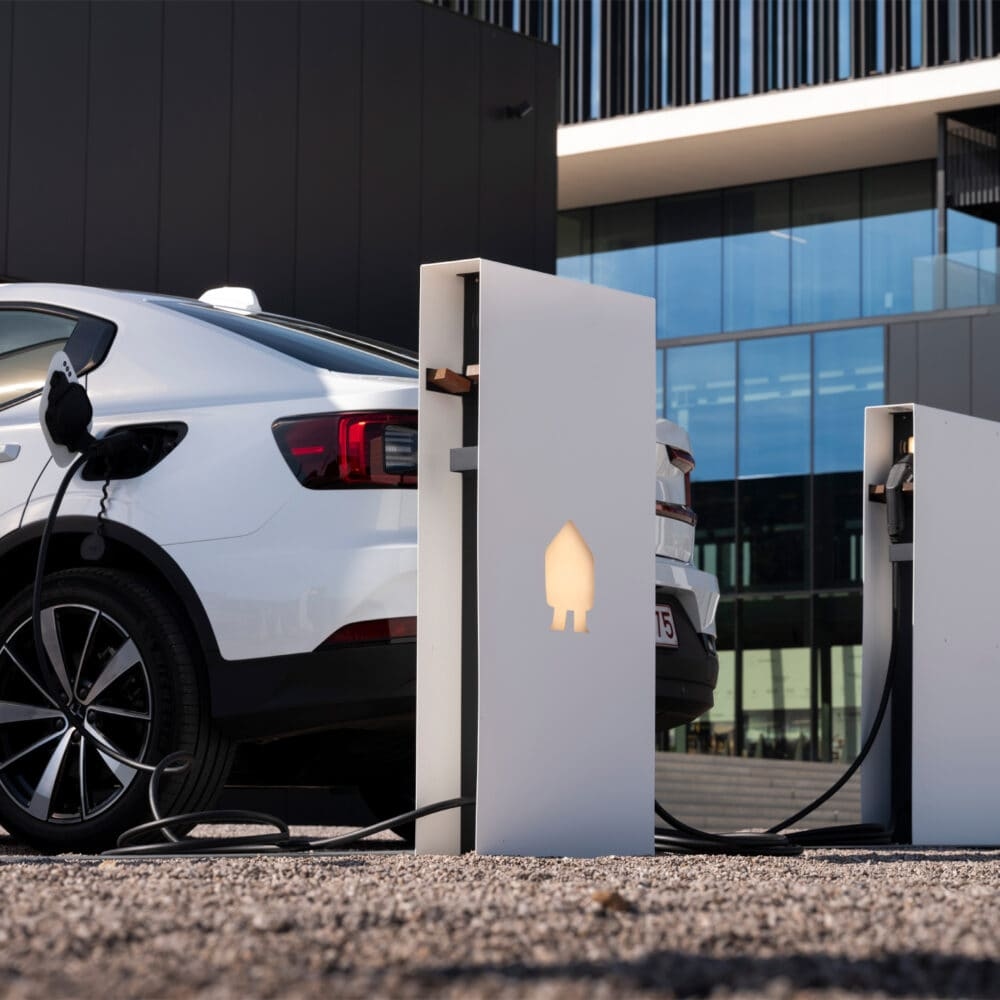
Laadpunt Nederland is a specialist in supplying and installing EV chargers. So they literally help businesses and households into the electric future. That calls for a website that does more than show the range: it has to guide visitors through a decision process and bring every enquiry into the CRM. We designed and built that platform, with an EV charger configurator at its heart, together with a specialist marketing agency.
In this case you can read how a configurator takes over that decision work, why we put WooCommerce and a quote route side by side, and how every enquiry reaches sales complete.
The project in brief
- Client
- Laadpunt Nederland
- Sector
- energy, charging infrastructure
- What we did
- UI/UX design, web development, configurator and quote flow, CRM and ecommerce integration
- Technology
- Figma, WordPress, PHP, HTML and CSS, WooCommerce, TribeCRM, Hotjar and Google Tag Manager
Why does the electric future call for a different website?
Because buying an EV charger is not an impulse purchase. Customers need to know which charger suits their car, whether they will charge at home or for business, and what installation involves. At Laadpunt Nederland, that decision process played out over phone calls and email threads. That is slow and hard to measure.
There was something else too. Marketing campaigns needed to be steered by numbers. But without visibility of the path from visitor to enquiry, every euro spent on a campaign is a gamble.
I recognise this pattern. A business grows, the product gets more complex and the website stays a brochure. The real sales work then happens on the phone, where you can't measure it and can't scale it.
How does a customer use the EV charger configurator?
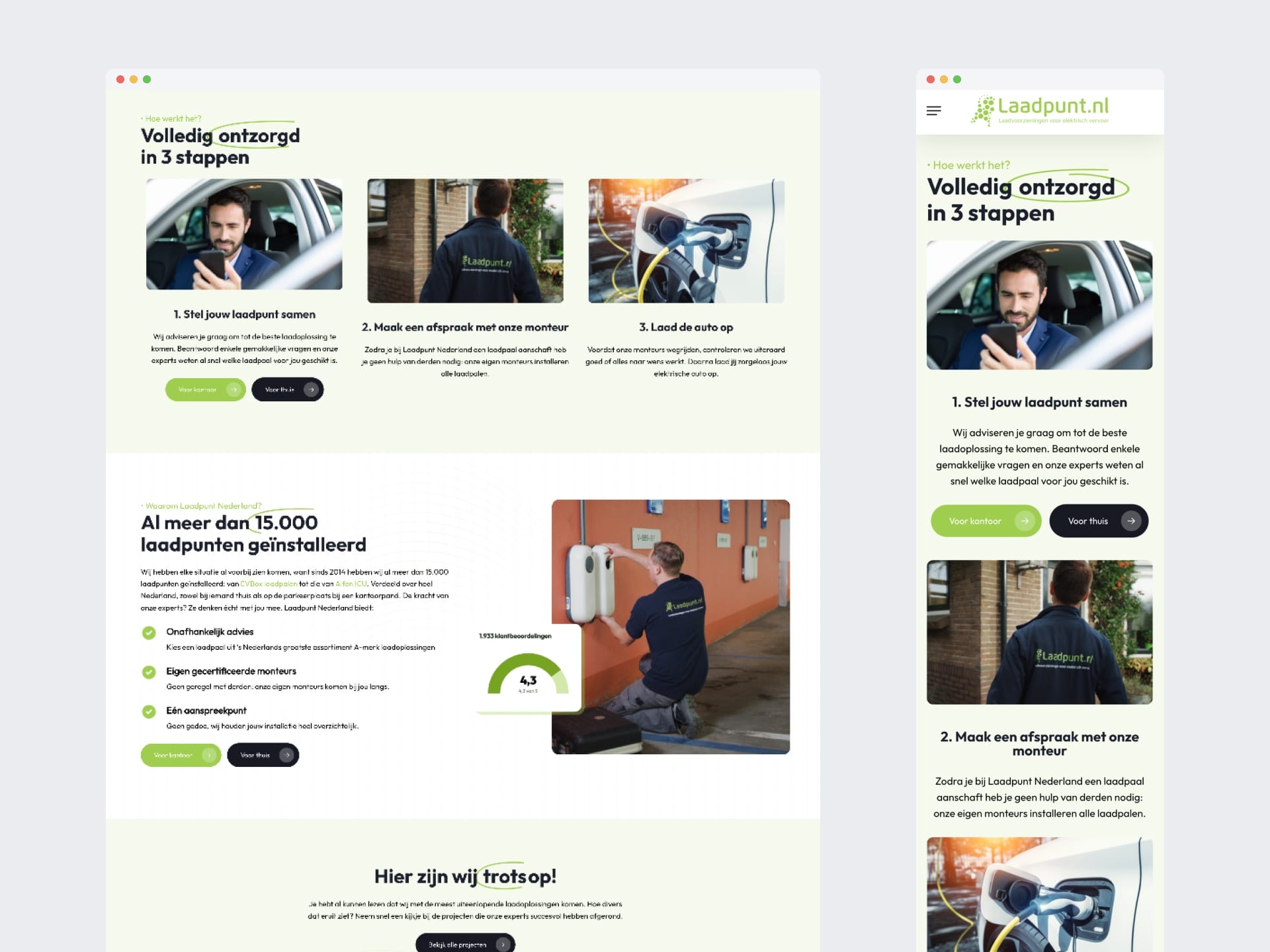
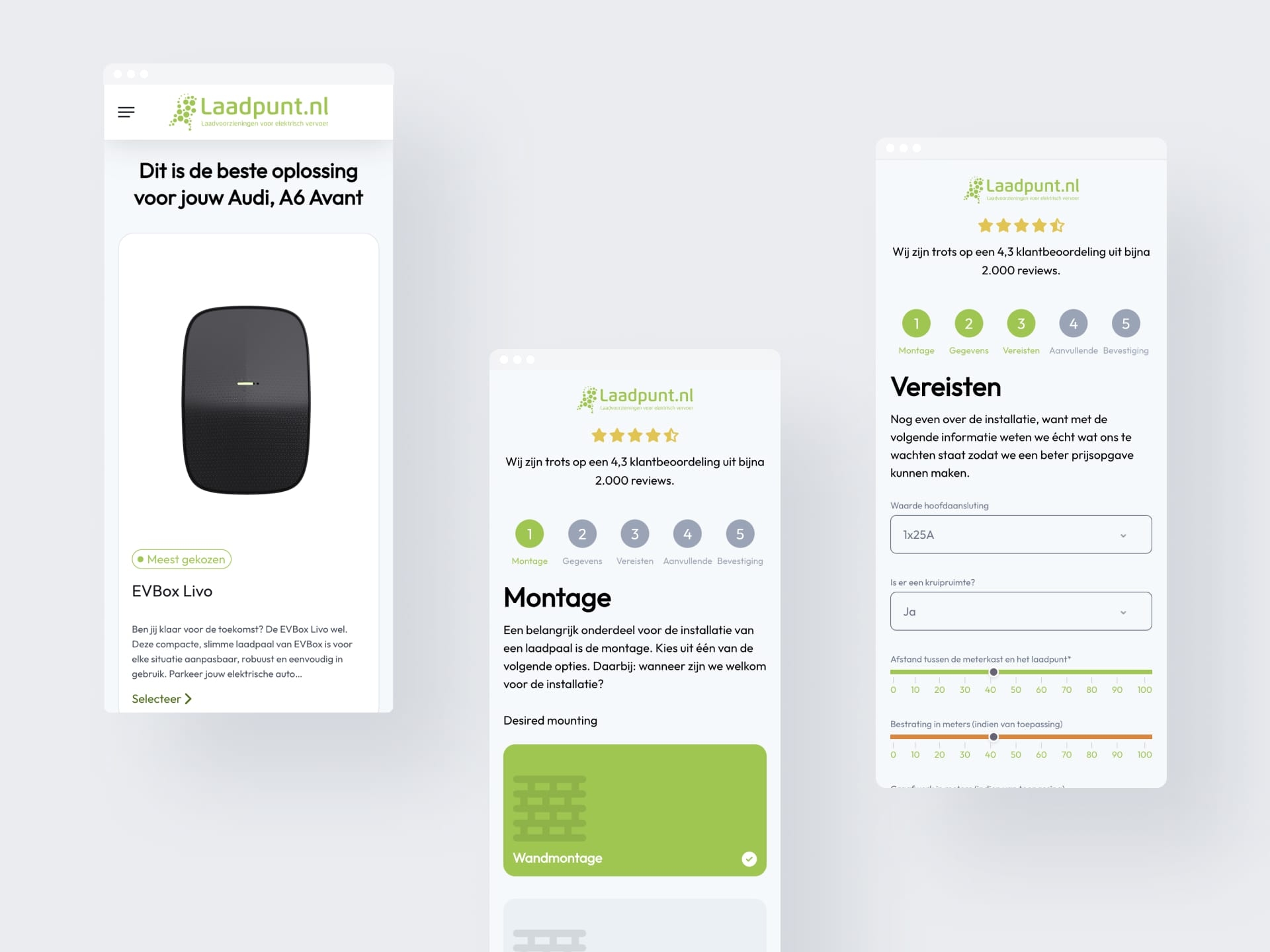
Through a configurator we custom-built as a dedicated WordPress plugin. Customers choose their charger, enter their installation requirements and receive the quote by email. Along the way they get charger advice for their specific car, choose the mounting and fill in their requirements with sliders.
The homepage puts that route front and centre. Under the heading "Specialist in laadvoorziening zonder gedoe" (charging specialist, without the hassle) there are fields for the make and model of the car. So you start with what you already know: the car you drive. That sounds obvious, but many sites start with their own product catalogue. Then visitors first have to learn your range before they get an answer.
Car makes and models always up to date
The configurator draws its data from a database that adds and updates car makes and models automatically. New models therefore appear on their own, without anyone having to maintain a list. In a market that moves this fast, manual updating always lags behind.
Order directly through WooCommerce
Alongside the quote route, customers can also order a charger online straight away. WooCommerce handles that. So people who already know exactly what they want don't have to go through a quote process first.
Those two routes side by side are, to me, one of the smartest choices in this project. The undecided get guidance, the decided get a shopping basket. Both end up in the same CRM.
Do you sell a product with lots of options and installation requirements? Then a configurator takes a lot of explaining off your sales team.
See our custom website development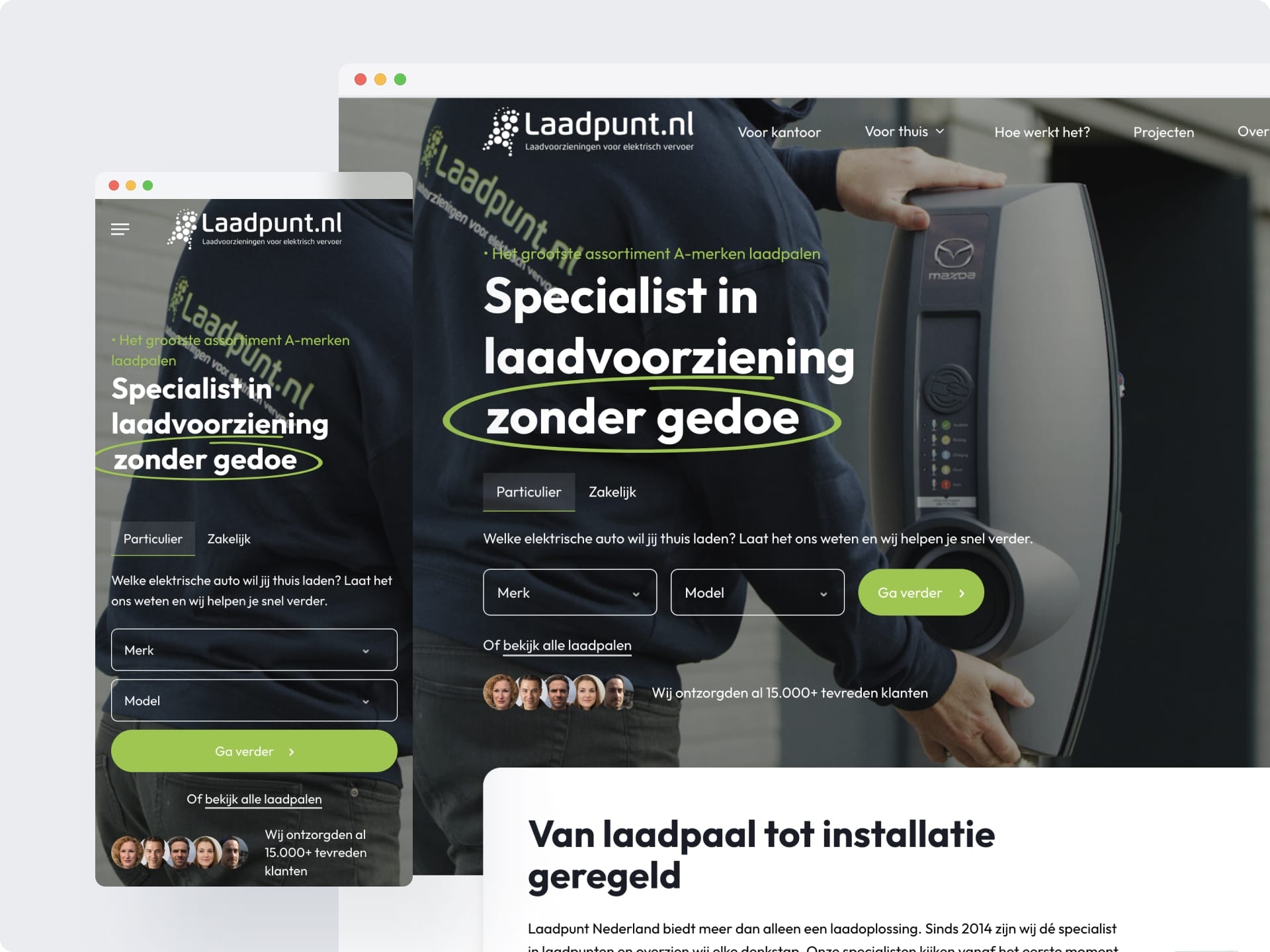
How does an enquiry reach the sales team?
Straight into TribeCRM, through an integration with its API. Every quote request and every order comes in as a lead, with the full configuration attached. Nobody has to retype anything and no enquiry sits forgotten in a mailbox. Sales can see at once which charger, which car and which installation requirements are involved.
This is the part of a project I get most excited about, and at the same time the least visible. A visitor never sees the integration. But the sales team notices it every day. You can read more about integrations like this on our integrations page, and what one costs on having an integration built.
How did the design come about?
Based on research up front, with conversion and measurability as the starting point. Before the design began, we put together a target audience analysis, market research and an overview of stakeholder interviews. That led to a strategic project brief that guided the design choices, such as which information is needed when and at what point the configurator should appear.
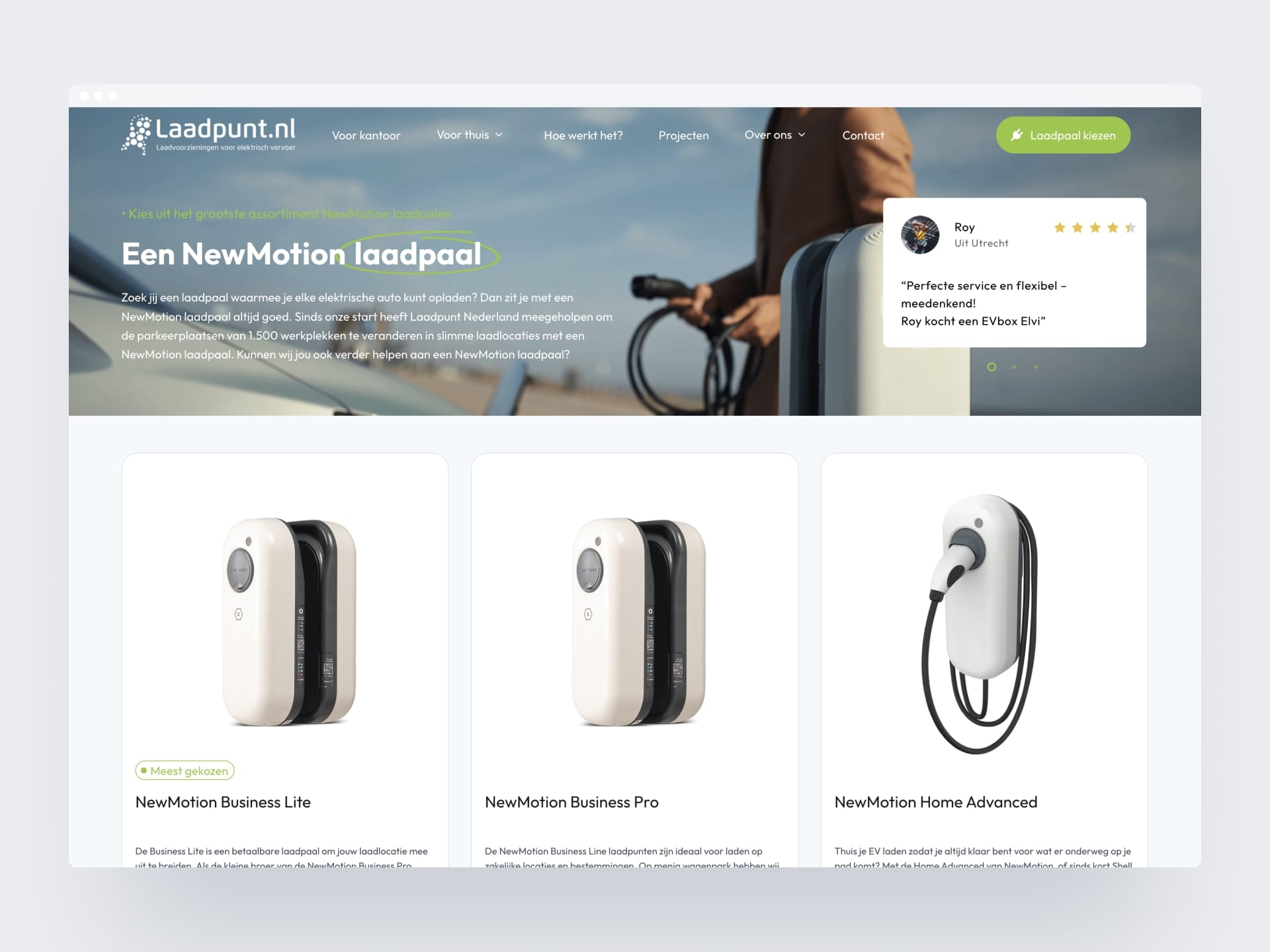
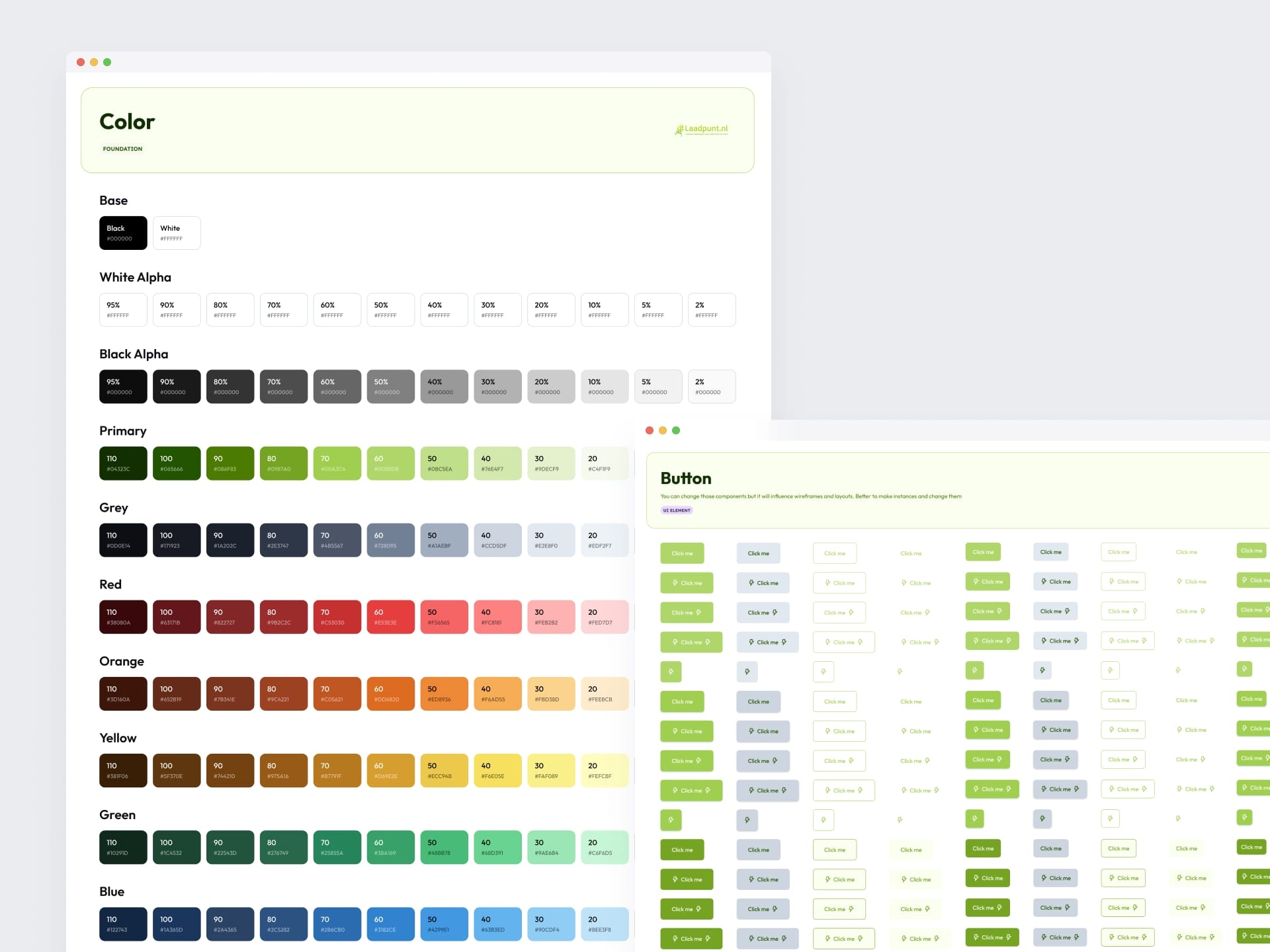
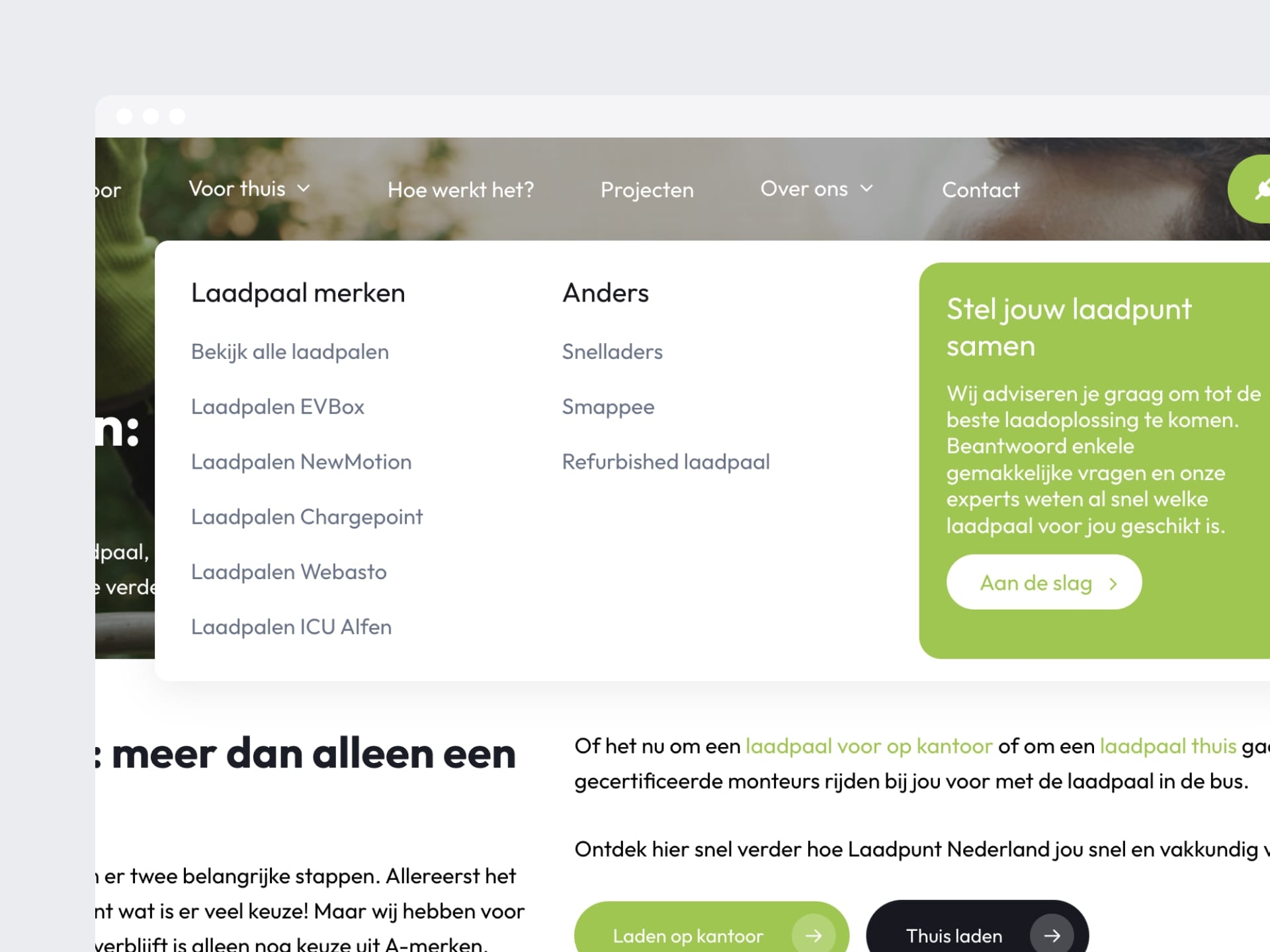
We worked out the design itself in Figma, with a dedicated design system. It defines, among other things, the colour foundation and the button variants, built around the brand's light green (#A0CE4E) with a near-black text colour. Each charger brand has its own page, such as the one for NewMotion, with a customer review and the models below it.
With Hotjar and Google Tag Manager, visitor behaviour can be measured after launch. That shows you where people drop off, so you can adjust based on real data instead of gut feeling.
What does the configurator deliver for Laadpunt Nederland's electric future?

Customers configure their own charging point and receive a quote straight away, with no step in between. The CRM integration delivers every enquiry to sales, configuration included. And the path from visitor to enquiry is measurable, so marketing can adjust its campaigns.
What I find strongest about it: those three things reinforce each other. Because the configurator does the decision work, the lead comes in complete. And because every lead lands in the CRM, you can actually see which campaign produced results. That makes the electric future for Laadpunt Nederland not just a promise on the homepage, but also a process that runs measurably.
A similar project is the quote tool with CRM integration for De Duurzame Jongens. Not sure whether to have something like this custom-built? Read Joey's blog on custom software or an off-the-shelf package.
Is your sales process still stuck on the phone? Tell me how a customer buys from you today, and we'll look at what the website can take over.
Book an intro callUpdated

Get in touch with us directly. We'll get back to you as soon as we can


 Your message goes straight to our team in Amsterdam.
Who built the Laadpunt Nederland website?
Your Tech Club. We did the UI/UX design, built the website and the EV charger configurator as a dedicated WordPress plugin, and took care of the integrations with WooCommerce and TribeCRM. A specialist marketing agency worked on the campaign side.
What technology does the Laadpunt Nederland website run on?
WordPress with PHP, with WooCommerce for the ordering process and a dedicated plugin for the configurator. The TribeCRM integration runs through its API, and Hotjar and Google Tag Manager handle the measurement.
What is a product configurator and when do you need one?
A tool that lets a customer put together their product step by step and see the result straight away. It pays off for products with many variants and installation options, such as EV chargers. Without a configurator, that decision work shifts to phone calls with the sales team.
Can you combine WooCommerce with a quote process?
Yes, and that is the set-up here. People who know exactly what they want order directly through WooCommerce. People who are unsure about the model or installation go through the configurator and receive a quote by email. Both routes end up in the same CRM.
How do you keep a database of car makes and models up to date?
By connecting it to an external source that automatically supplies new makes and models and updates existing ones. In a market that moves this fast, manual updating always lags behind.