


VIRPP music platform: one place for artists, demos and record labels
On the VIRPP music platform, 250,000+ users release music on Spotify and 40+ services, share demos and enter contests. Here's how we built it.
On the VIRPP music platform, artists release their music on Spotify, Apple Music and more than 40 other streaming services. They share demos there, enter contests and build an audience. Record labels find new talent. More than 250,000 users work with it, from emerging artists to big names.
Your Tech Club built the entire platform, from branding to mobile app.
In this case I explain why we couldn't solve this with separate tools, how the parts fit together and what it delivers for artists and labels.
The project in brief
- Client
- VIRPP
- Sector
- music
- What we did
- branding, UI/UX design, music distribution to streaming services, demo, contest and community platform, label dashboard, mobile development and website development
- Technology
- Figma, React, React Native, Laravel, PHP
What problem does the VIRPP music platform solve?
It solves two problems. Labels receive too many unsolicited demos to assess, so good material disappears in the pile. And artists need a different place for every next step: a distributor, a network to reach labels and a channel for fans. VIRPP brings all of that together in one environment.
The traditional route doesn't really work for anyone. An artist sends in a demo, for example, and never hears anything back. A label is stuck with an inbox it can never clear.
To my mind, the problem isn't the talent but the filtering. Artists make plenty of good music. That music just doesn't find the right ears. What's needed is a platform that sorts, not yet another email address.
Why was the VIRPP music platform custom-built?
Because there's no off-the-shelf product that combines distribution, a demo community, contests, a label dashboard and payouts in one system. On top of that, all the parts share a single data model. That keeps an upload, a review, a contest entry and a payout linked to each other.
You could try it with separate tools. A distributor here, a form there and a spreadsheet for the payouts. But then you lose exactly the connection that makes the platform valuable. When a label looks at a demo, it also wants to see how that track is doing with fans. That's only possible if everything sits in the same system.
I don't often say custom software is the only option. Here it was. If you want to weigh that up for your own situation, read Joey's blog on custom software or an off-the-shelf package.
How did we build it?
As one platform with one account. An artist releases music there, plays it to labels and fans, enters contests and follows how it's going. The web platform runs on React, the server side on Laravel with PHP and the mobile app on React Native. We worked out the design in Figma. For new visitors we also built a marketing website with landing pages, so artists and labels each come in through their own entrance.
Releasing music on streaming services
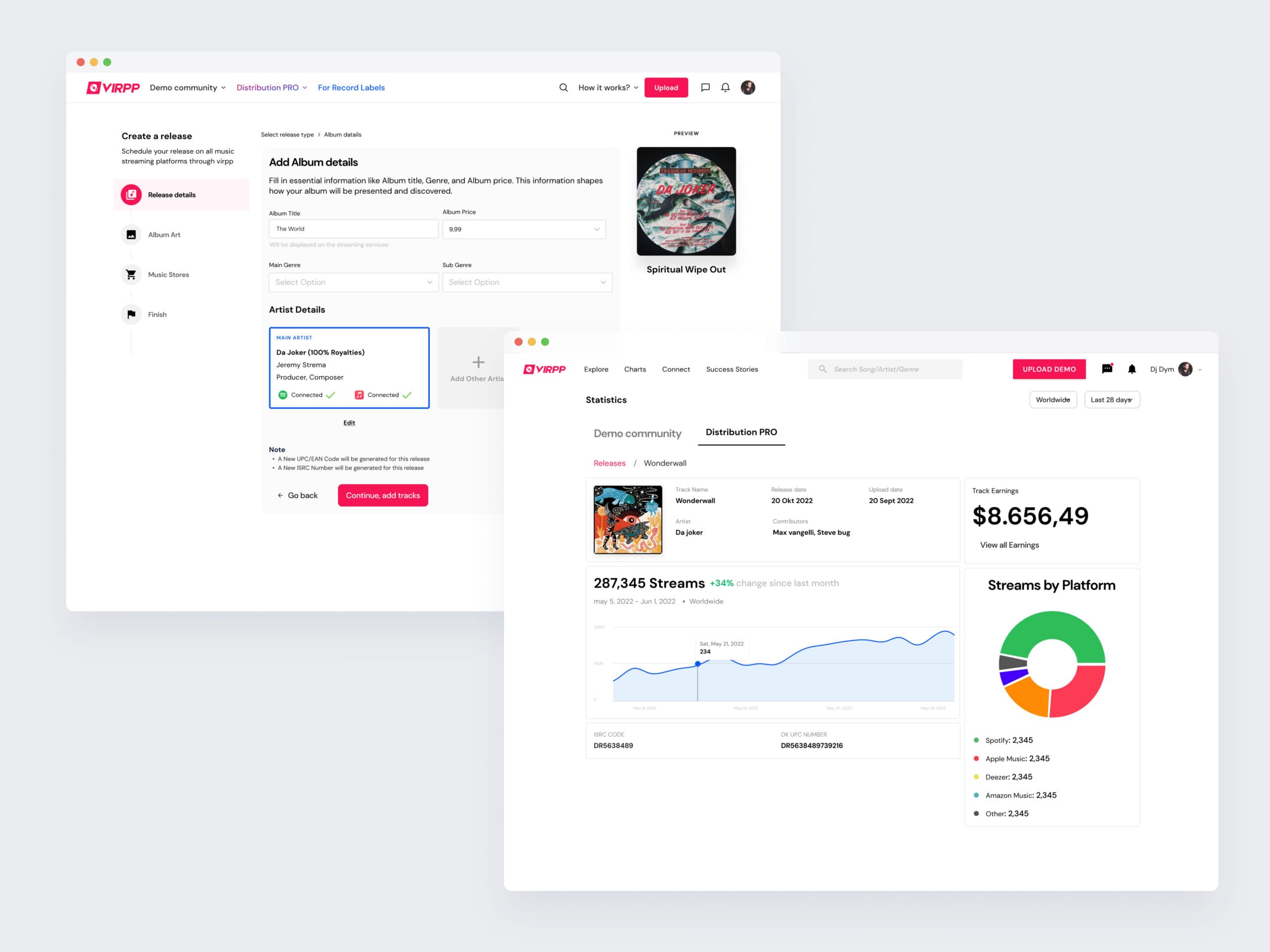
From VIRPP, artists distribute their music to Spotify, Apple Music and more than 40 other platforms. A separate distributor isn't needed. The platform also manages the earnings and pays them out, so the financial side stays transparent. In the web app, an artist fills in the album, price and artist, then follows streams and earnings per platform.
The demo community
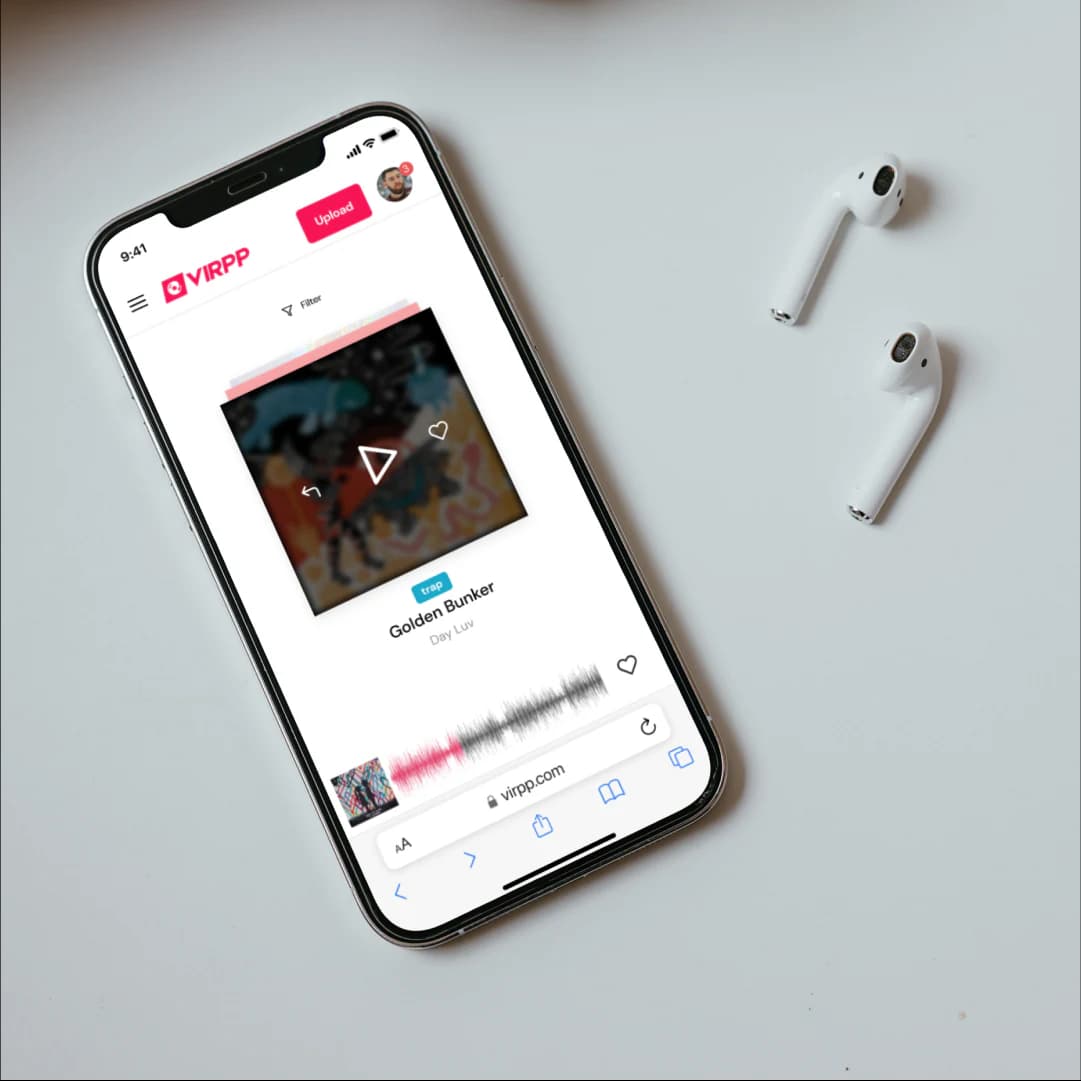
Artists upload demos and then share them with fans and other artists. Rating works with a swipe, as in a dating app. That might sound a bit playful for the music industry, but it works: listening and responding become effortless, for fans and for labels.
Contests, community and charts
Labels run contests through VIRPP. Artists submit a track and get a chance to be heard. Around the music there's also a community where artists and fans discover tracks, respond to each other and see in the charts what's doing well.
Got an idea for a platform where users, data and payments come together? That's exactly the kind of web application we build.
See how we develop a web applicationDashboard for record labels
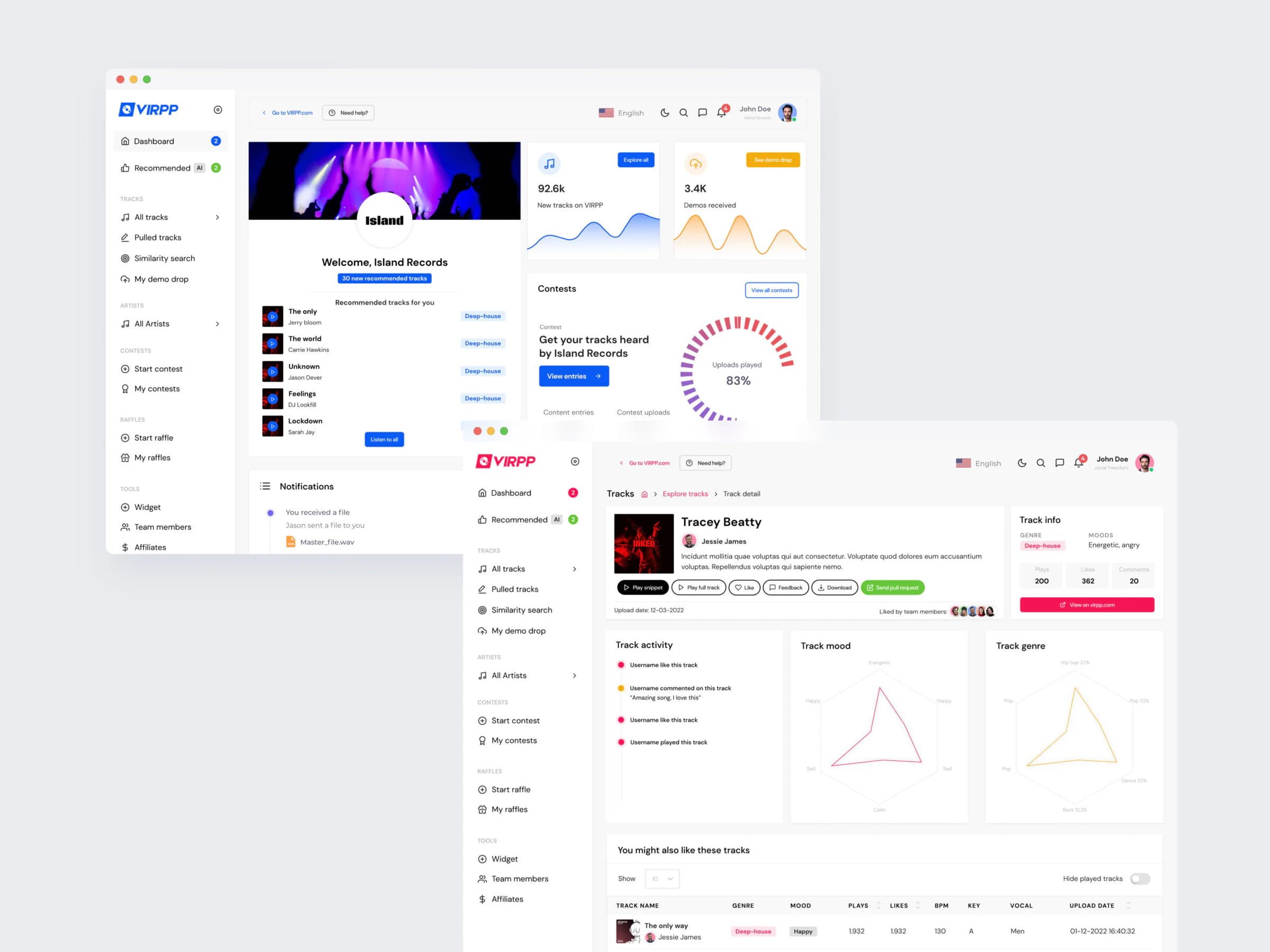
Labels filter demos by location, genre and popularity. So they search in a targeted way, instead of working through an inbox chronologically. AI recommendations also match demos to a label's style. The label dashboard has its own case, because there's plenty to say about it.
Mobile app
With the React Native app, artists follow their statistics and receive updates, on the go too. Read more about how we approach apps like this under mobile development.
What does the design look like?
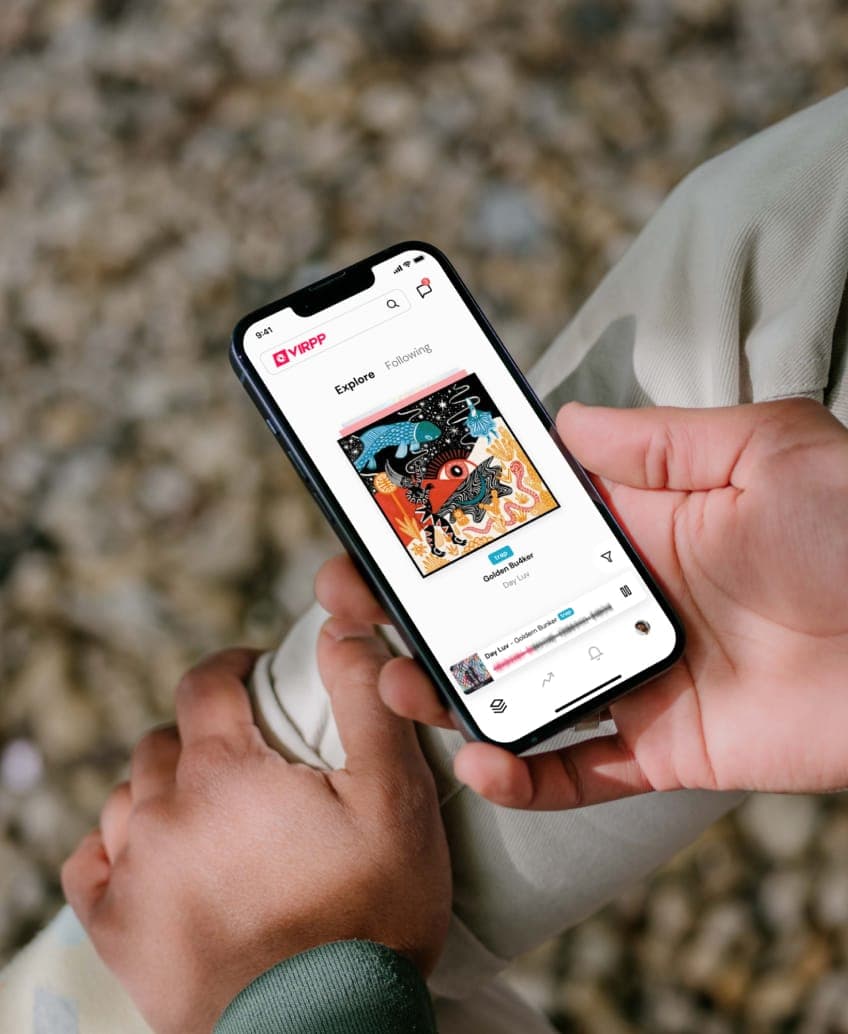
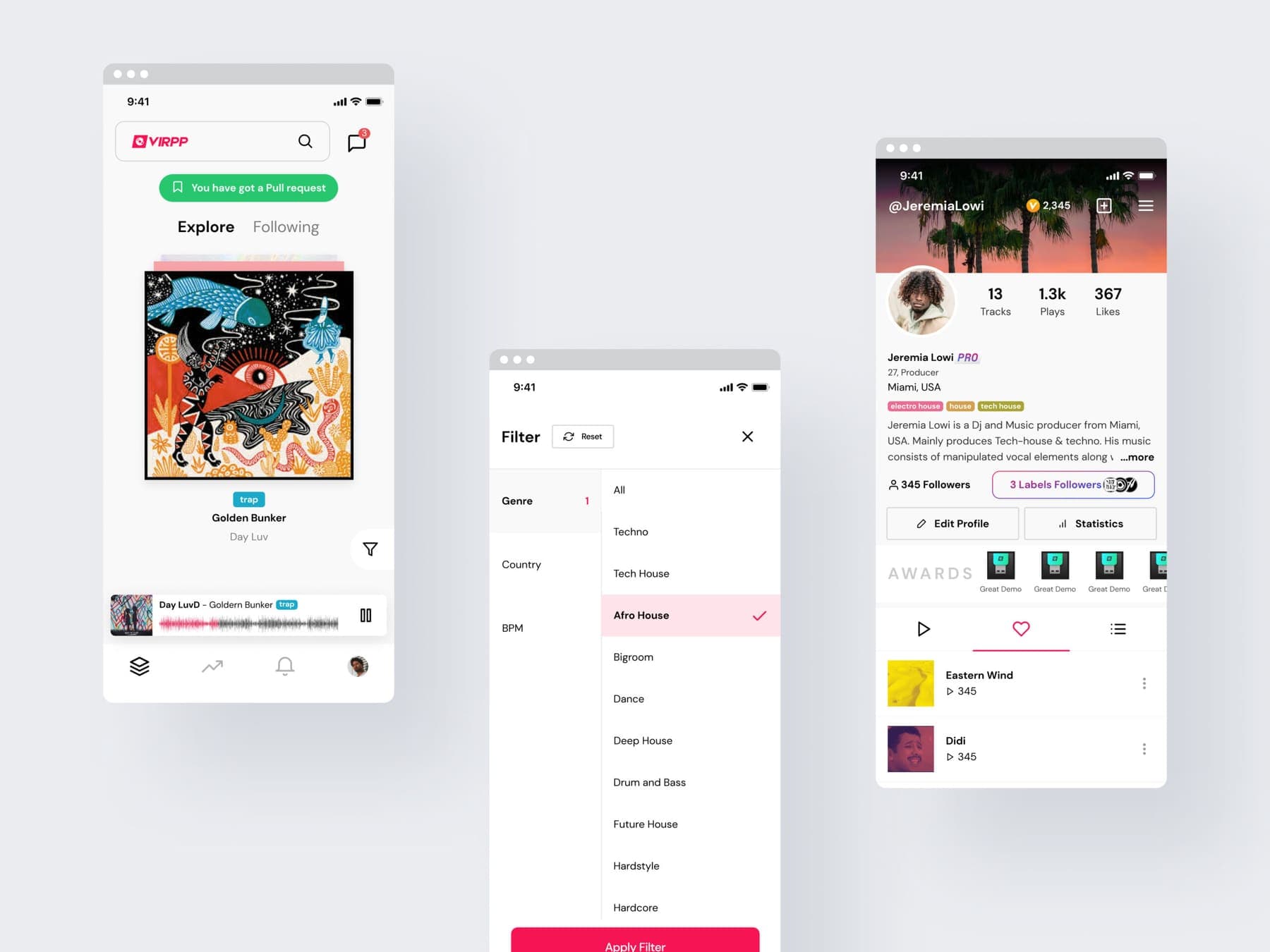
The design combines a distinctive brand with screens that work fast for people going through a lot of music. We did the branding and the UI/UX design ourselves. The app shows a discovery feed with a waveform player, filters for genre and BPM and an artist profile with tracks, plays and likes.
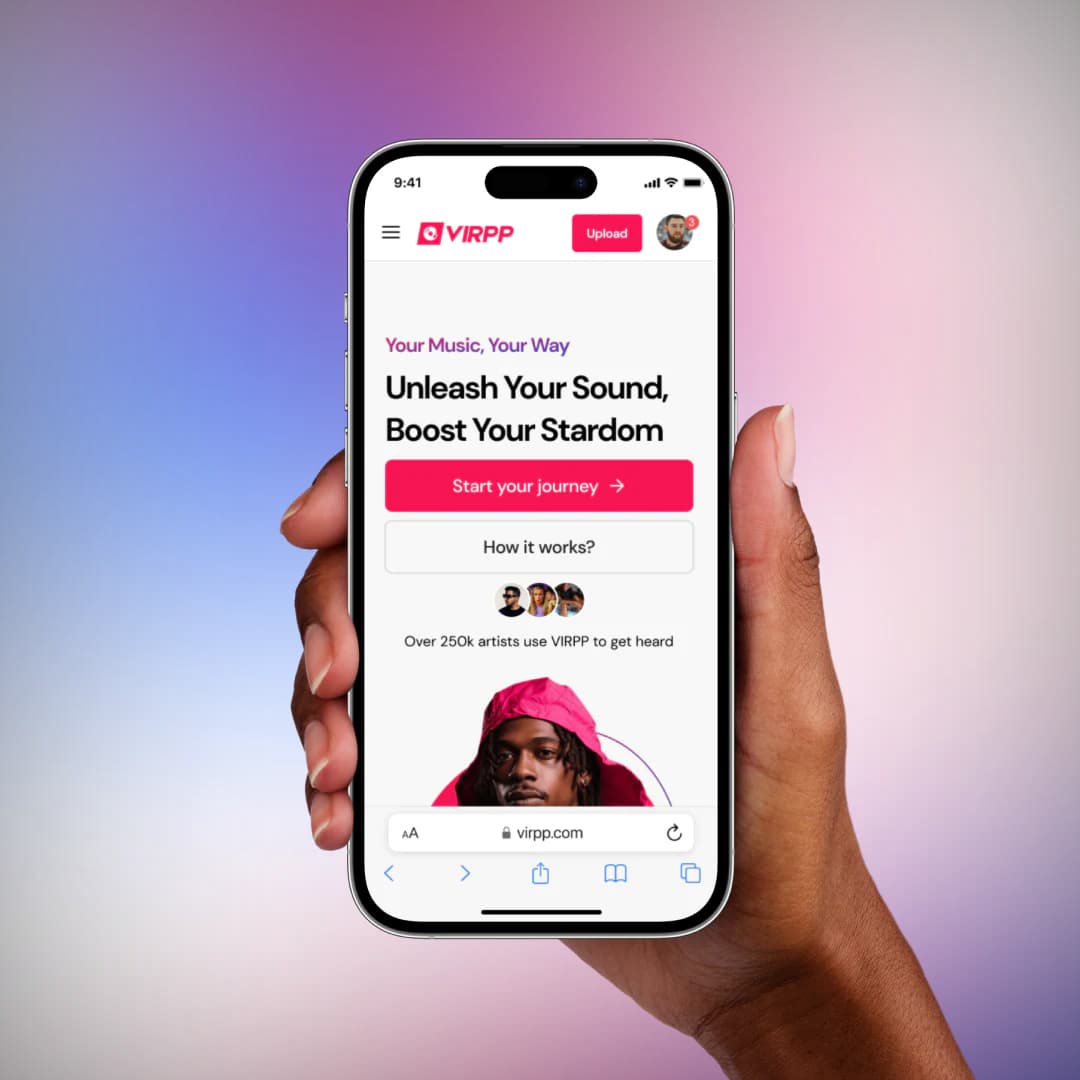
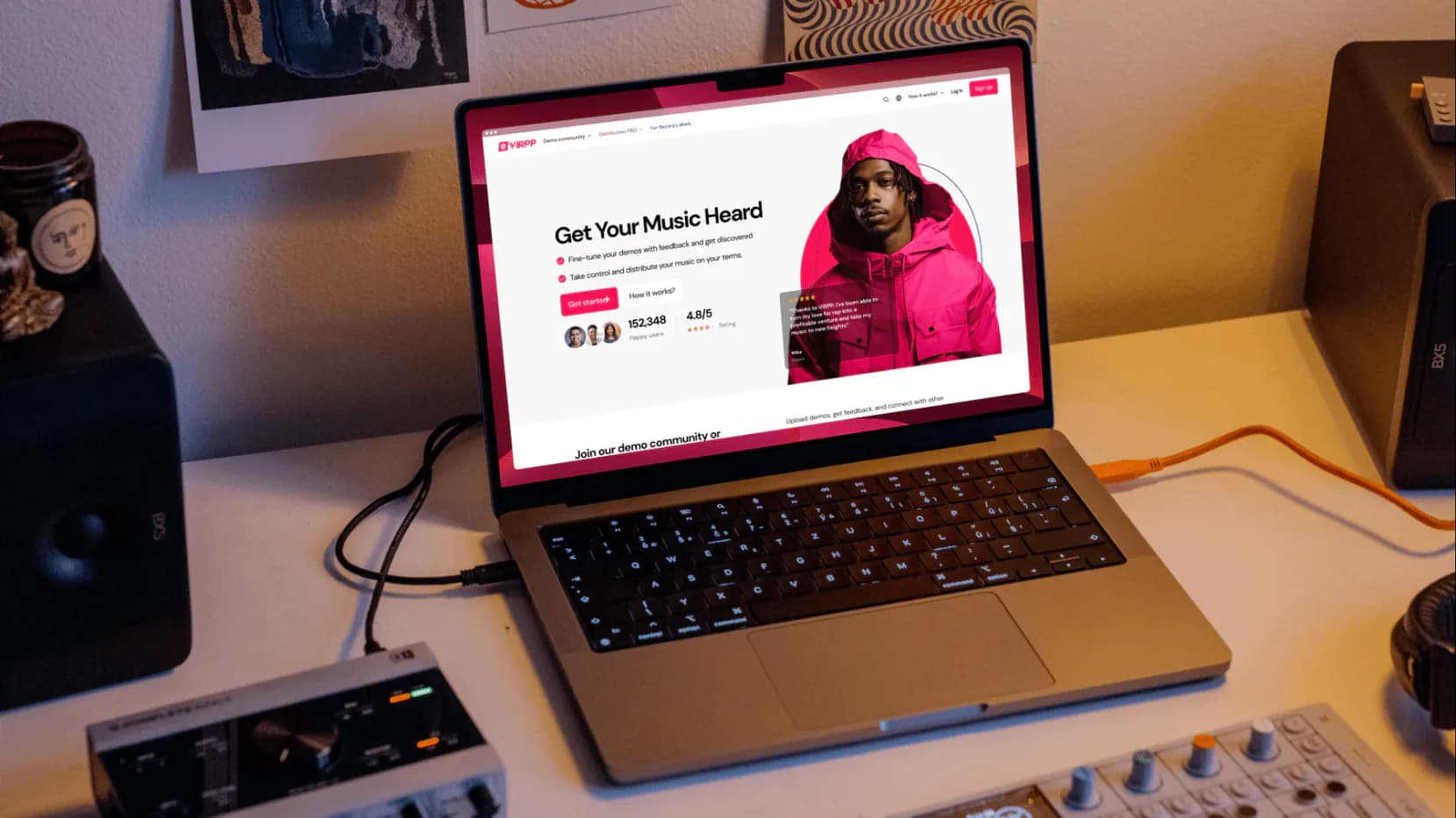
The mobile site opens with "Unleash your sound, boost your stardom" and a single button to get started. The label dashboard has a sidebar with demos, contests and raffles. For each track, a label sees activity, mood and genre.
What does the VIRPP music platform deliver?
From one place, artists release their music on Spotify, Apple Music and more than 40 other streaming platforms, play demos and enter contests. On the label side, the dashboard has already led to new talent being discovered and signed. More than 250,000 users work with it.
VIRPP works with partners including Nicky Romero, Amsterdam Dance Event and Steve Aoki. Big artists and labels use the platform to find talent and run contests.
For VIRPP and Amsterdam Dance Event we also built the demo upload platform for ADE and VIRPP. If you're curious what an app or platform like this costs, the page on the cost of an app gives a first idea.
Want to build a platform that grows with your users? Tell me what you have in mind, and we'll help you think through the first version.
Book an intro callUpdated
Get in touch with us directly. We'll get back to you as soon as we can


 Your message goes straight to our team in Amsterdam.
What is VIRPP?
A music platform for artists and record labels. Artists use it to release their music on streaming services, share demos, enter contests and build an audience. Labels use it to find new talent. More than 250,000 users work with it.
What did Your Tech Club build for VIRPP?
The entire platform: the branding and UI/UX design, the marketing site, the artist platform with distribution and payouts, the demo community and contests, the label dashboard and the mobile app.
Which streaming services can an artist distribute to?
Spotify, Apple Music and more than 40 other streaming platforms, directly from VIRPP.
How do labels assess the demos on the platform?
Through a swipe interaction, similar to dating apps, and through filters for location, genre and popularity. AI recommendations also match demos to a label's style, so a label gets to suitable material faster. Through contests, a label can also ask for submissions itself.
What technology does the VIRPP platform run on?
React for the web platform, React Native for the mobile app and Laravel with PHP on the server side. The design was worked out in Figma.